
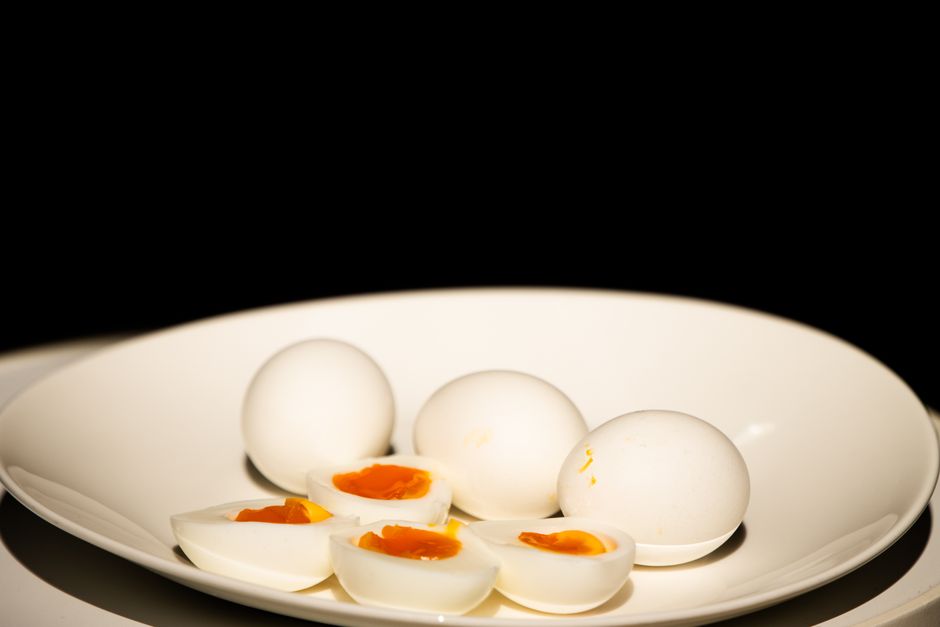
A hard-boiled egg that floats in water is usually old, but it is not automatically spoiled. The float test works because an egg’s air cell grows larger as it ages. That larger air cell gives the egg more buoyancy. A very fresh egg will sink and lie on its side. An older egg will stand upright on the bottom. An egg that floats to the top is typically past its prime, and you should check it carefully before eating.
Why Do Hard Boiled Eggs Float?
The shell of an egg is not solid. It is porous, meaning it has thousands of tiny pores that allow air and moisture to pass through. Over time, the egg loses moisture and carbon dioxide through these pores. As that moisture leaves, the space inside the shell gets replaced by air.
That air collects at the blunt end of the egg, forming what is called the air cell. In a fresh egg, the air cell is very small. As the egg ages, the air cell grows larger. A large air cell makes the egg more buoyant in water. This is simple physics. The egg displaces water, and if the egg weighs less than the water it displaces, it floats.
The same process applies whether the egg is raw or hard-boiled. Boiling does not change the size of the air cell. It only cooks the contents. So a hard-boiled egg that floats was already an older egg before you boiled it.
Is a Floating Hard Boiled Egg Safe to Eat?
The float test is a general indicator of age, not a direct test for spoilage. A floating egg is not automatically dangerous, but it does require closer inspection. The age of the egg matters because older eggs are more likely to harbor bacteria like Salmonella, which can multiply over time.
If your hard-boiled egg floats, crack it open and look at it. A fresh hard-boiled egg has a bright yellow or orange yolk and a firm white. An older egg may have a flatter yolk, a thinner white, or an off odor. If you notice any unusual smell, discoloration, or sliminess, throw it out immediately. Do not taste it to check.
When in doubt, discard it. The cost of one egg is far less than the cost of food poisoning. Food poisoning from eggs can cause severe vomiting and diarrhea, and it can be especially dangerous for older adults, pregnant women, and people with weakened immune systems.
How Long Do Hard Boiled Eggs Last?
Hard-boiled eggs do not last as long as raw eggs in the shell. The cooking process removes a natural protective coating called the bloom that covers raw eggs. Without that coating, the shell becomes more porous, and bacteria can enter more easily.
According to the United States Department of Agriculture, hard-boiled eggs should be refrigerated within two hours of cooking. They will keep for about one week in the refrigerator. Keeping them in the shell helps preserve them longer than peeling them right away. Peeled eggs should be stored in a covered container and eaten within a few days.
Do not leave hard-boiled eggs at room temperature for extended periods. Bacteria grow rapidly between 40°F and 140°F. If you are packing eggs for a picnic or lunch, keep them cold with an ice pack. If they have been out of the refrigerator for more than two hours, throw them away.





Should Hard Boiled Eggs Float After Boiling?
Some eggs that sink when raw will float after they are boiled. This can happen for a few reasons. The boiling process can force a small amount of air through the shell into the egg. More commonly, the egg was already slightly older, and the air cell was already growing before you cooked it.
Another factor is how you handle the eggs after boiling. Rapid cooling in an ice bath is a common technique. It makes the eggs easier to peel, but it can also cause the egg contents to shrink slightly as they cool. This shrinkage can increase the size of the air cell, making the egg more buoyant.
This means a floating hard-boiled egg is not always a sign of a bad egg. If you just bought the eggs, boiled them, and they float, they are likely fine. The float test is most useful for eggs that have been stored for a while. Use it as one piece of information, not the only piece.
How to Tell If an Egg Is Fresh
The float test is one method, but there are others. A fresh egg has a thick, cloudy white and a firm yolk. When you crack it open, the white holds together and does not spread out too much on the plate. An older egg has a thinner white that spreads widely, and the yolk may break more easily.
You can also shake an egg gently near your ear. A fresh egg makes almost no sound because the contents are thick and fill the shell. An older egg may make a sloshing sound because the contents have thinned and the air cell is larger. This is not a precise test, but it can give you a clue.
Check the sell-by date on the carton. This date tells you how long the store can sell the eggs, not how long they are safe to eat. Eggs can be safe to eat for several weeks past the sell-by date if they are stored properly in the refrigerator.
Does the Float Test Work for Raw Eggs?
Yes, the float test works the same way for raw eggs. Place the raw egg in a bowl of cold water. If it sinks and lies flat on its side, it is very fresh. If it sinks but stands upright, it is older but still fine to use. If it floats to the top, it is old and should be checked carefully.
This test is not foolproof. A very old egg that has lost a lot of moisture will float, but so might an egg that has a tiny crack or a shell abnormality. The float test tells you about density, not about bacteria. Always combine the float test with your senses. Smell the egg after cracking it. Look at the color and texture.
Some people use the float test to decide whether eggs are safe for recipes that require fresh eggs, like mayonnaise or meringue. For those recipes, use only eggs that sink and lie flat. Older eggs are still fine for baking or hard-boiling, where the egg is fully cooked.
Why Do Some Eggs Have a Green Ring?
A greenish-gray ring around the yolk of a hard-boiled egg is common, and it is not a sign of spoilage. It happens when the egg is overcooked or when it is not cooled quickly enough. The heat causes iron in the yolk to react with sulfur in the white, forming iron sulfide. This compound is harmless.
To avoid the green ring, do not boil eggs for too long. A standard method is to bring water to a boil, add the eggs, remove the pot from heat, and cover it. Let the eggs sit in the hot water for about 12 minutes. Then cool them immediately in an ice bath. This gives you a fully cooked yolk without the green ring.
The green ring does not affect the taste or safety of the egg. If you see it, the egg is fine to eat. It is purely a visual issue.
How to Store Hard Boiled Eggs Properly
Storage matters more than the float test when it comes to safety. Refrigerate hard-boiled eggs within two hours of cooking. Keep them in their shells until you are ready to eat them. The shell provides a layer of protection against bacteria and helps keep the egg moist.
Store them in the main body of the refrigerator, not in the door. The door opens and closes frequently, which causes temperature fluctuations. The back of a shelf has a more consistent temperature. Place the eggs in a covered container or a carton. If you have peeled them, cover them with a damp paper towel in a sealed container to keep them from drying out.
Label the container with the date you boiled the eggs. This helps you track how long they have been stored. Use them within one week. If you are unsure how old they are, throw them out. The risk is not worth it.
Frequently Asked Questions
Can you eat a hard-boiled egg that floats?
It may be safe, but it is old and needs a careful check. Crack it open and smell it, and look for any discoloration or sliminess before eating.
How can you tell if a hard-boiled egg is bad?
A bad hard-boiled egg has a strong sulfur or rotten smell, and the white or yolk may look gray, green, or slimy. If you notice any of these signs, throw it out.
Do fresh eggs float or sink in water?
Fresh eggs sink and lie flat on their side at the bottom of a bowl of water. As an egg ages, it stands upright and eventually floats.
Why does my hard-boiled egg float after boiling?
The boiling process can expand the air cell inside the egg, making it more buoyant. This is common and does not always mean the egg is spoiled.
