

From kidney failure on a TV set to sobriety to GLP-1 drugs in 2026, Margaret Cho’s weight-loss story covers more than 30 years. Here is everything that actually happened.
Quick Facts
- Margaret Cho is a 57-year-old comedian, actress, and activist.
- In 1994, she lost 30 pounds in two weeks for a TV sitcom.
- She took Fen-Phen, a now-banned weight loss drug.
- She went into kidney failure on the show’s set.
- She has been sober for more than 8 years as of 2024.
- In 2026, she uses GLP-1 medication for binge eating disorder.
- She has never had weight loss surgery.
Who Is Margaret Cho?
Margaret Cho was born on December 5, 1968, in San Francisco, California. She is a stand-up comedian, actress, and activist. She is known for being open, bold, and honest on stage.
In the early 1990s, her career took off fast. She did stand-up comedy about her Korean-American family. TV executives noticed her. They gave her her own sitcom called All-American Girl.
The show aired on ABC in 1994. It was the first prime-time sitcom on American TV starring an Asian-American cast. It was a big deal. But behind the scenes, things were going very wrong.
The 1994 Weight Loss Crisis: How It Started
Before filming began, TV executives told Cho she needed to lose weight. This shocked her. The show was based on her own life. She was playing herself. But she was still told her body was a problem.
“They were like, ‘You’re way too fat to be you.'”
Margaret Cho, The Person Who Believed in Me podcast, July 2026Cho was baffled. She had worked hard as a comedian for years. She thought her talent was what mattered. Instead, executives were focused on her weight.
She said execs were “freaking out” about her body. This pressure pulled her focus away from writing the show. She poured all her energy into losing weight as fast as possible.
Fen-Phen: The Drug That Made Her Sick
To lose weight quickly, Cho was put on Fen-Phen. This was a popular diet drug in the 1990s. It combined two drugs: fenfluramine and phentermine.
Fen-Phen was legal at the time. Many doctors prescribed it for rapid weight loss. But it was powerful and dangerous.
On top of the drug, Cho also worked out for four hours a day, six days a week. A trainer pushed her hard. A nutritionist controlled every meal she ate.
The result was extreme. She lost 30 pounds in just two weeks.
-
 Margaret Cho Weight Loss: What Actually Happened and Why It Matters
 -
Peptides for Weight Loss: What Science Actually Says in 2026
-
LeanBiome Reviews 2026: Does It Really Work for Weight Loss?
-
Citrus Burn Reviews 2026. What Users Say About Weight Loss!
-
Mitolyn Reviews 2026: Pros, Cons, And Complaints Analyzed



Kidney Failure on Set
The rapid weight loss destroyed her body from the inside.
Cho went into kidney failure on the set of All-American Girl. She realized something was very wrong when she saw blood in her urine in her on-set trailer. She was embarrassed. She secretly got herself to a hospital without letting anyone on set know.
Her hair also started falling out. A hairdresser noticed it happening and begged her to stop taking the pills.
“Through diet and exercise and sheer terror, I lost 30 pounds in two weeks. I got sick, big sick. My kidneys collapsed.”
Margaret Cho, I’m the One That I Want, 2001This was not a mild health scare. Kidney failure is a serious medical emergency. Her organs were shutting down because of what she had done to her body.
What the Executives Said When They Found Out
This is perhaps the most shocking part of the story.
When executives learned she was sick, they were not worried about her health. They were worried she would stop losing weight.
“They’re like, ‘That’s fine, but just don’t get the weight back.’ It was more terrifying that I was gonna have to stop dieting than it was that I was sick.”
Margaret Cho, The Person Who Believed in Me podcast, July 2026Cho later said she tried to give the people around the show some grace. She said they were working from focus-group feedback and a very narrow idea of what made TV successful at the time.
But she was clear: her health meant less to them than her body size.
The Show Was Cancelled and Things Got Worse
All-American Girl ran for one season. It was cancelled in March 1995. Only 19 episodes aired.
After the cancellation, Cho’s mental and physical health fell apart. The pressure from the show had shattered her self-image. She turned to substances to cope.
She became addicted to alcohol and opioid painkillers. She has talked openly about using Vicodin, OxyContin, Percocet, and heroin at different points. She also battled depression during this time.
More Diet Pills: The Years After Fen-Phen
Even after Fen-Phen was pulled from the market in 1997, Cho kept looking for ways to lose weight. She described herself as a “people pleaser” with an “addictive personality.” Stopping was not easy for her.
She started using other kinds of diet drugs. Some of these were fat-blocking pills. They worked by preventing your body from absorbing fat from food. Instead, the fat came out of the body directly and rapidly.
She also tried foods and supplements containing Olean, a fat substitute, which had the same effect.
The Onstage Accident
The side effects of these pills were bad. One night, during a comedy show, things went horribly wrong.
Cho was wearing an all-white outfit. She was near the end of her set. Then she lost control of her bowels while on stage.
She backed slowly off the stage through the curtains while it was happening. The audience gave her a standing ovation. They wanted an encore. She could not go back.
She went outside, got in her car, and drove away. The orange oil stain on her white outfit also ruined her car seat. She had to get a new car.
“I stopped taking the drugs at that point,” she said later. She added that she was laughing even as she told the story, because it was both awful and funny.
Margaret Cho’s Weight Loss Journey: A Full Timeline
Kidney Failure on Set
Executives tell Cho she is too fat to play herself. She takes Fen-Phen and loses 30 pounds in two weeks. Her kidneys fail. Her hair falls out. She is hospitalized in secret.
Show Cancelled, Addiction Begins
All-American Girl is cancelled after one season. Cho falls into addiction to alcohol and opioids. Depression follows.
Diet Pills and Public Accidents
Fen-Phen is off the market but Cho keeps trying other weight loss drugs. One causes a public accident on stage. She finally stops taking them.
Goes Public With Her Story
She writes about the kidney failure and body shame in her book I’m the One That I Want. She also releases a concert film of the same name.
Hits Rock Bottom
Cho later revealed she attempted suicide in a hotel room in 2013. She entered rehab voluntarily and stayed for nearly 19 months.
Gets Sober
Cho gets sober around this time. She uses therapy and a 12-step program. As of December 2024, she says she is 8.5 years sober.
GLP-1 Drugs for Binge Eating Disorder
At age 57, Cho tells Richard Taite on his podcast that she takes GLP-1 medication to manage binge eating disorder. She calls it “quite a lifesaver.”
Margaret Cho’s Weight Loss in 2025 and 2026
In 2025 and 2026, Cho looked noticeably different at public events. Fans and media both took notice. Many people searched online to understand what had changed.
In March 2026, she accepted the Icon Award at the 14th annual Queerties in Los Angeles. Photos from that event showed a visibly slimmer Cho.
Around the same time, she appeared on Richard Taite’s podcast We’re Out of Time and explained what she was doing differently.
Margaret Cho and GLP-1 Weight Loss Drugs
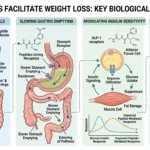
Cho confirmed in March 2026 that she uses GLP-1 medications. GLP-1 stands for glucagon-like peptide-1 receptor agonists. These drugs work in the brain to reduce hunger and control blood sugar. They also slow how fast food leaves your stomach.
Popular brands include Ozempic, Wegovy, Mounjaro, and Zepbound.
Cho was clear about why she started. It was not primarily about losing weight. She wanted to stop what she called “food noise.”
“I have a binge eating disorder. So, for me, it’s actually been quite a lifesaver.”
Margaret Cho, We’re Out of Time podcast, March 2026She described eating that was not driven by real hunger. Instead, she said it felt like “a kind of wild inner hunger that doesn’t make any sense.” She would eat until her mouth was sore. She called it a form of self-soothing and “a very destructive habit.”
The GLP-1 medication helped quiet that drive. “I love them. I’m really grateful for them,” she said.
What Is Binge Eating Disorder?
Binge eating disorder is a recognized medical condition. It is not simply overeating. It involves repeated episodes of eating large amounts of food in a short time.
People with binge eating disorder often feel a loss of control during these episodes. They may eat even when they are not hungry. They usually feel shame or guilt afterward. Unlike bulimia, binge eating disorder does not involve purging.
It is the most common eating disorder in the United States. It affects people of all body sizes.
Does Margaret Cho Use Ozempic?
Many people search specifically for “Margaret Cho Ozempic.” This is understandable. Ozempic is the most well-known GLP-1 drug right now.
However, Cho has never confirmed that she uses Ozempic specifically. She confirmed she uses a GLP-1 medication. She did not name the brand.
Ozempic is one option, but so are Wegovy, Mounjaro, and Zepbound. Any of these could be what she uses. We do not know which one.
Did Margaret Cho Have Weight Loss Surgery?
No. There is no credible evidence that Margaret Cho has ever had bariatric surgery or any other kind of weight loss surgery.
This search term comes up because people notice her physical change and look for explanations. But Cho herself has been very open about what she does and does not do for her health. She has never mentioned surgery.
Her visible weight loss is explained by three documented factors: sobriety, therapy, and GLP-1 medication for her eating disorder.
Margaret Cho’s Sobriety and Its Role in Her Health
One of the biggest changes in Cho’s life has been getting sober. She has been open that sobriety changed almost everything for her.
In December 2024, she told PEOPLE magazine she was 8.5 years sober. That puts the start of her sobriety around mid-2016.
“I thought the party would be over, but actually when you put all that stuff down, the party begins.”
Margaret Cho, PEOPLE magazine, December 2024She said people in her life alerted her to the problem. She said she had not fully recognized how serious it was on her own. She entered treatment and stayed for almost 19 months.
Sobriety meant no more alcohol calories. It also brought better sleep, reduced inflammation, and a more stable mood. All of these things can contribute to a healthier body over time.
Drugs Cho Has Used for Weight Loss: A Comparison
| Drug / Method | When | Effect | Status |
|---|---|---|---|
| Fen-Phen (fenfluramine + phentermine) | 1994 | Rapid weight loss; caused kidney failure and hair loss | BANNED 1997 |
| Fat-blocking pills / Olean-type drugs | Late 1990s / Early 2000s | Blocked fat absorption; caused uncontrollable bowel accidents | DISCONTINUED |
| GLP-1 medication (brand not named) | 2026 (current) | Reduces food noise; manages binge eating disorder | FDA APPROVED |
What Margaret Cho Regrets Most
Cho has spoken many times about regret. But not about the things you might expect.
She does not say she regrets being in Hollywood. She does not say she regrets her career.
What she regrets most is not being able to see her own beauty at the time.
“I have a lot of regret because I did not appreciate how beautiful I was. I just thought I was fat and ugly and I was so angry about the way I looked.”
Margaret Cho, The Guardian, 2021She looks back at the 25-year-old and 30-year-old version of herself with compassion now. She says the self-hatred was pushed onto her by the industry and by society. She believes if she had gotten past it sooner, she could have enjoyed her life more.
Now she says she is “so amazed to have been alive for as long as I have been.”
What the 1990s Were Like for Women in Hollywood
Cho’s story did not happen in a vacuum. The 1990s were a uniquely brutal time for women in the entertainment industry when it came to body image.
In a 2020 interview with Page Six, she said: “I was really caught up in the show business of the ’90s, where it became a very big issue for women in particular. I don’t know anyone that didn’t come out of that scarred.”
Thin was the only acceptable body type on TV. Focus groups and executives enforced it without question. Women were routinely pressured to lose weight in short periods of time. The health consequences were ignored.
What happened to Cho was not unusual for the time. It was just more extreme and more openly documented than most cases.
Frequently Asked Questions
The most documented weight loss was 30 pounds in two weeks in 1994. That was caused by Fen-Phen and extreme dieting for her TV show. In 2026, she has not shared specific numbers about her current weight loss. Fans notice she looks slimmer, but she has not released a figure.
She has discussed three types over the years. First, Fen-Phen in 1994, which caused kidney failure. Second, fat-blocking diet pills in the early 2000s, which caused bowel accidents. Third, a GLP-1 medication starting around 2026, which she takes for binge eating disorder. She named the first two types but did not name the specific GLP-1 brand she currently uses.
She has not confirmed using Ozempic specifically. She confirmed she uses a GLP-1 medication but did not name the brand. Ozempic is one of several GLP-1 drugs. Others include Wegovy, Mounjaro, and Zepbound. Any of these could be what she uses.
No. There is no credible evidence that she has had bariatric surgery or any weight loss surgery. She has been very open about her health choices over the years. She has never mentioned surgery. Her current weight loss is linked to sobriety, therapy, and GLP-1 medication for binge eating disorder.
She went into kidney failure in 1994 after losing 30 pounds in two weeks. This was caused by a combination of Fen-Phen (a now-banned diet drug), extreme exercise (four hours a day, six days a week), and severe caloric restriction. The rapid weight loss put massive stress on her kidneys. She was hospitalized in secret so the production team would not find out.
Yes. As of December 2024, she stated she was 8.5 years sober, putting her sobriety start around mid-2016. She uses therapy and a 12-step program. She has said sobriety “changed everything” for her and that she sees it as the foundation of her current health.
Binge eating disorder is a medical condition where a person repeatedly eats large amounts of food in a short time, even without feeling hungry. Cho says her eating is not driven by real hunger. She calls it “a wild inner hunger that doesn’t make any sense.” She eats to self-soothe. She says she would eat until her mouth was physically sore. GLP-1 medication has helped quiet this drive.
The show was called All-American Girl. It aired on ABC in 1994 and ran for one season. It was the first prime-time American sitcom with a majority Asian-American cast. The show was based on Cho’s own life and stand-up comedy. Despite playing a version of herself, she was told by executives she was “too fat to be you.”
They were more worried about her weight than her health. When she was suffering from kidney failure, their response was: “That’s fine, but just don’t get the weight back.” Cho later said it was “more terrifying that I was gonna have to stop dieting than it was that I was sick.” She gave the executives some grace, saying they were working from focus-group data and a very limited view of what made TV work.
As of 2026, she uses a GLP-1 medication to manage binge eating disorder. She is also sober, has been in therapy, and has done 12-step recovery work. She has not released a specific diet plan or workout routine. Her current approach is medically supervised and focused on mental health, not just weight.
