
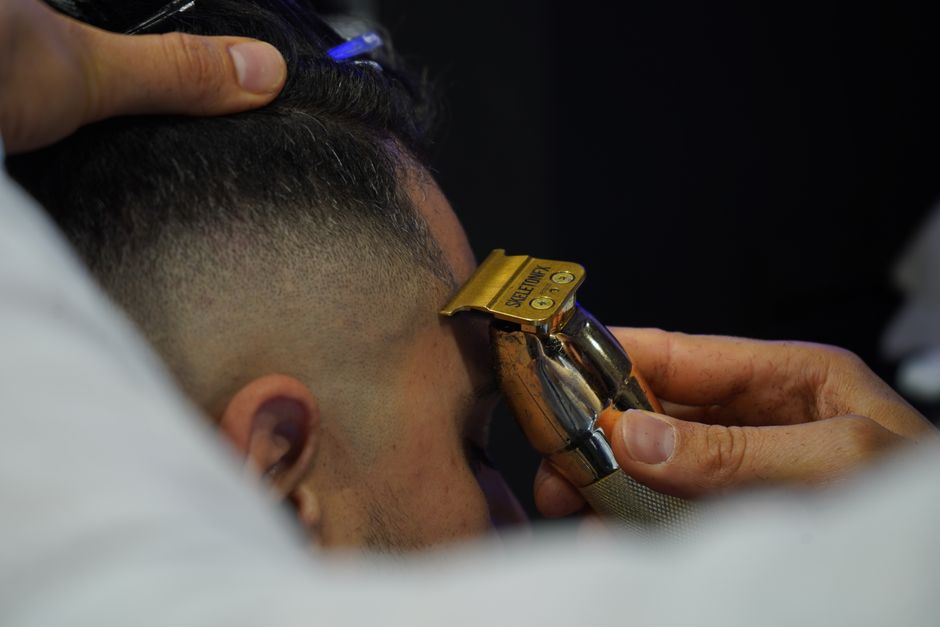
A receding hairline is the most common early sign of male pattern hair loss, a gradual shrinking of hair follicles along the front and temples that affects a large share of men by midlife. It is driven mostly by genetics and hormones, not by shampoo, hats, or stress alone. The key question is whether your change is the normal mature hairline that most adult men develop or the start of progressive loss that will continue.
Is Your Hairline Receding or Just Maturing?
Most men develop what doctors call a mature hairline, and it is not the same thing as balding. Somewhere in the late teens to thirties, the hairline often shifts back slightly and the temples hollow out a little. It then tends to stabilize.
A receding hairline from pattern hair loss behaves differently. It keeps moving. The corners of the hairline push back further over months and years, and the hair behind the front edge may start to look thinner. The distinction matters because a mature hairline needs nothing, while progressive loss is the one worth watching.
There is no lab test that separates the two on day one. Time is the honest diagnostic tool. Take a photo in the same light and angle every few months. If the line is stable, it is likely mature. If it is clearly moving back, that is the signal.
What Actually Causes a Receding Hairline?
Male pattern hair loss, also called androgenetic alopecia, is the cause in the large majority of cases. It comes down to two things working together: inherited sensitivity and the hormone dihydrotestosterone, or DHT.
Here is the mechanism. Testosterone is converted to DHT by an enzyme called 5-alpha reductase. In men with a genetic predisposition, hair follicles on the scalp are sensitive to DHT. Over time, DHT causes those follicles to shrink in a process called miniaturization. The hair grows back thinner, shorter, and lighter until the follicle eventually stops producing visible hair.
The pattern is not random. DHT-sensitive follicles cluster at the temples, the front hairline, and the crown. That is why loss usually starts there rather than at the back or sides of the head, which are far less sensitive to DHT.
This is why blaming shampoo, hats, or wearing your hair a certain way misses the point. Those things do not cause pattern loss. Genetics and hormones do.
How Do You Tell Normal Shedding From Real Thinning?
Shedding around 50 to 100 hairs a day is normal and expected. Finding hair in the shower or on your pillow is not proof of a problem.
Real thinning looks different from shedding. Watch for these signs:
- The temples move back and the front edge becomes an M shape.
- The part line or the front hair looks wider or thinner than it used to.
- Hair feels finer and softer at the front than at the back.
- You can see more scalp through the hair in bright light.
- The change is steady over months, not a sudden drop.
Sudden, patchy, or rapid hair loss is a different story. That pattern is less typical of androgenetic alopecia and can point to other causes, including thyroid problems, iron deficiency, or an autoimmune condition called alopecia areata. Those situations call for a doctor rather than a wait-and-see approach.





Does a Receding Hairline Happen to Women Too?
Yes, though the pattern usually differs. Women with androgenetic alopecia most often see diffuse thinning along the part line and over the top of the scalp, while the front hairline tends to stay intact. A receding front hairline in women is less common and worth having evaluated.
Hair loss in women has a broader set of possible causes than in men. Hormonal shifts, thyroid disorders, iron deficiency, and certain medications can all contribute. Because the causes vary, the workup differs, and self-treating with a men’s hair product is not appropriate.
What Can You Do About a Receding Hairline?
Two medications have the strongest evidence for treating androgenetic alopecia, and both require patience. Neither works overnight, and both need to be continued to keep their effect.
Minoxidil is a topical treatment applied to the scalp. It is available over the counter. It appears to lengthen the growth phase of the hair cycle and can slow loss and prompt some regrowth in some people. Results typically take several months to show, and hair that grew because of it is usually lost if you stop.
Finasteride is an oral prescription medication. It works by blocking the enzyme that converts testosterone to DHT, lowering DHT levels on the scalp. It is generally more effective at slowing loss than minoxidil, and some men see regrowth. It requires a prescription and a conversation with a doctor about benefits and side effects.
Other options exist, including low-level laser devices and hair transplant surgery, which moves DHT-resistant follicles from the back of the scalp to the front. Evidence for laser devices is weaker and results vary. Transplant surgery can produce lasting results but is costly and depends on having enough donor hair.
Be skeptical of shampoos, supplements, and serums marketed for hair regrowth. Most have no solid human trial evidence behind them. Some contain ingredients with early or limited data, but marketing claims routinely outrun the science.
Can You Prevent a Receding Hairline?
You cannot prevent genetic hair loss, and no product changes your inherited sensitivity to DHT. That is the honest position.
What you can do is catch it early and act on it if you choose to. Starting treatment while you still have hair tends to work better than starting after significant loss, because the medications work best on follicles that are still alive and producing hair. Once a follicle has fully miniaturized, medication is unlikely to bring it back.
General scalp and hair health still matters. Avoid harsh chemical treatments if your scalp is irritated, eat a balanced diet, and manage conditions like iron deficiency that can worsen shedding. These steps support healthy hair but do not stop pattern loss.
When Should You See a Doctor?
See a doctor if the loss is rapid, patchy, or accompanied by scalp itching, redness, or pain. Those features are not typical of ordinary pattern hair loss.
Also see a doctor if you are a woman with a receding hairline, or if you notice other symptoms like fatigue, weight changes, or unusual cold or heat sensitivity, which can point to a thyroid issue.
A doctor can examine the scalp, ask about your history, and in some cases order blood tests to rule out other causes. For men with a clear pattern and a family history, the diagnosis is often straightforward, and the conversation turns to treatment options.
Frequently Asked Questions
Is a receding hairline always permanent?
Pattern hair loss is progressive and does not reverse on its own, but treatments can slow it and sometimes regrow hair. A mature hairline that stabilizes is not the same as ongoing loss.
At what age does a receding hairline usually start?
It often begins in the twenties or thirties, though timing varies widely. Some men notice early changes and others never develop significant loss.
Does wearing a hat cause a receding hairline?
No. Hats do not cause pattern hair loss, which is driven by genetics and the hormone DHT. Hair shedding from a tight hat would be temporary friction, not permanent balding.
Can stress make a receding hairline worse?
Severe stress can trigger temporary shedding, but it does not cause androgenetic alopecia. The genetic and hormonal process behind a receding hairline is separate from stress-related hair loss.
