
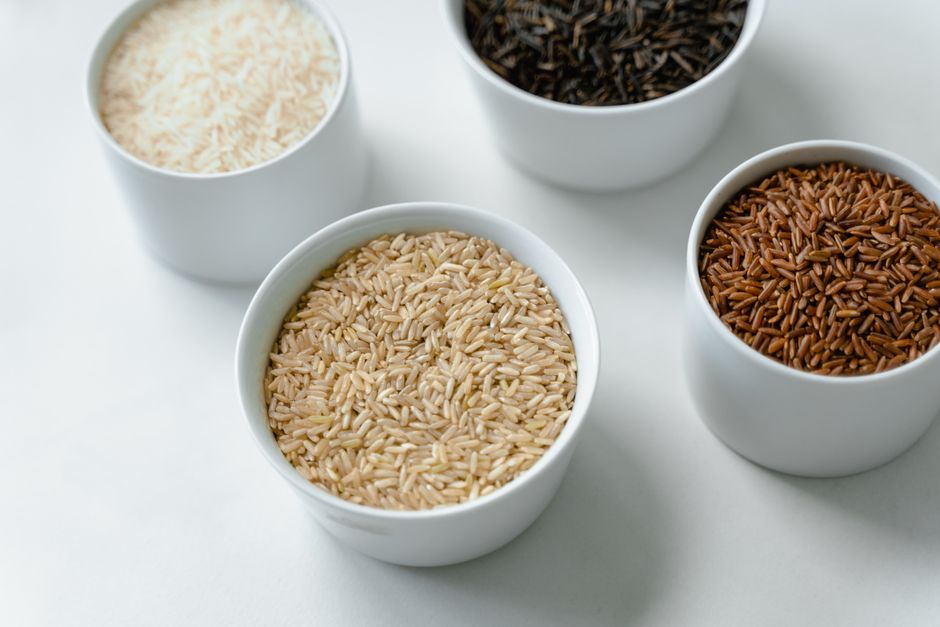
White rice has been a staple food for billions of people for thousands of years. Yet in recent decades, it has been blamed for weight gain, diabetes, and just about every modern health problem.
So is white rice actually unhealthy? The short answer is no — white rice is not inherently unhealthy. It is a source of carbohydrate that has been stripped of its fiber-rich bran and nutrient-dense germ during milling, which means it provides energy without much fiber, vitamins, or minerals. Whether it harms your health depends almost entirely on how much you eat, what you eat with it, and what the rest of your diet looks like.
What Happens to Rice During Milling?
White rice starts as brown rice. The difference between them is processing, not the plant itself.
A grain of rice has three main parts: the bran (outer layer), the germ (nutrient-rich core), and the endosperm (the starchy center). Brown rice keeps all three. White rice has had the bran and germ removed, leaving mostly the endosperm.
That removal matters. The bran and germ contain most of the grain’s fiber, B vitamins, vitamin E, magnesium, and other minerals. What remains is largely starch — a concentrated source of quick-digesting carbohydrate.
In the United States, most white rice is enriched. Manufacturers add back some B vitamins (thiamin, niacin, riboflavin, folic acid) and iron after milling. This restores part of what was lost, but not all of it. Fiber, for example, is not added back. Neither is magnesium or vitamin E.
So enriched white rice is not nutritionally empty. It is just less complete than the whole grain it came from.
How Does White Rice Compare to Brown Rice?
The nutritional gap between white and brown rice is real but often overstated.
According to USDA data, one cup of cooked white rice has roughly 200 calories, about 4 grams of protein, and less than 1 gram of fiber. The same amount of cooked brown rice has a similar calorie count but around 3 to 4 grams of fiber, plus more magnesium and other minerals.
| Nutrient (1 cup cooked) | White Rice | Brown Rice |
|---|---|---|
| Calories | ~200 | ~215 |
| Carbohydrate | ~45 g | ~45 g |
| Fiber | <1 g | ~3–4 g |
| Protein | ~4 g | ~5 g |
| Magnesium | Low (unless enriched) | Higher |
The fiber difference is the most meaningful one. Fiber slows digestion, feeds gut bacteria, and helps with blood sugar control and satiety. A cup of white rice contributes almost none of that. A cup of brown rice contributes a modest amount.
But here is a point that often gets lost: brown rice is not a fiber powerhouse either. It has more than white rice, but far less than beans, lentils, or vegetables. If fiber is your goal, swapping white rice for brown rice is a small improvement, not a dramatic one.
Does White Rice Cause Diabetes?
This is where the conversation gets more serious — and where the evidence is genuinely mixed.
White rice has a high glycemic index, meaning it raises blood sugar relatively quickly compared to many other carbohydrate foods. That is a well-established physiological fact. Because the bran and germ are removed, the starch is digested and absorbed faster than it would be from a whole grain.
Some large observational studies have found that people who eat more white rice tend to have a higher risk of type 2 diabetes. Other studies, particularly in populations where rice is a dietary staple, have found weaker or no associations. The evidence is not consistent across all research.
What does this mean for you? Observational studies show correlation, not causation. People who eat a lot of white rice may also eat fewer vegetables, get less exercise, or have other habits that affect diabetes risk. Researchers try to account for these factors, but they cannot fully separate them.
A more reasonable takeaway: white rice is not a direct cause of diabetes. But a diet built heavily on refined carbohydrates — white rice, white bread, sugary drinks — and low in fiber is a pattern linked to higher diabetes risk. White rice is one piece of that pattern, not the whole story.
For people who already have diabetes or prediabetes, portion size and pairing matter more. Eating white rice with protein, fat, and vegetables slows digestion and blunts the blood sugar spike. This is standard clinical guidance, not a fringe idea.





Is White Rice Bad for Weight Gain?
White rice is calorie-dense and easy to overeat. That combination can contribute to weight gain if portions are large and the rest of the diet is not balanced.
Cooked white rice has about 200 calories per cup. It is not particularly high in calories compared to many foods. But it is low in fiber and protein, two nutrients that help you feel full. Without them, you may eat more before your body signals that you have had enough.
This does not make white rice uniquely fattening. Any refined carbohydrate eaten in large amounts without balancing nutrients can have the same effect. The issue is the eating pattern, not the single food.
Some research suggests that people who eat more whole grains tend to have lower body weight over time. But again, this is observational. It does not prove that switching from white to brown rice will cause weight loss.
If weight is a concern, the practical questions are: How much rice are you eating? What are you eating it with? And what else is on your plate?
Who Might Need to Be Careful With White Rice?
White rice is safe for most people. But a few groups may want to pay closer attention.
- People with diabetes or prediabetes: Large portions of white rice can spike blood sugar. Pairing it with protein, fat, and fiber helps. Some clinicians recommend choosing whole grains more often, but individual responses vary.
- People watching their weight: White rice is easy to overeat because it is low in fiber and protein. Portion awareness matters.
- People with low fiber intake: If white rice replaces whole grains, beans, or vegetables in your diet, you may fall short on fiber. Most adults need roughly 25 to 30 grams of fiber per day, and many get far less.
- People with certain medical conditions: In some cases, a doctor may recommend a low-fiber diet. White rice is often included in those diets because it is easy to digest.
For most healthy adults, white rice is not something to fear. It is something to eat in appropriate portions alongside a varied diet.
Does It Matter What You Eat With White Rice?
Yes — and this may be the most important point in this article.
White rice is rarely eaten alone. In most cultures, it is a base for meals that include vegetables, protein, and fat. Those additions change how the rice affects your body.
Protein and fat slow stomach emptying. Fiber does the same. When you eat white rice with beans, chicken, fish, eggs, or vegetables, the blood sugar response is slower and more gradual than if you ate the rice by itself.
This is why traditional rice-based diets are not automatically unhealthy. A Japanese meal with rice, fish, vegetables, and miso soup is very different from a plate of plain white rice. The rice is the same. The context is not.
If you are going to eat white rice — and there is no reason you cannot — build a meal around it rather than making it the whole meal.
Is White Rice Unhealthy for You Overall?
No. White rice is not unhealthy on its own. It is a refined carbohydrate that provides energy with limited fiber and micronutrients, but it is not toxic, and it is not a direct cause of disease.
The problem is not white rice. The problem is a diet where refined carbohydrates dominate and fiber-rich foods are scarce. If most of your meals are built on white rice, white bread, and sugary foods, your overall eating pattern is likely working against your health. If white rice is one part of a varied diet that includes vegetables, protein, and other whole grains, it is not a concern.
The evidence on white rice and chronic disease is mixed. Some studies suggest higher intake is linked to higher diabetes risk. Others do not. No large trial has shown that eating white rice causes diabetes or that cutting it out prevents it.
What is clear: fiber matters, portion size matters, and what you eat alongside rice matters. Those are the levers worth paying attention to.
Frequently Asked Questions
Is white rice worse than brown rice?
White rice has less fiber, magnesium, and other nutrients than brown rice because the bran and germ are removed during milling. It is not worse in a harmful sense, but brown rice does offer more nutritional value per serving.
Can I eat white rice every day?
Yes, you can eat white rice daily as part of a balanced diet. The key is portion size and what you eat with it — pairing it with protein, vegetables, and healthy fats helps slow digestion and makes the meal more filling.
Does white rice raise blood sugar?
Yes, white rice raises blood sugar relatively quickly because it is a high-glycemic carbohydrate with little fiber to slow absorption. Eating it with protein, fat, and vegetables can reduce the speed of that rise.
Is white rice bad for weight loss?
White rice is not bad for weight loss on its own, but it is easy to overeat because it is low in fiber and protein. Watching portions and pairing it with filling foods can help.
