
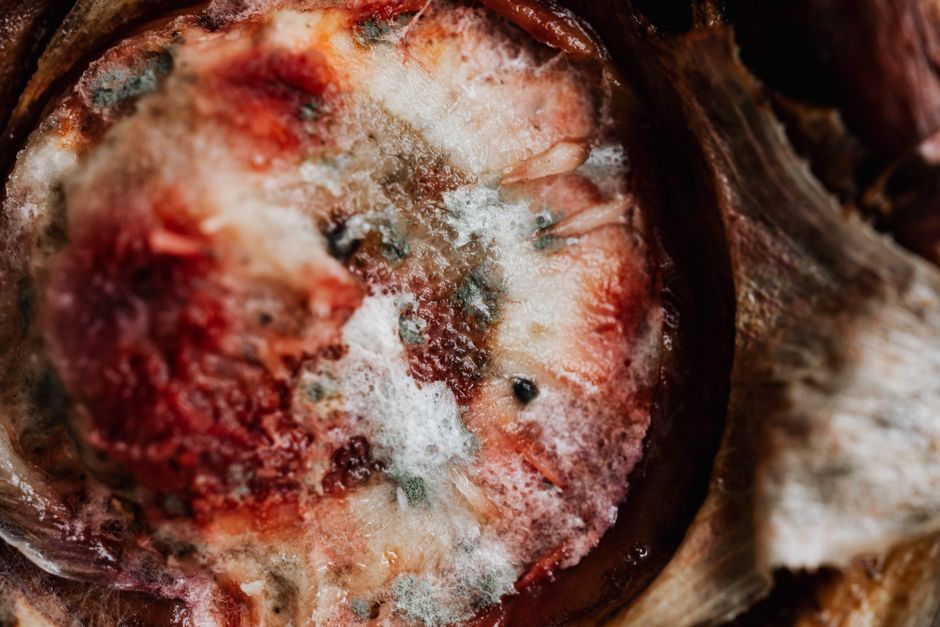
White mold is the fuzzy, pale growth you sometimes find on bread, cheese, fruit, or a damp wall. In most everyday cases, the white mold you find on food is not the dangerous kind — but that does not mean it is safe to eat around. Some white molds are harmless, some produce toxins, and a few can cause real infections in people with weakened immune systems.
The short answer: white mold on food should be treated as a possible health risk, not as a harmless surface you can scrape off. White mold growing in a building is a different problem — it does not usually infect healthy people, but it can worsen allergies and asthma. The color alone tells you very little. What matters is the type of mold, where it is growing, and who is exposed.
Is White Mold Harmful?
Yes, white mold can be harmful, but the risk depends entirely on the species and the situation. The white color is not a reliable warning sign, and it is not a reliable sign of safety either.
Mold is a fungus. It grows as a network of fine threads called hyphae, and the fuzzy white you see is often just the surface growth. Many different species can appear white, including some Aspergillus, Penicillium, and Mucor species. Some of these are used deliberately in food production. Others produce mycotoxins — toxic compounds that can make people sick.
This is the key point that gets lost in most online advice: you cannot identify a mold by its color. Two white growths that look identical can be completely different organisms with completely different risks. That is why food safety guidance does not ask you to identify the mold. It asks you to throw the food away.
There is also a separate issue. Some molds can cause infection, not just poisoning. These infections are rare in healthy people, but they are a genuine concern for people with weakened immune systems.
What Kind of White Mold Grows on Food?
The white mold on food is usually one of several common spoilage molds. The most frequent are species of Penicillium, Aspergillus, Botrytis, and Cladosporium. Some are harmless on their own. Others are known to produce mycotoxins under the right conditions.
There is a confusing detail here worth clearing up. The white rind on Brie and Camembert is a Penicillium mold that is intentionally added and safe to eat. The white bloom on some cured meats and aged cheeses is also deliberate. So white mold is not automatically a problem.
The problem is that the same family of molds includes species that are not safe. Penicillium includes both the cheese-making species and species that produce a toxin called patulin or ochratoxin A. You cannot tell which one you are looking at.
When mold grows on soft food, its threads can extend well below the visible surface. The fuzzy part is only the tip of the growth. This is why cutting off the moldy part does not reliably remove the mold or any toxins it has produced.
Can You Just Cut Off the Moldy Part?
For soft foods, no. The mold’s root network and any toxins it has released can spread through the food beyond what you can see.
Food safety guidance generally draws a line between soft and hard foods, and the difference matters:
- Soft foods — bread, soft cheese, yogurt, jam, cooked leftovers, soft fruit — should be thrown away. Mold spreads easily through them.
- Hard, dense foods — hard cheese, firm vegetables like carrots and bell peppers — can sometimes be salvaged by cutting off a generous margin around and below the mold. The remaining food should be checked carefully.
Even with hard foods, the margin needs to be large. A thin slice is not enough. If you are unsure, throwing it out is the safer choice.
One more point: mycotoxins are not destroyed by normal cooking or reheating. If a food has already produced toxins, cooking it does not make it safe. This is different from the mold organisms themselves, many of which are killed by heat. Killing the mold does not remove what it already made.
Is White Mold in a House Dangerous?
Indoor mold is a health concern, but the concern is mostly about allergies and irritation, not infection. This is an area where the evidence is often overstated in both directions.
What is well established: mold spores and mold fragments in the air can trigger allergic reactions and asthma symptoms in sensitive people. Research has consistently linked damp, moldy indoor environments to respiratory symptoms, wheezing, and asthma flare-ups. The World Health Organization and other public health bodies recognize dampness and mold as a risk factor for respiratory problems.
What is not well established: the idea that ordinary indoor mold causes serious disease in healthy people. For most healthy adults, exposure to household mold is unpleasant and allergenic rather than dangerous. The people at higher risk are those with asthma, mold allergies, or weakened immune systems.
White mold on a wall, ceiling, or windowsill is usually a sign of a moisture problem. Mold needs water to grow, so the growth itself is a symptom. Fixing the moisture source is the real solution. Cleaning the visible mold without addressing the dampness means it will return.
Some white or pale growth on wood, drywall, or insulation can also be something other than mold — efflorescence, a mineral deposit left by water evaporation, looks similar. A musty smell and a damp surface point more toward mold.
Who Is Most at Risk From Mold?
Most healthy people handle everyday mold exposure without serious problems. The risk rises sharply for certain groups.
People with weakened immune systems face the greatest concern. This includes people undergoing chemotherapy, organ transplant recipients, and people with advanced HIV. In these groups, molds that are harmless to others can cause invasive infections. Aspergillus is a well-documented cause of serious lung and systemic infection in immunocompromised patients. This is a medical issue, not a household-cleaning issue, and it requires clinical care.
People with asthma or mold allergies are also more vulnerable. For them, mold exposure can trigger symptoms that range from annoying to serious.
Infants, young children, and older adults may be more sensitive to indoor air quality in general, though the evidence for mold specifically is less clear-cut than for the groups above.
How Do You Handle White Mold Safely?
On food, the safe move is simple: when in doubt, throw it out. This is the guidance from food safety authorities, and it avoids the impossible task of identifying mold by sight.
For small areas of household mold, careful cleaning can reduce exposure. The goal is to avoid stirring up spores into the air you breathe.
- Fix the moisture source first — leaks, condensation, or high humidity.
- Wear a mask and gloves if you are sensitive to mold or asthma-prone.
- Ventilate the area while cleaning.
- Dry the area completely afterward.
- For large areas of growth, or mold inside walls or HVAC systems, professional help is often the better choice.
For people with asthma or mold allergy, reducing indoor dampness is one of the more reliable steps to limit symptoms. The evidence for that is stronger than for most mold “remedies” sold online.
What About Mold-Cleaning Products and Sprays?
Many products claim to eliminate mold or protect health. The evidence for most of these specific claims is limited.
What works is removing the mold and controlling moisture. Cleaning products can help with the visible growth, but no spray fixes an ongoing water problem. Foggers and “mold bombs” are widely sold, and some clinicians and remediation professionals consider them of limited value for the underlying issue.
Be cautious with products marketed as detoxifying or as treatments for mold-related illness. No clinical evidence currently confirms that these products treat a recognized mold disease. If you feel unwell and suspect mold is involved, that is a conversation for a doctor, not a supplement label.
When Should You See a Doctor?
Most mold exposure does not require medical care. See a doctor if you have ongoing respiratory symptoms, worsening asthma, or symptoms you cannot explain that started or worsened around a damp environment.
Seek care promptly if you have a weakened immune system and develop fever, cough, chest pain, or shortness of breath. In immunocompromised people, mold infections can progress, and early evaluation matters.
Allergic reactions that are severe — swelling, difficulty breathing, or a widespread reaction — need urgent attention.
Frequently Asked Questions
Is white mold on food always dangerous?
Not always, but you cannot tell by looking, so food safety guidance treats it as a risk. Soft foods with any mold should be thrown away.
Can you eat food after cutting off white mold?
For hard, dense foods you can sometimes cut off a generous margin around the mold. For soft foods, no — the mold and any toxins can spread beyond what you see.
Does cooking kill mold and make food safe?
Heat kills many mold organisms, but it does not destroy mycotoxins that have already formed. Cooking moldy food does not make it safe.
Is white mold in a house harmful to healthy people?
For most healthy adults it is mainly an allergen and irritant rather than an infection risk. People with asthma, mold allergies, or weakened immune systems are at higher risk.
