
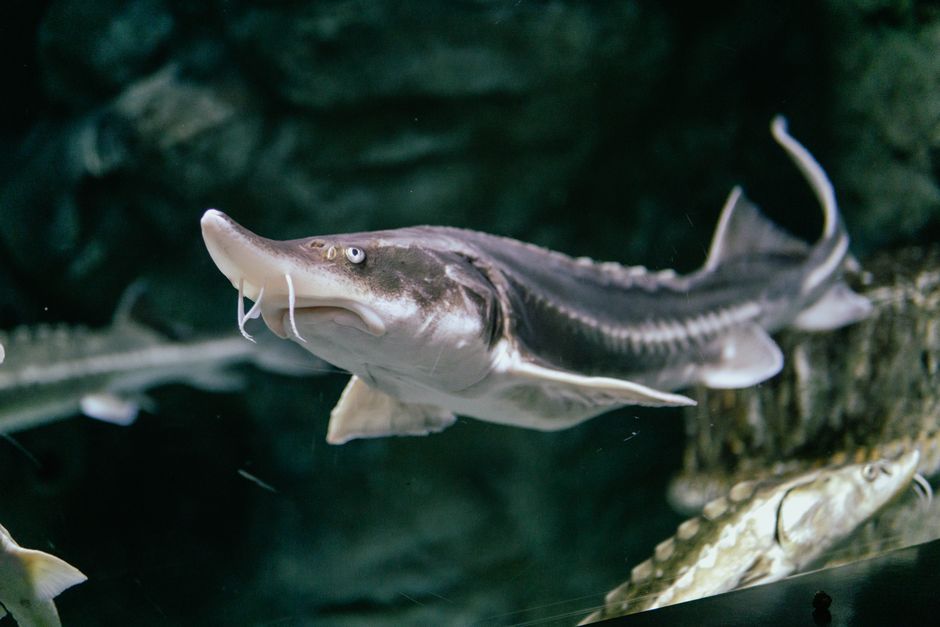
Walleye are not bottom feeders in the way catfish or carp are. They are mid-level predators that hunt by sight in dim light, feeding mostly on smaller fish, insects, and crustaceans. They will take food near the bottom when it suits them, but the lake floor is not their primary dining room.
Is Walleye a Bottom Feeder? Explaining Their Diet
No. A bottom feeder is an animal built to graze or scavenge along the floor of a lake or river. Catfish, carp, and suckers fit that description. Walleye do not.
Walleye are open-water and near-structure predators. Their diet is dominated by other fish, along with aquatic insects and crayfish. They are opportunistic, which means they eat what is available and catchable. That flexibility is probably where the bottom-feeder label comes from. A fish that sometimes eats off the bottom is not the same as a fish that lives off the bottom.
The distinction matters if you are thinking about what you are eating. It also matters if you are trying to catch one.
What Do Walleye Actually Eat?
Walleye diets shift with age, season, and whatever prey is abundant in a given body of water. The pattern is consistent across most populations: fish first, with invertebrates filling in.
Young walleye start on zooplankton and aquatic insect larvae. As they grow, they move to larger prey. Adult walleye eat mostly:
- Yellow perch, shiners, minnows, and other small forage fish
- Young-of-year fish from many species, including their own
- Aquatic insects such as mayflies and caddisflies
- Crayfish and other bottom-dwelling crustaceans
- Occasional frogs or other small vertebrates in some waters
Yellow perch show up in walleye stomachs so often in some lakes that the two species are closely linked. Where perch are scarce, walleye shift to whatever small fish is common. Cisco, smelt, and alewife appear in diets in lakes where those species live.
Invertebrates matter more than people expect. Crayfish are a real food source, especially for younger walleye and in waters where small fish are hard to catch. That is a bottom-dwelling food. It does not make the fish a bottom feeder.
Why Walleye Are Built to Hunt, Not Graze
Walleye anatomy points to a predator that chases prey in low light. Their eyes have a reflective layer behind the retina called the tapetum lucidum. It bounces light back through the retina and improves vision in dim conditions. That is why walleye feed heavily at dawn, dusk, and after dark, and why they can hunt in murky or deep water where other predators struggle.
Their body shape supports short bursts of speed. They have a large mouth with sharp teeth for gripping slippery prey. None of that is scavenging equipment. Catfish have sensory barbels for finding food in mud and low visibility. Walleye do not.
This is the non-obvious part. Walleye are sometimes caught on bottom-fishing rigs, and that gets read as proof they are bottom feeders. What is actually happening is that walleye will follow prey or structure down to the bottom. They are there to hunt, not to sift through sediment.





Do Walleye Ever Feed Near the Bottom?
Yes, and this is what creates the confusion. Walleye use the whole water column depending on light, temperature, and where the food is.
On bright days they often move deeper and hold near structure such as rock piles, sunken timber, or drop-offs. In low light they push shallower. In some lakes they suspend in open water chasing schools of baitfish. In others they hug the bottom around reefs and points.
When walleye are near the bottom, they are usually oriented to structure and ambushing prey. Crayfish and insect larvae are part of that picture. But a fish that sometimes feeds at the bottom is not classified as a bottom feeder. The term describes a feeding strategy, not a location.
Water temperature also moves them. Walleye tend to prefer cooler, well-oxygenated water and will adjust depth as temperatures change through the season.
How Walleye Compare to True Bottom Feeders
The difference is clearest side by side. These are general feeding patterns, and individual fish vary.
| Species | Typical feeding style | Main foods | Bottom-dependent? |
|---|---|---|---|
| Walleye | Mid-water and near-structure predator | Small fish, insects, crayfish | No |
| Channel catfish | Bottom-oriented omnivore and scavenger | Fish, insects, mollusks, detritus | Largely yes |
| Common carp | Bottom grazer | Plants, invertebrates, organic matter from sediment | Yes |
| White sucker | Bottom feeder | Aquatic insects, algae, organic debris | Yes |
Walleye sit in a different category. They are a top or mid-level predator in many freshwater food webs. Their role is to control populations of smaller fish, not to process what settles on the lake floor.
Does Diet Affect the Safety of Eating Walleye?
Diet influences what accumulates in a fish, but the bigger factor for most people is the water the fish came from. Mercury builds up in fish tissue over time, and it concentrates more in larger, older predatory fish. Walleye eat other fish, so they can carry more mercury than plant-eating or bottom-grazing species in the same water.
This is not a reason to avoid walleye. It is a reason to follow local guidance. State and tribal health agencies publish fish consumption advisories by species, water body, and sometimes by fish size. Those advisories exist because mercury levels vary widely from one lake to another. A walleye from one lake may be fine to eat regularly, while the same species from another may carry a limit.
If you eat fish you catch, check the advisory for your specific water. That is more useful than any general rule about bottom feeders versus predators.
For people who are pregnant, may become pregnant, or are feeding young children, fish consumption guidance is specific and worth following closely. The benefits of eating fish are real, and so are the concerns about mercury. Official guidance is built to balance both.
What This Means If You Are Trying to Catch Walleye
Understanding that walleye are predators, not bottom feeders, changes how you fish for them. It does not guarantee results, but it points you in the right direction.
Walleye respond to light level and prey movement. Low-light periods around dawn and dusk are widely considered productive. So are overcast days and night fishing in some waters. Anglers often target structure: points, reefs, weed edges, and drop-offs where baitfish gather.
Presenting a lure or bait that looks like a small fish matches what walleye are built to chase. Bottom rigs can work too, because walleye do feed near the bottom at times. But the fish is not there because it is a scavenger. It is there because that is where the food and cover are.
Local knowledge beats general rules. Walleye behavior varies a lot between a shallow prairie lake and a deep, clear reservoir. Anglers who fish one body of water regularly tend to know its patterns better than any general description can capture.
Frequently Asked Questions
Are walleye bottom feeders like catfish?
No. Walleye are mid-level predators that mainly eat small fish, insects, and crayfish, while catfish are built to feed along the bottom. Walleye will feed near the bottom at times, but that is not their primary feeding strategy.
What is the main food of walleye?
Small fish make up most of the adult walleye diet in most waters, especially yellow perch, shiners, and minnows. Insects and crayfish fill in the rest, and young walleye rely more heavily on invertebrates.
Why do people think walleye are bottom feeders?
Because walleye are often caught on bottom-fishing rigs and are sometimes found near the lake floor. In reality, they move through the water column and go deep to follow prey or structure, not to scavenge.
Is walleye safe to eat?
Walleye can be a healthy food, but mercury levels vary by water body and fish size, so check your local fish consumption advisory. Guidance is especially important for people who are pregnant or feeding young children.
