
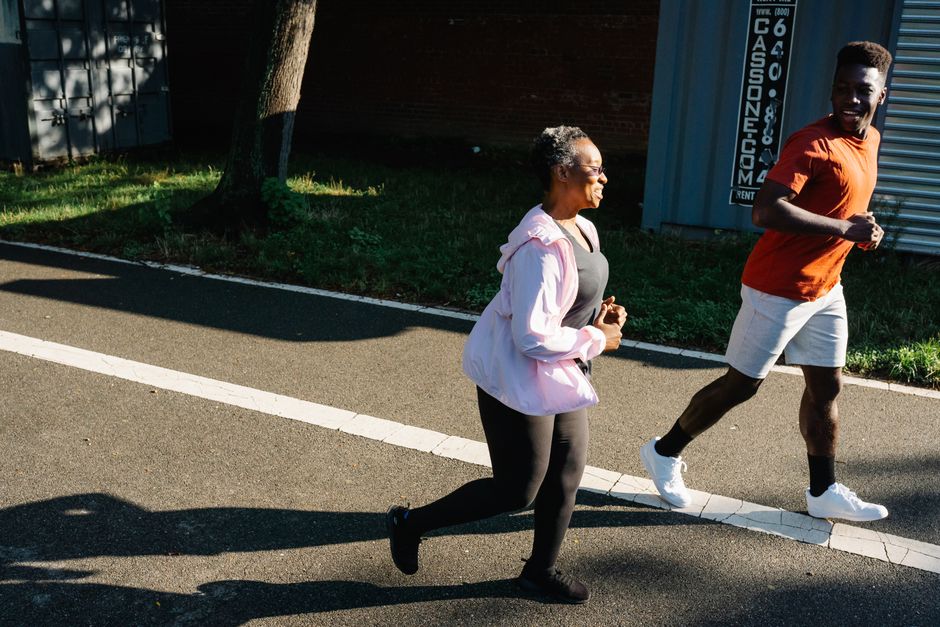
Walking is not as good as running for weight loss when you compare the same amount of time, but it can be just as effective when you compare the same distance. The key difference is simple: running burns more calories per minute. However, walking is easier on your joints, safer for most people, and much easier to stick with long-term. For sustainable weight loss, the best exercise is the one you will actually do consistently, and for many people that is walking.
How Many Calories Does Walking Actually Burn Compared to Running?
The math is straightforward but often misunderstood. A 155-pound person burns roughly 300 calories running at 5 miles per hour for 30 minutes. The same person walking at 3.5 miles per hour for 30 minutes burns about 150 calories. Running burns about twice the calories per minute.
But here is what most articles leave out. When you compare by distance instead of time, the numbers get much closer. Walking one mile burns roughly the same calories as running one mile. The difference is that running covers that mile in half the time. Research published in the Journal of Sports Sciences found that energy expenditure per mile is nearly identical between walking and running once you adjust for body weight.
This matters because most people think about exercise in terms of time. A 30-minute run will burn more calories than a 30-minute walk. But if you have the time to walk for 60 minutes, you can match or exceed the calorie burn of a 30-minute run. The CDC reports that a 154-pound person walking at a moderate pace for one hour burns about 280 calories. The same person running for 30 minutes burns about 295 calories. The difference is negligible.
Does Walking Help You Lose Belly Fat as Well as Running?
This is where things get interesting. Spot reduction — losing fat from one specific area of your body — is not real. The American Council on Exercise states clearly that you cannot target belly fat with any specific exercise. Walking and running both reduce overall body fat, and your belly will shrink as your total body fat percentage drops.
Some studies suggest that moderate-intensity exercise like walking may be slightly better for mobilizing fat from abdominal stores. Research in Medicine & Science in Sports & Exercise found that walking at a moderate pace for 45-60 minutes daily reduced visceral fat more effectively than running at a high intensity for shorter periods. The reason appears to be that walking relies more on fat for fuel at lower intensities.
But do not overinterpret this. The total calorie deficit is what drives fat loss. If running creates a larger deficit in less time, it will reduce belly fat faster. Walking just needs more time to get the same result. The advantage of walking is that you can do it every day without your body breaking down.
Is Walking as Good as Running for Weight Loss When You Factor in Injury Risk?
This is the part most fitness content ignores. Running has a yearly injury rate of 20 to 80 percent depending on the population studied. A review in the British Journal of Sports Medicine found that novice runners have injury rates above 50 percent in their first year. Walking has an injury rate near zero for most people.
When you get injured from running, you stop exercising entirely. A pulled hamstring, runner’s knee, or stress fracture can sideline you for weeks or months. During that time, you are not burning any extra calories. You may also lose muscle mass, which lowers your resting metabolism.
Walking does not have this problem. You can walk daily for decades without significant injury risk. The Journal of Orthopaedic & Sports Physical Therapy reports that walking has a negligible injury rate even in older adults and people who are overweight. This makes walking the more sustainable choice for long-term weight management.
Consider this: a person who walks 45 minutes daily for two years without missing a single day will burn more total calories than a runner who trains for six months, gets injured, takes three months off, and then repeats the cycle. Consistency beats intensity every time.





What Does the Research Say About Walking and Weight Maintenance?
The National Weight Control Registry tracks people who have lost significant weight and kept it off for at least one year. Their data shows that 94 percent of successful weight maintainers increased their physical activity. Walking is the most common activity reported by registry members.
This is not a coincidence. Walking is the easiest form of exercise to integrate into daily life. You can walk to the store, walk during your lunch break, walk while on the phone, or walk after dinner. Running requires changing clothes, warming up, cooling down, and showering afterward. Walking requires shoes and a door.
Research published in Obesity followed 4,500 adults for 15 years and found that those who walked regularly had significantly lower weight gain over time compared to sedentary adults. The study controlled for diet and other exercise. Walking alone was enough to prevent the typical 1-2 pound annual weight gain that most American adults experience.
For weight loss specifically, a 2014 meta-analysis in the Journal of Exercise Nutrition & Biochemistry reviewed 15 studies on walking and weight loss. The average weight loss across all studies was about 1.5 pounds per month with walking alone. That is not dramatic, but it is real and sustainable. When combined with dietary changes, the results were significantly better.
How Should You Walk to Maximize Weight Loss?
Not all walking is equal. A slow stroll around the block burns very few calories. To get meaningful weight loss results, you need to walk at a pace that elevates your heart rate. The CDC defines moderate-intensity walking as 2.5 to 4 miles per hour. At this pace, you should be breathing harder but still able to hold a conversation.
Here are the evidence-based strategies that actually work:
- Walk for at least 30 minutes per session, ideally 45-60 minutes
- Maintain a pace of at least 3 miles per hour
- Walk on most days of the week, aiming for 5-7 days
- Add incline walking on a treadmill or find hilly outdoor routes
- Use intervals: walk fast for 3 minutes, then moderate for 2 minutes
- Carry hand weights or wear a weighted vest to increase calorie burn
The American College of Sports Medicine recommends 150-250 minutes of moderate-intensity exercise per week for weight loss. That is 30-50 minutes per day, five days per week. Walking at a brisk pace for this amount of time will produce measurable weight loss results for most people.
One study in The Journal of Nutrition compared two groups of women over 12 weeks. One group walked at a moderate pace for 50 minutes daily. The other group did high-intensity interval training for 25 minutes. Both groups lost similar amounts of weight and body fat. The walking group reported higher satisfaction and lower dropout rates.
Can You Lose Weight by Walking Without Changing Your Diet?
Technically yes, but practically no for most people. Walking one mile burns about 100 calories for a 155-pound person. To lose one pound of fat, you need a deficit of about 3,500 calories. That means walking 35 miles to lose one pound. If you walk five miles per day, that is one pound per week from walking alone.
The problem is that many people unconsciously eat more when they increase their exercise. A study in Appetite found that people who started a walking program increased their calorie intake by an average of 120 calories per day without realizing it. That small increase can erase the calorie deficit from a 30-minute walk.
This is why walking for weight loss works best when combined with basic dietary awareness. You do not need to count every calorie. But paying attention to portion sizes, reducing added sugar, and eating more vegetables will dramatically improve your results. The Harvard School of Public Health notes that diet has a larger effect on weight loss than exercise, but exercise is critical for weight maintenance.
For context, a 30-minute walk burns roughly the same calories as one can of soda or two cookies. If you walk but do not adjust what you eat, you may maintain your weight rather than lose it. That is still a win — maintaining weight is better than gaining — but it is not the same as losing.
What About Walking vs. Running for Appetite Control?
This is a less discussed but important factor. Running at high intensity can suppress appetite temporarily due to changes in hunger hormones like ghrelin. A study in the American Journal of Physiology found that intense exercise reduces ghrelin levels for several hours after exercise. Walking does not have this same appetite-suppressing effect.
However, the effect is short-lived. Within a few hours, appetite returns to normal after running. Some people also experience a “rebound hunger” later in the day and overcompensate. Walking does not suppress appetite, but it also does not trigger the same rebound effect in most people.
Some research suggests that moderate exercise like walking may improve insulin sensitivity and blood sugar regulation, which can help stabilize appetite over the long term. The Diabetes Care journal published a study showing that daily walking significantly improved how the body processes glucose. Stable blood sugar means fewer energy crashes and fewer cravings for sugary foods.
For most people, the appetite effects of walking are neutral. You will not feel less hungry after walking, but you will not feel ravenous either. This makes it easier to maintain your normal eating patterns without feeling like you are starving yourself after a workout.
| Factor | Walking (30 min) | Running (30 min) |
|---|---|---|
| Calories burned (155 lb person) | ~150 | ~300 |
| Injury risk | Very low | 20-80% per year |
| Joint impact | Low | High |
| Time needed for same calorie burn | 60 min | 30 min |
| Consistency over 1 year | High | Moderate |
| Appetite suppression | Minimal | Temporary |
| Equipment needed | Comfortable shoes | Supportive running shoes |
| Fat burning during exercise | Higher percentage | Higher total amount |
Common Misconceptions About Walking and Weight Loss
The biggest misconception is that walking is a waste of time for weight loss because it burns fewer calories than running. This ignores the fact that most people cannot run every day. Walking can be done daily without rest days, which means your weekly calorie burn can be higher with walking than with running.
Another misconception is that you need to walk 10,000 steps per day for health benefits. That number originated from a Japanese marketing campaign in the 1960s, not from science. A 2019 study in JAMA Internal Medicine followed nearly 17,000 older women and found that walking 4,400 steps per day was associated with significantly lower mortality rates compared to 2,700 steps. Benefits leveled off around 7,500 steps. The 10,000-step goal is arbitrary.
Some people also believe that walking does not build muscle. Walking does build muscle in your legs, glutes, and core — just not as much as running or resistance training. Walking on inclines or wearing a weighted vest increases the muscle-building effect. Stronger muscles increase your resting metabolic rate, which helps with weight loss.
The final misconception is that you must walk outdoors for it to count. Treadmill walking is equally effective. A study in the Journal of Sports Medicine and Physical Fitness found no significant difference in calorie burn between treadmill walking and outdoor walking at the same speed and incline. The best walking surface is the one you will actually use.
Frequently Asked Questions
Can you lose weight by walking 30 minutes a day?
Yes, but the amount depends on your pace and diet. A 30-minute brisk walk burns about 150 calories, which can lead to about 1 pound of weight loss per month if you do not increase your food intake.
Is walking better than running for joint health?
Yes, walking puts much less stress on your knees, hips, and ankles. Running generates impact forces of 2-3 times your body weight, while walking is about 1.2 times.
How fast should I walk to lose weight?
Walk at a brisk pace of 3 to 4 miles per hour. You should be breathing harder than usual but still able to talk in full sentences. This is moderate-intensity exercise.
Can walking reduce belly fat specifically?
No, you cannot target belly fat with walking or any exercise. Walking reduces overall body fat, and your belly will shrink as your total body fat percentage decreases.
