
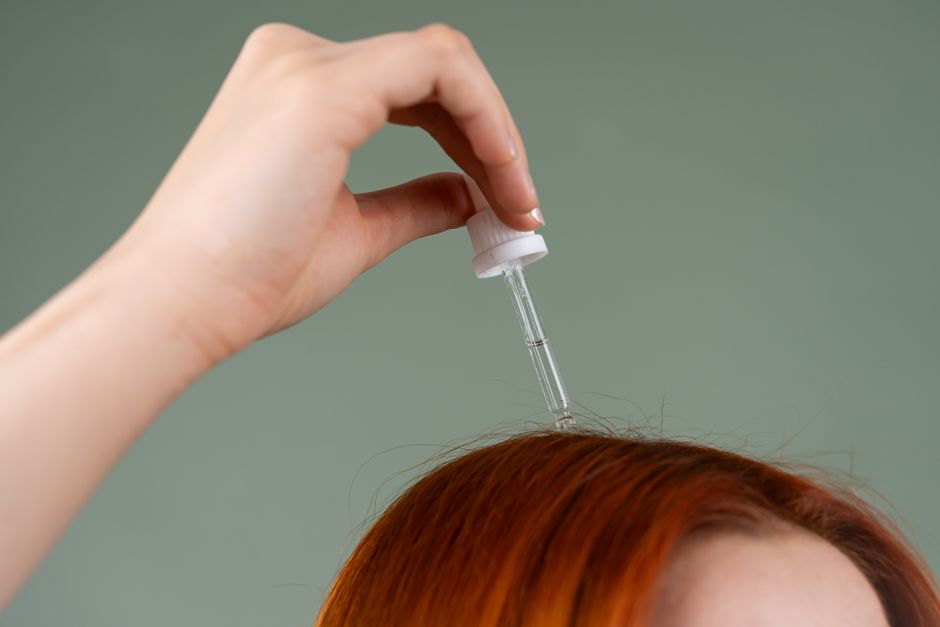
Your hair goes through a lot in a week. Most people wash it, condition it, and then add something else — a serum, a styling cream, a heat protectant, a finishing spray. None of that is automatically a problem. Using hair products every day is not bad for your hair by itself. What matters is which products you use, what is in them, and how your scalp and hair respond over time.
The real risks come from a small number of ingredients and habits: harsh cleansers that strip the scalp, heavy buildup that blocks the follicle, repeated heat without protection, and tight styles that pull on the root. Get those right and daily product use is generally fine. Get them wrong and damage can build up quietly over months.
Is Using Hair Products Everyday Bad For Your Hair?
No. Daily use of well-formulated hair products is not inherently damaging. Dermatologists routinely recommend daily or near-daily washing and conditioning for many people, and leave-in products are standard care for dry, curly, or chemically treated hair.
The problem is rarely frequency. It is formulation and application. A gentle shampoo used daily is usually kinder to the scalp than a harsh one used twice a week, because the scalp itself benefits from regular cleansing. Sebum, dead skin cells, sweat, and product residue accumulate on the scalp. Left too long, that buildup can irritate the skin and, in some people, contribute to flaking or follicular inflammation.
Where daily use does cause trouble is with products that are hard to remove, contain high concentrations of drying alcohols, or are applied in ways that trap residue at the root. That is a product and technique issue, not a frequency issue.
What Do Common Hair Products Actually Do to Hair and Scalp?
Different products act on different parts of the hair and scalp, and their risks differ accordingly. Understanding what each one does helps you judge whether your routine is working for you or against you.
- Shampoo lifts oil and residue from the scalp using surfactants. Strong sulfate-based formulas clean thoroughly but can strip natural oils, especially on dry or color-treated hair. Gentler surfactant blends clean adequately for most people.
- Conditioner smooths the hair cuticle and reduces friction. Applied to the scalp in large amounts, it can contribute to buildup. Most of it belongs on the mid-lengths and ends.
- Leave-in treatments and serums add moisture and slip. Silicones coat the hair shaft, which reduces frizz and breakage from friction. They do not “suffocate” hair — that is a myth — but they do accumulate if you never clarify.
- Heat protectants reduce thermal damage from styling tools. Their protection is partial, not absolute.
- Hairspray and styling gels hold shape through polymers and resins. These are the products most likely to leave residue at the root if not washed out.
One clarification worth making: hair is not living tissue once it exits the follicle. The visible strand is keratinized protein with no blood supply and no ability to repair itself. Products can coat it, smooth it, and reduce friction damage, but they cannot heal a damaged strand. That is why prevention — gentle handling, heat limits, and avoiding harsh chemical processing — matters more than any repair product.
Which Ingredients Are Worth Avoiding or Limiting?
A short list of ingredients accounts for most of the genuine concerns with daily product use. The evidence varies by ingredient, so treat this as informed caution rather than a blanket ban.
Harsh sulfates such as sodium lauryl sulfate are effective cleansers but can be irritating to sensitive scalps and drying to hair that is already dry or chemically treated. Many people do fine with them. Others notice improved comfort with gentler formulas.
High concentrations of drying alcohols — denatured alcohol, isopropyl alcohol — appear in some sprays and gels. In small amounts they help products dry quickly. In high amounts and used daily, they can leave hair feeling brittle. The distinction between drying alcohols and fatty alcohols (like cetyl and stearyl alcohol, which are moisturizing) is often lost in marketing, and the two are not interchangeable.
Formaldehyde-releasing preservatives are present in some keratin smoothing treatments. Regulatory agencies in several countries have raised concerns about these and about formaldehyde exposure during certain salon procedures. If you are considering a smoothing treatment, ask the salon directly what is in it.
Fragrance and preservatives such as methylisothiazolinone are recognized contact allergens. They are more likely to cause scalp itching, redness, or a rash than hair damage. If you develop scalp irritation after starting a new product, an allergic reaction is a reasonable thing to consider.
Worth noting honestly: many “free from” claims on hair products are marketing positioning rather than safety requirements. A product labeled sulfate-free is not automatically gentler or better, and a product containing sulfates is not automatically harmful.




Can Daily Product Use Cause Buildup, Clogged Follicles, or Hair Loss?
Buildup is real. Clogged follicles causing hair loss is largely overstated. This is one of the most common points of confusion, and it deserves a clear answer.
Product residue does accumulate on the scalp and hair shaft, especially with silicones, oils, and styling polymers. Over time this can leave hair feeling heavy, limp, or coated, and it can make the scalp feel itchy. A periodic clarifying wash — using a shampoo formulated to remove residue, typically once every week or two depending on your routine — usually resolves this.
The claim that products “clog pores and cause hair loss” is not well supported. Hair follicles are not pores in the skin in the way most people picture. The follicle is a deep structure, and surface product residue does not typically block it in a way that stops hair growth. What can happen is scalp inflammation or irritation from a product, and in some cases that irritation may worsen an existing scalp condition.
Genuine hair loss from hair care usually comes from other causes: traction from tight hairstyles, chemical damage that causes breakage, heat damage, or an underlying medical condition such as thyroid disease, iron deficiency, or androgenetic alopecia. If you are losing hair, the product shelf is rarely the explanation. A dermatologist can help identify the actual cause.
Does Washing Your Hair Every Day Damage It?
Daily washing does not damage hair for most people. The scalp produces oil continuously, and for many people — especially those with oily scalps or who exercise regularly — daily washing keeps the scalp comfortable and reduces irritation.
The exception is hair that is already dry, brittle, or heavily processed. For that hair, daily washing with a strong shampoo can increase dryness and friction damage over time. In those cases, washing less often or switching to a gentler cleanser is a reasonable adjustment.
What matters more than frequency is technique. Scrubbing the scalp with fingernails, applying shampoo to the ends rather than the scalp, and skipping conditioner to save time all cause more problems than washing daily does. Shampoo belongs on the scalp. Conditioner belongs on the mid-lengths and ends.
How Do You Build a Daily Routine That Protects Your Hair?
A protective routine is not complicated. It comes down to matching products to your hair type, limiting the things that cause cumulative damage, and paying attention to how your scalp feels.
- Choose a shampoo that cleans your scalp without leaving it tight or itchy. If it does, it is too harsh for you.
- Apply conditioner from mid-length to ends, not the scalp, unless your hair is very dry.
- Use a heat protectant whenever you use hot tools, and keep the tool moving rather than holding it in one spot.
- Clarify periodically if you use silicones, oils, or heavy styling products.
- Avoid tight ponytails, buns, and braids that pull on the hairline, especially if worn daily.
- Give your hair a break from chemical treatments and tight styles when you can.
If your scalp becomes persistently itchy, red, flaky, or painful, or if you notice thinning or patchy loss, that is a reason to see a dermatologist. Those symptoms are not a normal response to hair products, and they are worth investigating rather than treating with another product.
Frequently Asked Questions
Is it bad to use hair products every day?
No, daily use of well-formulated hair products is not inherently harmful. The bigger factors are which ingredients are in the product and whether your scalp tolerates them.
Can hair products cause hair loss?
Product residue does not typically clog follicles and cause hair loss. Hair loss from hair care is more often linked to tight styles, chemical damage, heat damage, or an underlying medical condition.
Do I need to wash my hair every day if I use products?
Not necessarily. How often you wash depends on your scalp oiliness, hair type, and how much product you use. Heavy styling products usually warrant more frequent cleansing to prevent buildup.
Are sulfate-free shampoos better for daily use?
Not automatically. Sulfate-free shampoos can be gentler for dry or sensitive scalps, but they are not universally better, and some clean less effectively for people with oily scalps.
