
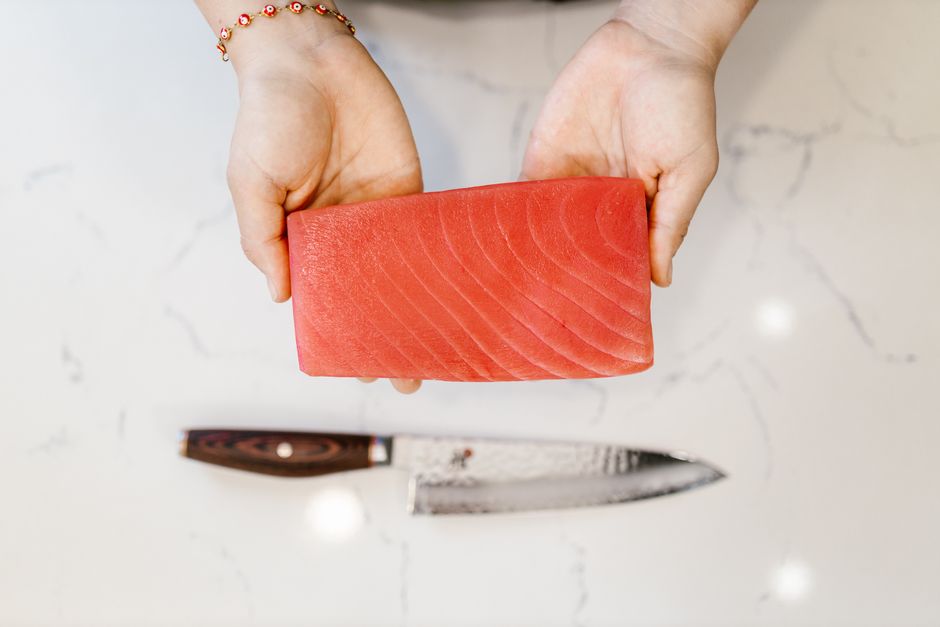
Tuna is a lean fish. Most varieties contain less than 5 grams of fat per 3-ounce cooked serving, and some canned varieties pack as little as 1 gram. That puts tuna in a different category from fatty fish like salmon, mackerel, or sardines, which can carry 10 to 20 grams of fat in the same portion. The fat tuna does contain is mostly the healthy unsaturated kind, though the exact amount shifts depending on the species, the cut, and how it is packed.
How Much Fat Is Actually in Tuna?
The numbers vary more than most people expect. A 3-ounce serving of raw yellowfin tuna has roughly 1 gram of fat. The same portion of bluefin tuna — especially the fatty belly cut sold as toro — can contain 15 grams or more. That is a wider range than exists between some entirely different species of fish.
Water-packed canned light tuna is among the leanest animal proteins available. A 3-ounce drained serving has about 1 gram of fat and around 100 calories. Oil-packed tuna adds fat from the packing oil, but much of it drains away when you open the can. If you do not drain it, you are eating the oil, not the fish’s own fat.
Albacore, often labeled “white tuna,” sits in the middle. It has more fat than skipjack (the fish usually sold as “light” tuna) but still far less than salmon. A 3-ounce serving of canned albacore in water has roughly 3 grams of fat.
Here is a comparison of common options per 3-ounce cooked or drained serving:
| Type of Tuna | Total Fat | Calories (approx.) |
|---|---|---|
| Canned light tuna, water-packed | ~1 g | ~100 |
| Canned albacore, water-packed | ~3 g | ~130 |
| Fresh yellowfin, raw | ~1 g | ~110 |
| Fresh bluefin (lean muscle) | ~5 g | ~150 |
| Bluefin toro (belly) | 15 g or more | ~250+ |
These figures come from USDA nutritional data. Actual values will vary somewhat by season, diet, and individual fish.
Is Tuna High In Fat What The Nutrition Shows Compared to Other Proteins?
Set tuna beside chicken breast, and the fat content is nearly identical. Both land around 1 to 3 grams per 3-ounce serving, depending on the cut. Set it beside a ribeye steak, and tuna looks dramatically leaner — a 3-ounce ribeye carries roughly 15 to 20 grams of fat.
Compared to other fish, tuna is on the lean end. Salmon, trout, herring, and mackerel all carry considerably more fat. That matters because those fattier fish are also the main dietary sources of omega-3 fatty acids.
Tuna does contain omega-3s, but at lower concentrations than fatty fish. A serving of albacore provides meaningful omega-3s. Light canned tuna provides less. If omega-3 intake is your goal, tuna can contribute, but it is not a substitute for salmon or sardines.
Does the Type of Tuna Change the Fat Content?
Species matters most. Skipjack, the fish behind most “light” canned tuna, is naturally very lean. Yellowfin is similar. Bluefin is a different animal entirely — it is built for long-distance swimming and stores fat in its muscle tissue, which is why toro is prized for its rich texture.
Cut matters almost as much as species. A bluefin loin and bluefin belly come from the same fish but differ by a factor of three or more in fat. Restaurants charge accordingly.
Packing method changes the number on the label but not the fish itself. Tuna packed in water stays lean. Tuna packed in oil absorbs some oil during processing. Draining reduces the added fat substantially, though not entirely.
Fresh versus canned makes little difference to the fish’s own fat. Canning does not add or remove fat from the tissue. It only changes what surrounds it.





What Kind of Fat Does Tuna Contain?
Most of the fat in tuna is unsaturated. That includes both monounsaturated and polyunsaturated fats, along with the omega-3 fatty acids EPA and DHA. Saturated fat makes up a small fraction of the total.
This profile is generally considered favorable. Unsaturated fats, when they replace saturated fats in the diet, are associated with lower LDL cholesterol. That relationship is well established in nutrition research.
The omega-3 content is real but modest in most tuna. The American Heart Association has long recommended eating fish at least twice a week, partly for omega-3s. Tuna counts toward that, though fatty fish deliver more per serving.
Is Leaner Always Better?
Not necessarily. Fat carries flavor and moisture. It also carries fat-soluble vitamins. A lean fish like tuna can dry out quickly when cooked, which is why it is often served seared or packed in oil.
More importantly, leanness is not the same as nutritional superiority. Fatty fish like salmon deliver substantially more omega-3s per serving. If you are choosing fish specifically for heart or brain benefits tied to omega-3s, tuna is a supporting player, not the star.
Tuna’s strength is protein density. It delivers a high amount of protein per calorie with very little fat. For someone watching calorie intake or trying to hit a protein target, that is a genuine advantage.
A useful way to think about it: tuna is a protein source that happens to be fish, while salmon is a fat source that happens to be protein. Both are good. They just do different jobs.
Are There Other Things to Know About Tuna?
Fat is only part of the picture. Tuna is a large predatory fish, and larger fish accumulate more mercury than smaller ones. This is a well-documented issue, not a fringe concern.
The FDA and EPA issue guidance on fish consumption, particularly for people who are pregnant, may be pregnant, or breastfeeding, and for young children. That guidance distinguishes between types of tuna. Light canned tuna is generally listed as a lower-mercury option. Albacore and fresh or frozen tuna steaks carry higher mercury levels, and the guidance recommends limiting those for sensitive groups.
If you are pregnant, planning to become pregnant, breastfeeding, or feeding a young child, follow the current federal guidance rather than general advice. Mercury exposure during development is a real risk, and the recommendations exist specifically because of it.
Tuna is also high in sodium when canned, unless labeled “no salt added.” A standard 3-ounce serving of canned tuna can contain 200 to 300 milligrams of sodium. Rinsing and draining reduces it somewhat.
None of this makes tuna a bad food for most adults. It makes it a food worth eating with awareness, especially if you eat it frequently.
How Does Tuna Fit Into a Normal Diet?
For most adults, tuna is a practical, affordable, high-protein, low-fat food. It works well in sandwiches, salads, and grain bowls. It stores easily and requires no cooking when canned.
The main thing to watch is frequency if you are in a higher-risk group for mercury exposure. For everyone else, eating tuna a few times a week is consistent with federal dietary guidance, which encourages variety across fish types rather than relying on any single one.
If your goal is more omega-3s, rotate in salmon, sardines, or mackerel. If your goal is lean protein with minimal fat, tuna is hard to beat.
Frequently Asked Questions
Is tuna considered a high-fat food?
No. Most tuna contains less than 5 grams of fat per 3-ounce serving, and canned light tuna in water has about 1 gram.
That places it among the leanest animal proteins, well below fatty fish like salmon.
Which tuna has the least fat?
Canned light tuna packed in water is the leanest common option, at roughly 1 gram of fat per 3-ounce drained serving.
Bluefin belly, sold as toro, is at the opposite end with 15 grams or more.
Does canned tuna in oil have more fat than water-packed?
Yes, because the fish absorbs some of the packing oil during processing.
Draining the can removes a large portion of that added fat, though not all of it.
Is the fat in tuna healthy?
Most of it is unsaturated fat, including omega-3 fatty acids, with only a small amount of saturated fat.
The omega-3 content is lower than in fatty fish like salmon, so tuna is not an equivalent source.
