
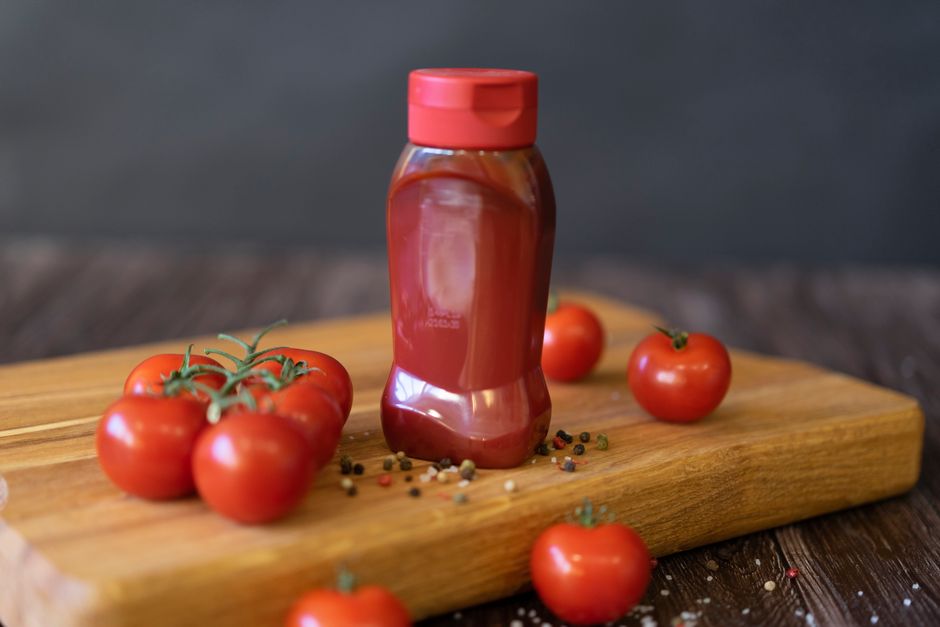
Most tomato ketchup is gluten free. The main ingredients — tomatoes, vinegar, sugar, salt, and spices — do not contain gluten, and the big national brands sold in the US do not add wheat, barley, or rye. That said, “most” is not “all.” A small number of ketchup products do contain gluten, and cross-contact during manufacturing is possible. Reading the label is the only way to know for sure.
Is Tomato Ketchup Gluten Free?
For the majority of bottles on a grocery shelf, yes. The standard recipe for tomato ketchup is built from tomato concentrate, distilled vinegar, sweetener, salt, onion and garlic powder, and natural flavoring. None of those are gluten grains.
Distilled vinegar deserves a specific mention because it worries people more than it should. In the United States, distilled vinegar is almost always made from corn. Even when it is made from wheat or barley, the distillation process is understood to remove the gluten protein. Gluten is a protein and does not survive distillation. This is why distilled vinegar is not considered a gluten source by major celiac disease organizations.
The bigger risk is not the base recipe. It is what gets added after. Some flavored or specialty ketchups use malt vinegar, which is made from barley and does contain gluten. Some use soy sauce, which traditionally contains wheat. Some “homestyle” or “gourmet” varieties add wheat-based thickeners or flavorings. Those are the products to watch.
Which Ketchup Ingredients Can Contain Gluten?
The ingredient list is where gluten hides in ketchup. It is rarely the tomatoes.
- Malt vinegar — made from barley, contains gluten. This is the most common gluten source in ketchup.
- Soy sauce — traditionally brewed with wheat. Some ketchups use it for depth of flavor.
- Wheat-based thickeners — occasionally used in small-batch or imported products.
- Natural flavors — usually gluten free, but the term is broad and can legally include a wide range of ingredients.
- Modified food starch — usually made from corn in the US, but can be made from wheat.
Here is the part many people miss. In the US, if wheat is used to make modified food starch or any derivative, federal labeling rules require it to be declared as “wheat” on the label. That rule exists because of the Food Allergen Labeling and Consumer Protection Act. So a US label that lists modified food starch without saying “wheat” is very unlikely to contain wheat.
Malt vinegar is different. Barley is not one of the eight major allergens under US law, so it does not have to be flagged the same way. You have to recognize the word “malt” yourself.
How Do You Read a Ketchup Label for Gluten?
Start with the ingredients list, not the front of the bottle. Front-of-package claims like “natural” or “made with real tomatoes” say nothing about gluten.
Look for a “gluten free” statement. Under FDA rules, a product labeled gluten free must contain less than 20 parts per million of gluten. That threshold is the established standard, and it applies to foods regulated by the FDA. Ketchup falls under FDA rules, not USDA rules, so this labeling standard applies.
If there is no gluten free claim, scan the ingredients for the words that matter: wheat, barley, rye, malt, malt vinegar, malt extract, and soy sauce. If none appear and the product is a mainstream brand, it is very likely gluten free.
One practical tip: ketchup recipes change. A bottle that was safe last year can be reformulated. Checking the label each time you buy is not paranoia. It is the same habit people with celiac disease already use for every packaged food.





Is Ketchup Safe for People With Celiac Disease?
For most mainstream ketchup, yes. The base ingredients are gluten free, and the FDA’s gluten free labeling rules give people with celiac disease a reliable way to identify safe products.
Celiac disease is an autoimmune condition, not a sensitivity or a preference. Even small amounts of gluten can trigger intestinal damage and symptoms in people with the condition. That is why the 20 ppm threshold exists and why label reading matters more for this group than for someone avoiding gluten by choice.
Cross-contact is the remaining concern. A manufacturer that also runs wheat-based products on the same equipment can introduce trace gluten. Many large ketchup makers test their products and label them gluten free, which addresses this. Smaller or imported brands may not.
If you have celiac disease and a ketchup does not carry a gluten free claim, contact the manufacturer directly. Most have customer service lines that can confirm whether a product is tested and whether it meets the 20 ppm standard.
Does Ketchup Have Other Ingredients to Watch?
Gluten is not the only thing people ask about in ketchup. Two others come up often.
High fructose corn syrup. Many ketchups use it as a sweetener. It is gluten free. Whether it matters for health is a separate question from whether it contains gluten, and the two get mixed up in online discussions constantly.
Tomatoes. Tomatoes are gluten free. They are also a nightshade, which some people avoid for unrelated reasons. Nightshade avoidance has nothing to do with gluten.
If you are avoiding gluten for a medical reason, the ingredient that matters most is malt vinegar. Everything else in a standard ketchup is either naturally gluten free or required to be labeled if it is not.
What About Organic, Homestyle, and Imported Ketchup?
These are the categories where gluten is more likely to show up. Not because organic or imported products are worse, but because they often use different recipes.
- Organic ketchup — usually gluten free, but check the label. Organic certification says nothing about gluten.
- Homestyle or craft ketchup — more likely to use malt vinegar or soy sauce for a distinct flavor profile.
- Imported ketchup — labeling rules vary by country. A product that would be flagged in the US may not be flagged elsewhere.
- Restaurant ketchup — usually the same national brands you find in stores, but packets and pumps can vary.
Here is a non-obvious point. A ketchup can be labeled “wheat free” and still contain barley or rye. Wheat free and gluten free are not the same thing. Only “gluten free” carries the FDA’s defined meaning and the 20 ppm limit.
How Does Ketchup Compare to Other Condiments?
Ketchup is one of the safer condiments for a gluten free diet. Others are more of a problem.
| Condiment | Typical gluten status | Main concern |
|---|---|---|
| Tomato ketchup | Usually gluten free | Malt vinegar or soy sauce in some varieties |
| Yellow mustard | Usually gluten free | Distilled vinegar is fine; watch for added flavorings |
| Soy sauce | Usually contains gluten | Brewed with wheat; use tamari instead |
| Barbecue sauce | Often contains gluten | Soy sauce, malt vinegar, or wheat-based thickeners |
| Mayonnaise | Usually gluten free | Distilled vinegar is fine; watch for modified starch |
| Salad dressings | Varies widely | Malt vinegar, soy sauce, or wheat-based additives |
The pattern is simple. Condiments built on distilled vinegar and oil tend to be safe. Condiments built on soy sauce or malt vinegar tend to be a problem. Ketchup sits on the safe side of that line unless a specific product changes the recipe.
Frequently Asked Questions
Is Heinz tomato ketchup gluten free?
Yes. Heinz states that its tomato ketchup is gluten free, and the product does not list any gluten-containing ingredients. It is one of the most commonly recommended ketchup brands for people with celiac disease.
Does ketchup contain wheat?
Most ketchup does not contain wheat. Some specialty or imported ketchups use soy sauce or wheat-based thickeners, which is why reading the label still matters.
Is malt vinegar in ketchup a problem for celiac disease?
Yes. Malt vinegar is made from barley and contains gluten, so ketchup made with malt vinegar is not safe for people with celiac disease. Distilled vinegar is a different product and is not considered a gluten source.
Can I trust a ketchup that says “wheat free”?
No, not for celiac disease. “Wheat free” does not cover barley or rye, and it has no defined legal standard. Look for a “gluten free” label instead, which requires the product to meet the FDA’s 20 ppm limit.
