
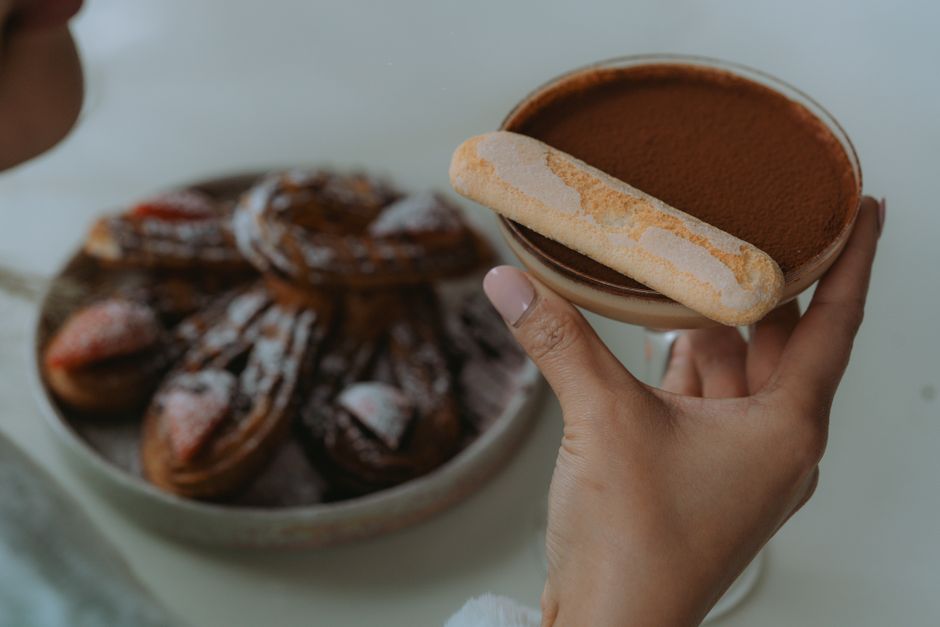
Tiramisu is a high-calorie dessert. A typical restaurant serving of about one cup can land anywhere from roughly 400 to 600 calories, depending on the recipe and portion size. Most of those calories come from fat and sugar, so if you are watching your weight, tiramisu is a food to enjoy occasionally and in smaller amounts rather than a light everyday treat.
That does not mean you have to skip it forever. Understanding what is actually in tiramisu — and where the calories come from — makes it easier to fit it into a balanced way of eating without derailing your goals.
Is Tiramisu Fattening Calories Fat And Lighter Options?
Tiramisu is calorie-dense, meaning a small amount packs a lot of energy. The core ingredients are mascarpone cheese, egg yolks, sugar, heavy cream in many versions, and coffee-soaked ladyfinger cookies, often finished with a dusting of cocoa.
Each of those ingredients contributes calories in a different way:
- Mascarpone is a soft Italian cheese made from cream. It is roughly 40 to 50 percent fat by weight, which makes it one of the richest cheeses used in desserts.
- Egg yolks add fat and some protein, and they are the base of the traditional custard.
- Sugar sweetens both the custard and the whipped cream, adding calories with no fat but plenty of energy.
- Ladyfingers are light sponge cookies, but they are still refined carbohydrates and absorb the coffee and any added syrup.
- Cocoa powder on top adds very few calories on its own.
The result is a dessert that is high in fat and sugar at the same time. Fat carries 9 calories per gram, while sugar and other carbohydrates carry about 4 calories per gram. Because tiramisu is built largely from fat and sugar, a modest slice can carry the calorie load of a small meal.
Portion size is the single biggest variable. A small square from a bakery and a generous restaurant portion can differ by hundreds of calories, even when they look similar on the plate.
How Many Calories Are in a Serving of Tiramisu?
There is no single official calorie count for tiramisu because recipes vary so widely. A reasonable working range is about 400 to 600 calories per one-cup serving, with some restaurant portions running higher and smaller homemade squares running lower.
The table below shows roughly where the calories come from in a typical full-fat recipe. These are approximate figures, not exact values, since every recipe differs.
| Component | Main contribution |
|---|---|
| Mascarpone cheese | Fat and calories |
| Heavy cream | Fat and calories |
| Egg yolks | Fat, some protein |
| Sugar | Carbohydrates |
| Ladyfinger cookies | Refined carbohydrates |
| Cocoa powder | Minimal calories |
Because the exact numbers depend on the recipe, the most reliable approach is to check the nutrition information if you are buying a packaged version, or to estimate based on the ingredients if you are making it yourself. Treat any single number you see online with some caution — it usually reflects one specific recipe, not tiramisu in general.
Why Tiramisu Is So High in Fat and Sugar
Tiramisu was not designed to be a light dessert. Its texture depends on fat. Mascarpone gives it the rich, creamy body that defines the dish, and whipped cream lightens that richness without reducing the fat content. Remove the fat and you no longer have tiramisu — you have something closer to a coffee-flavored sponge.
Sugar plays a similar structural role. It sweetens the custard, stabilizes the whipped cream, and balances the bitterness of the coffee and cocoa. Cutting sugar too far changes both flavor and texture.
This is why “diet tiramisu” recipes often taste noticeably different from the classic version. The ingredients that make tiramisu what it is are the same ingredients that make it calorie-dense. There is no way around that trade-off entirely — only ways to manage it.





Are There Lighter Versions of Tiramisu?
Yes, and some of them are genuinely lower in calories. The most common swaps involve replacing mascarpone with a lighter cheese, using less cream, or reducing sugar. Each swap changes the result, so it helps to know what you are trading.
Common lighter options include:
- Greek yogurt or light cream cheese in place of some or all of the mascarpone. This cuts fat and calories but produces a tangier, denser texture.
- Less whipped cream or skipping it entirely. The dessert becomes heavier but lower in fat.
- Reduced sugar in the custard. This lowers calories but can make the coffee and cocoa taste more bitter.
- Smaller portions of the full-fat version. Often the simplest option, since it keeps the flavor you want.
One clarification worth making: a “lighter” tiramisu is still a dessert with fat and sugar. Swapping ingredients reduces the calorie load, but it does not turn tiramisu into a low-calorie food. If a recipe claims otherwise, look closely at the portion size it is based on.
How to Fit Tiramisu Into a Balanced Diet
No single dessert makes or breaks a healthy way of eating. What matters is the overall pattern — how often you eat calorie-dense desserts and how they fit alongside the rest of your meals.
A few practical approaches that many people find workable:
- Choose a smaller portion rather than a large one, and eat it slowly.
- Have tiramisu occasionally rather than daily, so it stays a treat rather than a habit.
- Balance the rest of the day with meals built around vegetables, lean protein, and whole grains.
- If you are making it at home, control the portion size by preparing it in smaller cups.
None of this is a rule. It is simply the general principle behind fitting any rich dessert into a diet: portion, frequency, and what the rest of your plate looks like. There is no evidence that avoiding tiramisu entirely is necessary for good health, and no evidence that eating it freely has no effect. The truth sits in the middle.
Does Tiramisu Contain Alcohol and Caffeine?
Traditional tiramisu often includes a small amount of alcohol, such as Marsala wine, rum, or coffee liqueur, brushed onto the ladyfingers or mixed into the custard. Many modern recipes leave it out, especially versions sold in grocery stores or made for children.
The coffee is a more consistent ingredient. Tiramisu gets its name from the Italian for “pick me up,” a nod to the espresso used to soak the cookies. The caffeine content depends on how strong the coffee is and how much the cookies absorb, but it is generally modest — far less than a cup of coffee in most recipes.
If you are avoiding alcohol for any reason, check the recipe or label. “Classic” tiramisu frequently contains it, while many commercial versions do not.
Is Tiramisu Worse Than Other Desserts?
Not necessarily worse, but it does tend to be on the higher end for fat and calories. Cheesecake, for example, is similarly rich. A fruit sorbet or a plain biscotti is considerably lighter.
What matters more than comparing desserts is understanding that tiramisu is a rich food. It is not a low-fat option, and it is not marketed as one. Compared with a piece of fresh fruit or a small bowl of yogurt, it carries far more calories per bite. Compared with a slice of cheesecake or a chocolate lava cake, it is roughly in the same range.
If your goal is to reduce calories from desserts, lighter choices exist. If your goal is to enjoy tiramisu occasionally, there is no reason it cannot be part of a balanced diet.
Frequently Asked Questions
Is tiramisu fattening?
Tiramisu is calorie-dense because it is high in fat and sugar, so eating it often or in large portions can contribute to weight gain. Enjoyed occasionally in smaller servings, it can fit into a balanced diet.
How many calories are in a serving of tiramisu?
A typical serving of about one cup usually contains roughly 400 to 600 calories, depending on the recipe and portion size. Restaurant portions often run higher than homemade ones.
Can I make tiramisu lower in calories?
Yes, by using Greek yogurt or light cream cheese instead of mascarpone, reducing sugar, and cutting back on whipped cream. These swaps lower the calorie count but change the flavor and texture.
Does tiramisu contain alcohol?
Traditional recipes often include a small amount of Marsala wine, rum, or coffee liqueur, but many modern and commercial versions leave it out. Check the recipe or label if you are avoiding alcohol.
