
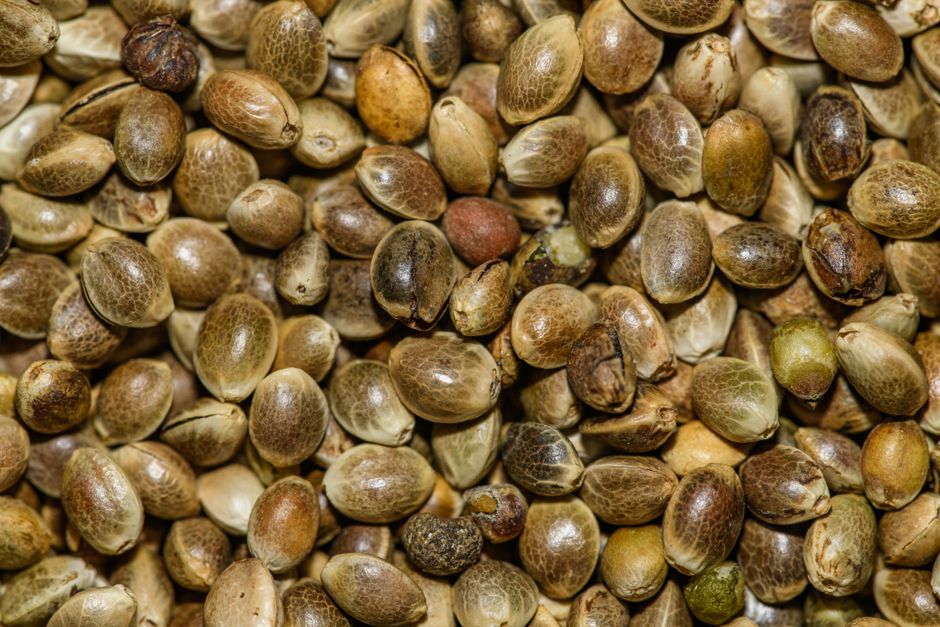
Hemp seeds do not naturally contain meaningful amounts of CBD. The seed is the reproductive part of the plant, and cannabinoids like CBD are produced mainly in the flowers and leaves. Testing labs sometimes detect tiny traces on hulled seed, but those traces come from contact with plant material during harvest and processing, not from the seed itself.
That distinction matters more than it sounds. A positive “trace” result on a hemp seed product does not mean the seed makes CBD. It usually means dust, resin, or fine plant bits stuck to the outside. Once that is understood, the rest of the questions about hemp seeds and CBD become much easier to answer.
Is There CBD in Hemp Seeds Facts, Traces, and Tests?
The plant biology is clear. Cannabinoids are synthesized in glandular structures called trichomes, and trichomes are concentrated on the flowers, with smaller amounts on leaves and stems. The seed does not have trichomes.
So a clean, hulled hemp seed has essentially no CBD. A whole hemp seed with its hull intact can carry trace residue from the plant it grew on. That residue is a contaminant of harvest and handling, not a component of the seed.
This is why you will see two very different numbers floating around. A lab testing the seed kernel will report CBD as not detected or below the limit of quantification. A lab testing whole seed or an unrefined seed product may report a small positive value. Both can be accurate. They are measuring different things.
Why Do Some Hemp Seed Products Test Positive for Traces of CBD?
Contact is the main reason. Hemp seeds are harvested from plants that are covered in resin-rich trichomes. During combining, drying, and storage, fine plant material and resin can cling to the seed surface.
Processing affects how much survives. Hulling removes the outer layer and takes most of the surface residue with it. Cold-pressing seed into oil is different — if the seed was not thoroughly cleaned first, a small amount of plant material can end up in the oil.
There is also the matter of testing sensitivity. Modern analytical instruments can detect cannabinoids at very low concentrations. A result described as a “trace” may be far below any level that could have a biological effect. A detectable amount and a meaningful amount are not the same thing.
One clarification worth holding onto: a certificate of analysis showing “CBD present” on a hemp seed oil tells you the lab found some. It does not tell you the product delivers a dose. Those are separate questions, and most seed products are not formulated or tested to deliver CBD at all.
How Much CBD Is Actually in Hemp Seed Oil?
For properly cleaned, hulled seed and the oil pressed from it, the amount is negligible — typically at or below the detection limits labs use. There is no established standard that assigns hemp seed oil a CBD content, because the seed is not a CBD source.
This is where hemp seed oil and CBD oil get confused, and the confusion is understandable. Both come from the same plant. Both are sold as oils. But they are made from different parts of the plant and are not interchangeable.
- Hemp seed oil is pressed from seeds. It is a food oil, rich in polyunsaturated fats, and contains little to no CBD.
- CBD oil is extracted from flowers and leaves, where cannabinoids are concentrated. It is formulated to contain a specified amount of CBD.
If a product is marketed as hemp seed oil and also implies CBD benefits, that is a signal to read the label and the certificate of analysis carefully. The two claims do not sit comfortably together.
Can Trace CBD in Hemp Seeds Show Up on a Drug Test?
Standard workplace drug tests screen for THC metabolites, not CBD. CBD itself is not what these tests are designed to detect.
The practical concern people actually have is different: could a hemp seed product contain enough THC to trigger a positive result? For hulled hemp seed and refined seed oil, the THC content is generally extremely low, and the available evidence does not suggest these foods are a realistic cause of positive tests. Some clinicians and workplace testing programs still advise caution with any cannabis-derived product, and the safest position for anyone facing mandatory testing is to discuss it with the testing authority rather than assume.
CBD products are a separate matter. Full-spectrum CBD products can contain small amounts of THC, and heavy use of such products has been associated with positive screens in some reported cases. That is a product-composition issue, not a hemp seed issue.
Are Hemp Seeds a Good Source of CBD?
No. Hemp seeds are a good source of plant protein, fiber, and polyunsaturated fats, including omega-3 and omega-6 fatty acids. They are not a source of CBD in any practical sense.
Anyone seeking CBD for a specific reason should look at products actually formulated and tested for cannabinoid content, and should talk with a clinician first. CBD is not risk-free. It can interact with certain medications, and the evidence for many of its proposed uses is still limited or mixed depending on the condition.
The reverse is also worth saying. If you want the nutritional benefits of hemp seeds — protein, fiber, minerals like magnesium and iron — you do not need a CBD product to get them. The seed stands on its own nutritional merits.
What Should You Look for on a Hemp Seed Product Label?
The label should tell you what part of the plant the product came from. “Hulled hemp seed” or “hemp hearts” indicates the kernel. “Hemp seed oil” should mean oil pressed from seed.
Watch for language that blurs the line. Phrases like “full-spectrum hemp” or “contains naturally occurring cannabinoids” usually signal a product made from aerial plant parts, not seed alone. That may be a legitimate product, but it is not a seed product.
A certificate of analysis from an independent lab is the most reliable way to know what is actually in a product. It should list cannabinoid content, including CBD and THC, with the testing method and detection limits stated. If a company cannot or will not provide one, that tells you something.
Be cautious with claims that a seed product “supports” calm, sleep, or relief through CBD. No clinical evidence confirms that hemp seed products deliver CBD at levels that would produce such effects. The seed simply does not contain enough of it.
Frequently Asked Questions
Do hemp seeds contain CBD?
No, hemp seeds do not naturally contain meaningful amounts of CBD because cannabinoids are produced in the flowers and leaves, not the seed. Tiny traces found on some products come from plant residue on the seed surface.
Does hemp seed oil have CBD in it?
Hulled hemp seed oil typically contains little to no CBD. Any trace amounts come from incomplete removal of plant material during processing, not from the seed itself.
Will eating hemp seeds make me fail a drug test?
Standard drug tests screen for THC metabolites, and hulled hemp seed is generally very low in THC. Anyone facing mandatory testing should check with the testing authority rather than assume.
Is hemp seed oil the same as CBD oil?
No, they are different products made from different parts of the plant. Hemp seed oil is pressed from seeds and is a food oil, while CBD oil is extracted from flowers and leaves and is formulated to contain CBD.
