
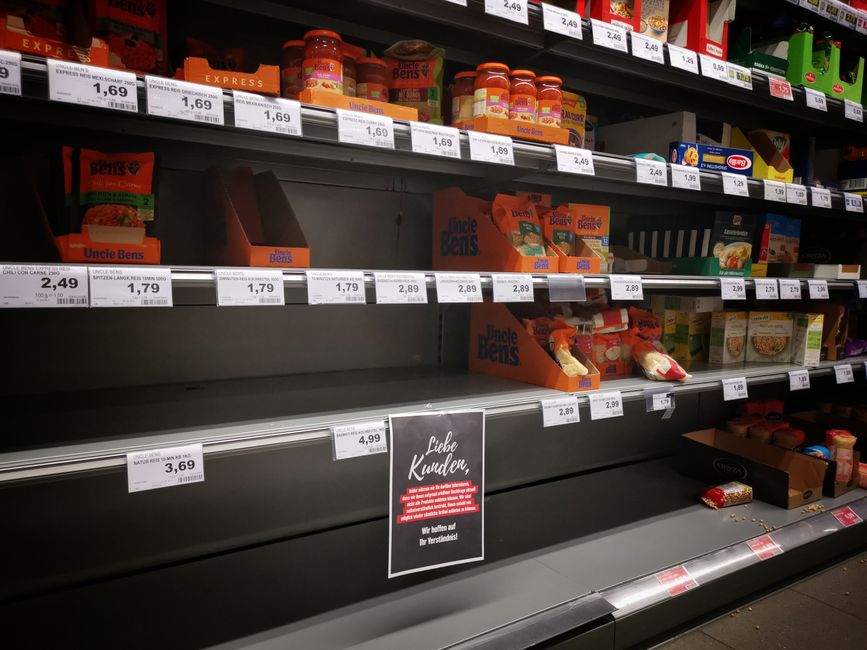
There is no nationwide food shortage in the United States. Store shelves are stocked, and the country produces and imports more food than its population needs. When people ask whether there is a food shortage, the honest answer is that the problem is almost never a lack of food overall. It is a lack of access to food for specific people in specific places, and that distinction matters because it changes who is actually at risk.
Is There A Food Shortage And Who Is Most At Risk?
For most Americans, the answer is no. The U.S. food supply is not running out. What exists is food insecurity — a household-level problem where people cannot reliably get enough affordable, nutritious food even when grocery stores nearby are full.
The people most at risk are those with the least money and the fewest buffers: low-income households, people already receiving federal food assistance, children in those households, older adults living on fixed incomes, and people in rural or low-income urban areas with limited grocery access. Job loss, a large medical bill, or a car repair can push a family that was getting by into food insecurity within weeks.
This is not a fringe problem. The U.S. Department of Agriculture tracks food insecurity every year, and the households it counts are measured by whether they had enough food for an active, healthy life at some point during the year. The number moves with the economy, but it has never been zero.
What Actually Causes Food Shortages In The US?
Real shortages do happen, but they are usually short and narrow. A hurricane closes ports. A plant that makes baby formula shuts down. A labor dispute slows shipping. A disease outbreak cuts into a specific crop. These events cause temporary gaps in specific products, not a collapse of the food system.
The 2022 infant formula shortage is the clearest recent example. It was triggered by a plant closure and compounded by market concentration — a small number of companies make most of the formula sold in the U.S. — and by import rules that limited backup supply. The shortage was real and serious for families who needed formula, but it was a failure in one product category, not a sign that food overall was running out.
Three forces drive most genuine shortages:
- Concentration. When a few facilities make most of a product, one closure can remove a large share of supply.
- Supply chain fragility. Just-in-time delivery keeps costs down but leaves little slack when something breaks.
- Price shocks. Even when food exists, a sharp price rise can make it unaffordable for low-income households, which functions like a shortage for them even if store shelves are full.
That last point is the one people miss. A food shortage and a food affordability crisis look different in the news but hit the same families. If the price of eggs doubles and your budget is already tight, the effect on your dinner table is close to what a shortage would do.
Why Do Some People Face Food Shortages While Stores Are Full?
Because access depends on money, transportation, and location — not on total supply. A grocery store two miles away is not accessible if you have no car and the bus runs once an hour. A full shelf does not help if your food budget ran out on the twentieth of the month.
Food insecurity in the U.S. is concentrated in households below or near the poverty line. It is also higher in households with children, in single-parent households, and among Black and Hispanic households, reflecting differences in income, wealth, and neighborhood resources rather than any difference in need. Rural areas add distance. Low-income urban neighborhoods sometimes lack a full-service grocery store within reasonable walking distance, a pattern researchers call a food desert, though the evidence on how much store access alone changes diet is mixed.
Older adults face a separate version of the problem. Fixed incomes, limited mobility, and medical costs can leave people who appear financially stable struggling to afford adequate food. Food insecurity among older adults is often undercounted because it is less visible.





Who Is Most At Risk During A Real Shortage?
The same people who are most at risk when food is plentiful — but the stakes rise fast. When a specific product becomes scarce, the people who can pay more or who have backup options get served first. Everyone else waits.
During the infant formula shortage, families who could afford to buy multiple brands, drive to several stores, or order from abroad had options. Families relying on a single brand through a federal assistance program often did not. That is the pattern in nearly every shortage: scarcity sorts people by resources, not by need.
The groups most exposed include:
- Households already receiving food assistance, whose benefits are fixed and may not stretch when prices rise
- Infants and young children, who depend on specific products and have no substitute
- People with medical conditions requiring special diets or formulas
- Older adults and people with disabilities who cannot easily shop around
- Rural households far from alternative stores
One clarification worth making: food banks and pantries are a critical backstop, but they are not designed to replace a household’s full food supply. They help close gaps. They cannot absorb a broad, sustained shortage.
Are Food Shortages Getting Worse Or Better?
The U.S. food supply has been remarkably stable for decades, and the long-term trend in food insecurity has generally improved since the 1990s, though it rises and falls with the economy and with policy changes. The evidence does not support the idea that the country is heading toward a broad food shortage.
What has changed is the frequency of localized disruptions. Global supply chains are more connected, which makes them efficient but also means a shock in one region can ripple outward. Climate-related disruptions to specific crops are a genuine and growing concern for certain foods. But these are pressures on specific products and prices, not signs of an empty food system.
Claims that a food shortage is imminent or already underway in the U.S. do not match what the data show. When you see such claims online, check whether they are describing a specific product, a specific region, or a specific price change — and whether they are generalizing from that to the whole food supply. Usually they are.
What Actually Helps When Food Is Hard To Get?
The most effective tools are income-based, not supply-based. Federal programs like the Supplemental Nutrition Assistance Program (SNAP), the Special Supplemental Nutrition Program for Women, Infants, and Children (WIC), and school meal programs exist because the core problem is affordability, not availability. Research consistently shows that these programs reduce food insecurity among the households they reach.
For individuals facing a tight month, practical steps include checking eligibility for SNAP and WIC, contacting local food pantries, and asking schools about free or reduced-price meal programs. For families with infants, WIC and pediatric guidance are the right first stop if a specific formula becomes hard to find — switching formulas should be discussed with a pediatrician, not decided alone, because not all formulas are interchangeable for every infant.
What does not help is panic buying. Stockpiling a product that is temporarily scarce makes the shortage worse for everyone else and often leaves the buyer with more than they can use. The people hurt most by that behavior are the ones with the least ability to shop around.
The bottom line is uncomfortable but clear: for most Americans, the risk is not that food will disappear. The risk is that food will become unaffordable or out of reach for people who were already close to the edge. That is a problem of money and access, and it is solvable in ways a true shortage would not be.
Frequently Asked Questions
Is there a food shortage in the US right now?
No. The U.S. food supply is not running out, and store shelves are generally stocked. What exists is food insecurity for specific households that cannot afford or reach adequate food.
Who is most at risk of food insecurity?
Low-income households, children in those households, older adults on fixed incomes, and people in rural or low-income urban areas with limited grocery access face the highest risk. Job loss or a large unexpected expense can push any family into it quickly.
What causes a real food shortage?
Real shortages usually come from a specific disruption — a plant closure, a port shutdown, a crop disease, or a labor dispute — combined with market concentration that leaves little backup supply. They tend to be short and limited to specific products.
Does food assistance actually reduce food insecurity?
Research consistently shows that programs like SNAP and WIC reduce food insecurity among the households they reach. They address affordability, which is the core problem for most food-insecure families.
