
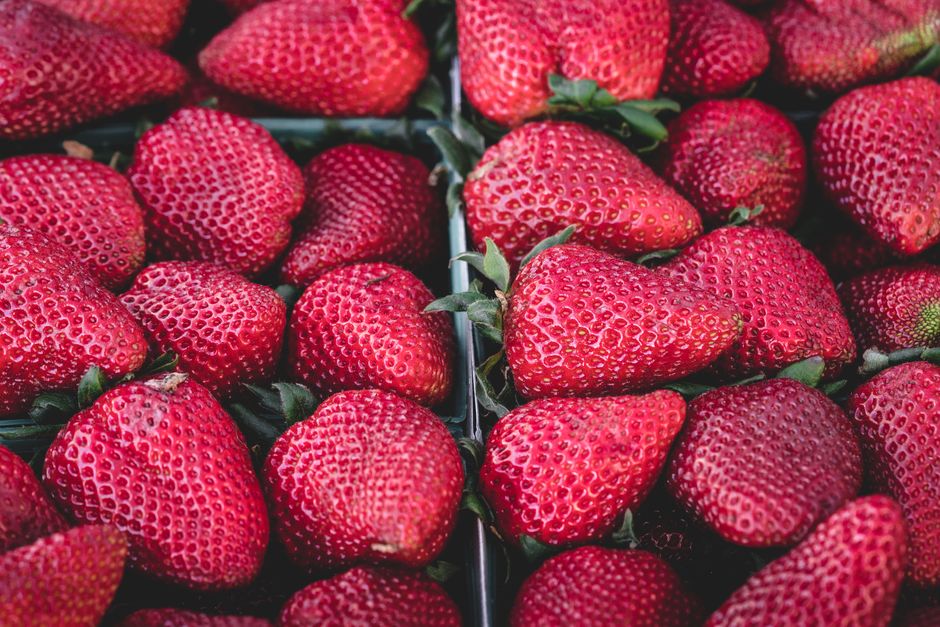
A strawberry is a fruit in the kitchen and a lie in the garden. Botanically speaking, the fleshy red part of a strawberry is not a fruit at all — it is a swollen receptacle, the tissue that holds the flower’s reproductive parts. The actual fruits are the tiny, seed-like structures scattered across its surface, and each one is a separate fruit in its own right.
So the answer depends on which definition you use. In everyday language and nutrition science, a strawberry is a fruit. In strict botanical terms, it is an aggregate accessory fruit — a category that makes it a close relative of the raspberry, the blackberry, and the apple in structural terms, though not in flavor or family.
Is The Strawberry A Fruit The Botanical Answer?
Botanically, a fruit is the mature ovary of a flowering plant. It develops from the ovary after fertilization and contains the seeds. By that definition, the red part of a strawberry fails the test.
Here is what actually happens. A strawberry flower has many tiny ovaries arranged in a spiral on the tip of the stem. Each ovary contains one ovule. After pollination, each ovule develops into a tiny dry fruit called an achene. The achene is the small, hard, seed-like speck you see on the strawberry’s surface. The fleshy red tissue underneath is the enlarged receptacle — the stem tip that swelled up to support those fruits.
So a single strawberry is not one fruit. It is dozens of fruits sitting on a swollen platform. Botanists call this an aggregate accessory fruit. “Aggregate” because it forms from many ovaries, and “accessory” because the edible part comes from tissue that is not the ovary itself.
This is not a technicality invented to confuse people. It reflects a real structural difference. In a peach, the flesh you eat is the ovary wall. In a strawberry, the flesh you eat is stem tissue. Those are genuinely different things.
Why Do People Call It A Fruit Then?
Because in everyday language, “fruit” means something different from what it means in a botany textbook. In common usage and in nutrition, a fruit is a sweet, fleshy plant part typically eaten as a snack or dessert. Under that definition, a strawberry is obviously a fruit.
Nutrition science uses the culinary definition, not the botanical one. When the USDA counts strawberries as a fruit in dietary guidance, it is grouping them with apples, bananas, and oranges because they play the same role in the diet — sweet, nutrient-dense, and eaten whole. That grouping is useful for nutrition advice. It is not a claim about plant anatomy.
This kind of split between scientific and everyday categories happens constantly. A tomato is botanically a fruit but culinarily a vegetable. A peanut is botanically a legume but nutritionally grouped with nuts. These are not errors. They are different classification systems built for different purposes.
What Are The Tiny Seeds On A Strawberry?
Those “seeds” are the real fruits. Each one is an achene — a small, dry, one-seeded fruit with a hard outer shell. A typical strawberry carries dozens to a few hundred of them on its surface.
Inside each achene is a single seed. This is a genuinely useful distinction: the achene is the fruit, and the seed is inside the fruit. So when you bite into a strawberry, you are eating one large accessory structure topped with many tiny fruits, each containing a seed.
The achenes are not just passengers. Research suggests the developing achenes produce plant hormones — particularly auxins — that signal the receptacle to swell. In experiments where achenes are removed from part of a strawberry’s surface, the tissue underneath those spots often fails to enlarge, producing a misshapen fruit. The seeds are, in a real sense, directing the growth of the flesh around them.





Is A Strawberry A Berry?
No. A strawberry is not a berry in the botanical sense, despite the name. This surprises most people, because the word “berry” is right there in the name.
In botany, a true berry is a fleshy fruit produced from a single ovary. A blueberry is a true berry. A tomato is a true berry. A grape is a true berry. A banana is a true berry. A strawberry is not, because it comes from many ovaries plus non-ovary tissue.
Botanists also classify some surprising things as berries. A watermelon is a type of modified berry called a pepo. A pumpkin is too. Meanwhile, raspberries and blackberries — which most people would call berries — are aggregate fruits, just like strawberries, though their structure differs in one important way. In a raspberry, each little bump is a fleshy fruit called a drupelet, and those drupelets are the ovaries themselves. In a strawberry, the individual fruits are dry achenes, and the flesh is separate tissue.
Strawberry Structure Compared To Other Common Fruits
The table below shows how the edible part of several fruits develops. This is the clearest way to see why a strawberry is unusual.
| Fruit | Botanical category | What you eat |
|---|---|---|
| Strawberry | Aggregate accessory fruit | Swollen receptacle (stem tissue); achenes are the true fruits |
| Raspberry | Aggregate fruit | Cluster of drupelets, each from a separate ovary |
| Peach | Simple fleshy fruit (drupe) | Ovary wall; the pit is the seed’s hard covering |
| Blueberry | True berry | Ovary wall and inner tissues |
| Apple | Accessory fruit (pome) | Mostly receptacle tissue; the core is from the ovary |
The apple comparison is worth pausing on. Like the strawberry, the apple’s edible flesh is largely accessory tissue rather than ovary wall. Most people would never call an apple a fake fruit. The strawberry’s oddity is not that it uses accessory tissue — it is that its true fruits are dry and tiny, while the accessory tissue is the juicy part everyone notices.
Does The Botanical Definition Change Anything Nutritionally?
No. Whether a strawberry is called a fruit, a vegetable, or an accessory structure has no effect on what it contains or how your body uses it.
Strawberries are a good source of vitamin C and provide fiber, folate, and various plant compounds including anthocyanins, the pigments responsible for the red color. According to USDA nutritional data, one cup of raw strawberry halves provides roughly 49 calories and about 3 grams of fiber.
The botanical classification matters for plant science, for breeding programs, and for understanding how the plant develops. It does not change the nutrition label. A food does not become healthier or less healthy because botanists file it under a different heading.
Why Does This Question Confuse So Many People?
Because two reasonable definitions of the same word point in opposite directions, and neither is wrong. That is the whole source of the confusion.
Botany classifies fruits by how they develop from flower parts. Cooking and nutrition classify them by how they taste and how people use them. Both systems are internally consistent. They simply answer different questions.
If someone tells you a strawberry is not a fruit, they are using the botanical definition and they are correct within it. If someone tells you a strawberry is a fruit, they are using the everyday definition and they are also correct. The disagreement is about which definition is in play, not about any fact of the plant itself.
What is not up for debate is the structure: the red flesh is receptacle tissue, and the tiny specks on the surface are the actual fruits. That part is settled plant anatomy.
Frequently Asked Questions
Is a strawberry a fruit or a vegetable?
A strawberry is a fruit in the everyday and nutritional sense, and it is also a fruit in botany — just an unusual type called an aggregate accessory fruit. It is never classified as a vegetable.
What part of a strawberry is actually the fruit?
The tiny seed-like specks on the surface are the true fruits, and each one is called an achene. The red fleshy part is swollen receptacle tissue, not fruit tissue.
Why is a strawberry not a berry?
A botanical berry must develop from a single ovary, and a strawberry develops from many ovaries plus non-ovary stem tissue. Blueberries, tomatoes, and bananas are true berries; strawberries are not.
Are the seeds on a strawberry safe to eat?
Yes, the achenes are edible and are normally eaten along with the fruit. They pass through digestion largely intact because of their hard outer shell.
