
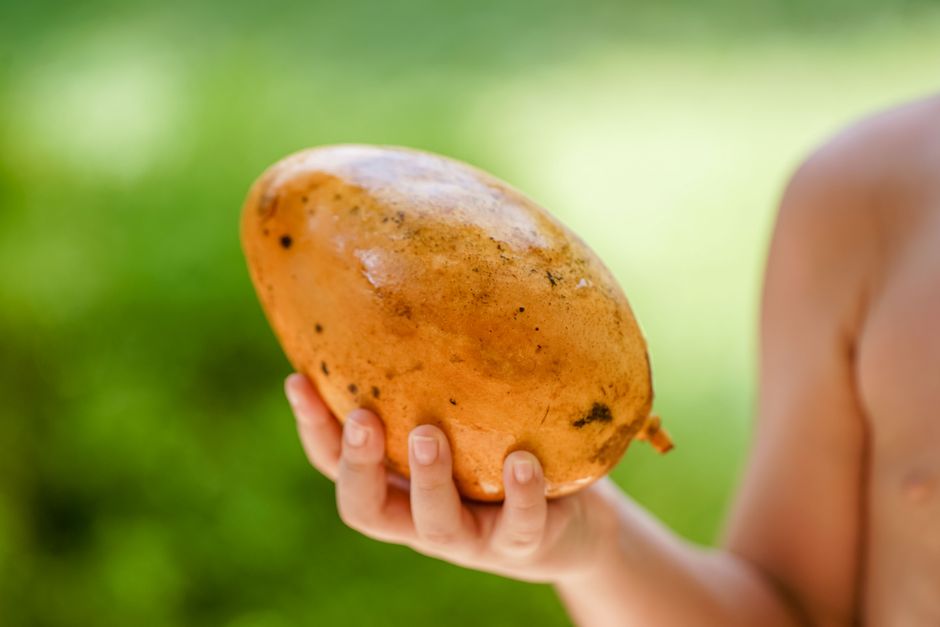
Yes, the skin on a mango is technically edible, and you will not get sick from eating it. But there is a real difference between being safe to eat and being pleasant to eat. The skin is tough, fibrous, and has a bitter, resinous taste that most people find off-putting. More importantly, it contains compounds that can cause an allergic reaction in some people, particularly those with a sensitivity to poison ivy or poison oak.
Is The Skin On A Mango Edible?
The skin is edible in the sense that it is not toxic and will not poison you. You can chew and swallow it without immediate danger. However, it is not recommended as a regular food source.
The primary reasons people avoid it are texture and taste, not safety. The skin has a thick, leathery texture that is difficult to chew, and it tastes bitter and somewhat like turpentine. For most people, eating the flesh alone is the preferred and more enjoyable option.
What Is In Mango Skin That Causes Reactions?
Mango skin contains a group of compounds called urushiol. This is the same oily resin found in poison ivy and poison oak. It is a skin irritant that causes contact dermatitis in sensitive individuals.
If you have ever had a rash from poison ivy, you have a higher chance of reacting to mango skin. The reaction usually appears as an itchy, red rash on the lips, around the mouth, or on the hands where the skin touched the fruit. In severe cases, the rash can blister and swell.
This reaction is not an allergy to the fruit itself. It is a reaction to the oil in the peel. People who can eat mango flesh without issue may still react to the skin.
Are There Nutritional Benefits To Eating Mango Skin?
Mango skin does contain nutrients. Some research suggests it is rich in fiber, antioxidants, and certain plant compounds like polyphenols and carotenoids. These compounds are present in higher concentrations in the skin than in the flesh.
However, the evidence that eating the skin provides meaningful health benefits is limited. No large human trials have confirmed that eating mango skin improves health outcomes. The amount you would need to eat to get a significant dose of these compounds is impractical because of the taste and texture.
Getting these same nutrients from other common foods is easier and more reliable. Berries, leafy greens, and other fruits provide similar antioxidants without the bitter taste or irritation risk.
Pesticides And Contaminants On Mango Skin
Like most produce, mangoes are often treated with pesticides during farming. The skin is the part that directly contacts these chemicals. Washing the mango removes some surface residue, but it does not remove all of it.
Some pesticides can penetrate the skin of the fruit, not just sit on the surface. This means even a thorough wash does not guarantee the skin is free of chemical residue. Buying organic mangoes reduces but does not eliminate this concern, because organic farming also uses approved pesticides.
If you choose to eat the skin, washing the fruit thoroughly with water and scrubbing the surface is the best you can do. There is no reliable method to remove all potential contaminants from the peel.
How To Safely Try Mango Skin If You Want To
If you are curious and want to try the skin, there are ways to reduce the risk of a reaction. Start by washing the mango thoroughly. Then cut a small piece of skin and rub it on the inside of your wrist. Wait a few hours to see if a rash develops.
This patch test is not foolproof, but it gives you some information about your sensitivity. If you have a known allergy to poison ivy, poison oak, or poison sumac, you should not do this test. Your risk of a reaction is too high.
If you decide to eat the skin, do not eat the whole mango skin at once. Try a small piece first. Stop immediately if you feel any tingling, burning, or itching in your mouth or throat. These could be early signs of a reaction.
Common Ways People Eat Mango Skin
In some cuisines, mango skin is used in pickles or chutneys. The pickling or cooking process changes the texture and may reduce some of the bitter compounds. However, cooking does not destroy urushiol, so the allergy risk remains.
Some people blend the whole mango, including the skin, into smoothies. This masks the bitter taste with other fruits and sweeteners. It also grinds the fibrous skin into small pieces that are easier to swallow.
Neither method removes the chemical compounds that cause irritation. If you are sensitive to urushiol, you can still have a reaction even if the mango is cooked or blended.
Who Should Never Eat Mango Skin
Certain people should avoid mango skin entirely. Anyone with a known allergy to poison ivy or related plants should not eat it. The risk of a serious allergic reaction is real and not worth the minimal nutritional gain.
People with sensitive digestion may also want to avoid it. The high fiber content and tough texture can be hard on the stomach, causing bloating or discomfort. The skin is not easily broken down during chewing.
Children should not eat mango skin. Their skin is more sensitive, and they are more likely to have a reaction. Their digestive systems are also less prepared to handle the tough, fibrous material.
No clinical guidelines currently exist for how much mango skin is safe to eat. The evidence base is simply too thin. When in doubt, peel the mango.
Does Mango Skin Have Any Real Culinary Use?
In professional kitchens, mango skin is rarely used. Chefs almost always peel mangoes because the skin adds nothing positive to a dish. The bitterness competes with the sweet flesh, and the texture is unpleasant.
The only culinary use with any tradition behind it is in pickling, where the sour brine and spices can mask the bitter flavor. Even then, the skin is usually sliced thin and used in small amounts as a flavor accent, not eaten as a main component.
For home cooking, the simplest advice is to peel the mango. The flesh is where the flavor and nutrition you actually want are concentrated. The skin offers no practical advantage.
What About Mango Leaves And Seeds?
Mango skin is not the only part of the fruit people ask about. The large flat seed in the center also gets questions. The seed is not edible in any practical sense. It is hard, woody, and contains compounds that can be irritating.
Mango leaves are used in some traditional medicine practices, but they are not a food. They contain compounds that can be toxic in large amounts. Do not eat mango leaves.
Stick to the flesh. It is the only part of the mango that is both safe and pleasant to eat.
Frequently Asked Questions
Can eating mango skin make you sick?
It can cause an allergic reaction in people sensitive to urushiol, the same compound in poison ivy. It is not toxic, but the bitter taste and tough texture can also cause stomach discomfort.
Does washing a mango remove the allergy-causing compounds?
No. Washing removes surface dirt and some pesticides, but it does not remove urushiol. The oil is embedded in the skin itself.
Is organic mango skin safe to eat?
Organic mango skin still contains urushiol and can cause allergic reactions. Organic farming reduces pesticide exposure, but it does not change the natural compounds in the skin.
Can you cook mango skin to make it safe?
Cooking changes the texture and may reduce bitterness, but it does not destroy urushiol. The allergy risk remains even after cooking or pickling.
