
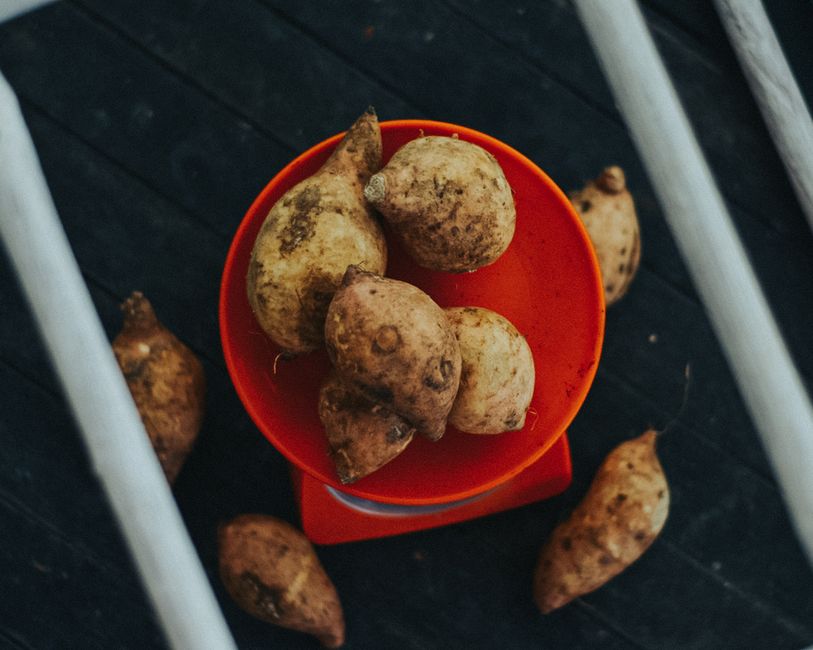
A sweet potato is not a low-calorie food, but it is a moderate-calorie one. A medium baked sweet potato with skin contains roughly 100 to 115 calories, which makes it a reasonable choice for most meals. How you cook it and how much you eat matter far more than the vegetable itself.
How Many Calories Are in a Sweet Potato?
Calorie counts depend on size and cooking method. The numbers below are based on USDA nutritional data for plain sweet potatoes with no added ingredients.
| Portion | Calories | Notes |
|---|---|---|
| Medium raw, with skin (about 130 g) | ~112 | Reference weight |
| Medium baked, with skin | ~100–115 | Water loss concentrates nutrients slightly |
| 1 cup cubed, raw | ~114 | Common recipe measure |
| 1 cup mashed, cooked | ~200–250 | Denser pack raises calories per cup |
| 1 cup frozen, cooked | ~180–200 | Varies by brand and added ingredients |
Sweet potatoes are mostly water and carbohydrate. They contain very little fat and a modest amount of protein. That macronutrient profile explains why they land in the moderate-calorie range rather than the low-calorie one.
For comparison, the same weight of raw celery or cucumber delivers far fewer calories. But sweet potatoes offer more fiber, more vitamin A, and more potassium than those vegetables. The trade-off is real.
Is Sweet Potato Low Calorie Portions Cooking Tips?
Portion control is where most people lose track of calories, not the sweet potato itself. A sweet potato that fits in your palm is roughly one serving. A sweet potato the size of a football is three or four servings.
Weighing your sweet potato once or twice can recalibrate your eye. Most people underestimate portion sizes by a meaningful margin. A food scale removes the guesswork.
Here are practical steps that keep calories in check:
- Choose medium sweet potatoes, about the size of your fist.
- Leave the skin on. It adds fiber and holds the shape together.
- Skip butter, brown sugar, marshmallows, and heavy syrups. These can double or triple the calorie count.
- Use plain Greek yogurt, cinnamon, or a small amount of olive oil instead.
- Pair with protein and non-starchy vegetables to build a filling plate.
- If you are tracking calories, weigh the potato raw. Cooking changes water content, not total calories.
A medium sweet potato with a teaspoon of olive oil and a pinch of salt comes to about 140 calories. The same potato loaded with two tablespoons of butter and a quarter cup of brown sugar can exceed 400 calories. The potato did not change. The additions did.
Does Cooking Method Change the Calories?
No cooking method adds or removes calories from the sweet potato itself. Baking, boiling, steaming, roasting, and microwaving all preserve the same calorie content. What changes is water content, which affects weight and volume, not total energy.
Baking causes water to evaporate. A baked sweet potato weighs less than the raw one you started with, but it contains the same calories. This is why a 130-gram raw sweet potato might weigh 110 grams after baking. The calories did not disappear. The water did.
Boiling adds water. A boiled sweet potato weighs more than it did raw, but again, the calories are unchanged. You are just paying for water weight.
What does change calories is what you add during or after cooking:
- Roasting in oil adds roughly 40 calories per teaspoon of oil absorbed.
- Mashing with butter or cream adds calories quickly.
- Candied sweet potato recipes with sugar and butter can add 200 or more calories per serving.
- Air frying with a light spray of oil adds very few calories compared to deep frying.
The cooking method matters for flavor, texture, and nutrient retention. It does not change the base calorie count.





Are Sweet Potatoes Good for Weight Management?
Sweet potatoes can fit into a weight management plan, but they are not a weight-loss food on their own. No single food causes weight loss. What matters is total calorie intake over time.
That said, sweet potatoes have qualities that support satiety. They contain fiber, which slows digestion. A medium sweet potato with skin provides about 4 grams of fiber. They also contain water, which adds volume without calories.
Research on satiety and fiber consistently shows that higher-fiber foods tend to increase fullness and reduce later calorie intake. Some studies suggest that people who eat more fiber weigh less over time, though this is an association and not proof of cause.
The glycemic index of sweet potatoes is moderate, not low. Baking raises the glycemic index compared to boiling. For most people without diabetes, this is not a major concern. For people managing blood sugar, portion size and cooking method are worth discussing with a clinician.
Sweet potatoes are not a magic weight-loss food. They are a nutritious carbohydrate source that can be part of a balanced diet when portions are reasonable.
What About Sweet Potato Fries and Chips?
Sweet potato fries and chips are not low-calorie foods. This is one of the most common misconceptions about sweet potatoes.
A medium order of sweet potato fries from a restaurant can contain 300 to 500 calories or more, depending on oil absorption and portion size. A one-ounce serving of sweet potato chips typically contains about 140 to 160 calories. That is similar to regular potato chips.
The confusion comes from the base ingredient. Sweet potatoes are nutritious. But frying adds fat, and fat is calorie-dense at 9 calories per gram. A sweet potato that started at 110 calories can become a 400-calorie side dish after frying.
Baked sweet potato wedges made at home with a light oil spray are a different story. They retain more of the nutritional profile and add far fewer calories. The difference is preparation, not the vegetable.
How Do Sweet Potatoes Compare to White Potatoes?
Sweet potatoes and white potatoes have similar calorie counts. A medium baked white potato with skin contains about 130 to 160 calories. A medium baked sweet potato contains about 100 to 115 calories. The difference is modest.
The bigger differences are in nutrient profile. Sweet potatoes are exceptionally high in beta-carotene, which the body converts to vitamin A. A medium sweet potato can provide well over 100% of the daily vitamin A requirement for most adults. White potatoes contain almost no beta-carotene.
White potatoes provide more potassium per serving in some varieties, though sweet potatoes are also a good source. Both are nutritious. Neither is inherently fattening. Preparation and portion size determine the calorie impact.
Some people avoid white potatoes because of their glycemic index. Sweet potatoes have a slightly lower glycemic index when boiled, but baked sweet potatoes have a glycemic index closer to baked white potatoes. The gap is smaller than many people assume.
Do Sweet Potatoes Have Any Downsides?
For most people, sweet potatoes are well tolerated and nutritious. A few considerations are worth knowing.
Sweet potatoes contain oxalates. People with a history of calcium oxalate kidney stones may want to moderate intake. This is a clinical consideration, not a general warning.
Sweet potatoes also contain a compound called ipomoea batatas trypsin inhibitor, though cooking deactivates most enzyme inhibitors. Raw sweet potatoes are not recommended for consumption.
Some people experience bloating or gas from sweet potatoes due to their fiber content. This usually improves as the gut adapts. Introducing them gradually can reduce discomfort.
People taking beta-blockers or other medications that affect potassium levels should discuss dietary potassium with their clinician. Sweet potatoes are a potassium-rich food.
None of these points make sweet potatoes a bad choice. They are simply reasons why individual context matters.
What Is the Best Way to Cook a Sweet Potato?
The best cooking method depends on what you want. For nutrient retention, steaming and boiling preserve more water-soluble vitamins. For flavor and texture, roasting and baking are hard to beat.
Microwaving is the fastest method. Prick the skin with a fork, microwave for 5 to 8 minutes depending on size, and let it rest. The result is a tender sweet potato with no added calories.
Roasting at 400°F for 45 to 60 minutes produces a caramelized, sweeter flavor. The natural sugars concentrate as water evaporates. This happens without adding any sugar.
If you want fries, cut the potato into wedges, toss with a teaspoon of oil, and bake at 425°F for 25 to 30 minutes. This gives you the texture of fries with a fraction of the calories of deep-fried versions.
No method is objectively best. The one you will actually use and enjoy is the one that works.
Frequently Asked Questions
Is sweet potato low calorie?
A medium sweet potato has about 100 to 115 calories, which is moderate, not low. It is lower in calories than many starchy sides but higher than non-starchy vegetables.
How many calories are in a medium sweet potato?
A medium baked sweet potato with skin contains roughly 100 to 115 calories, based on USDA data. A medium raw sweet potato of about 130 grams contains about 112 calories.
Does boiling sweet potatoes remove calories?
No. Boiling adds water weight but does not remove calories. The total calorie content stays the same regardless of cooking method.
Are sweet potato fries healthier than regular fries?
Sweet potato fries are not automatically healthier. They are often fried and can contain 300 to 500 calories per restaurant serving, similar to regular fries.
