
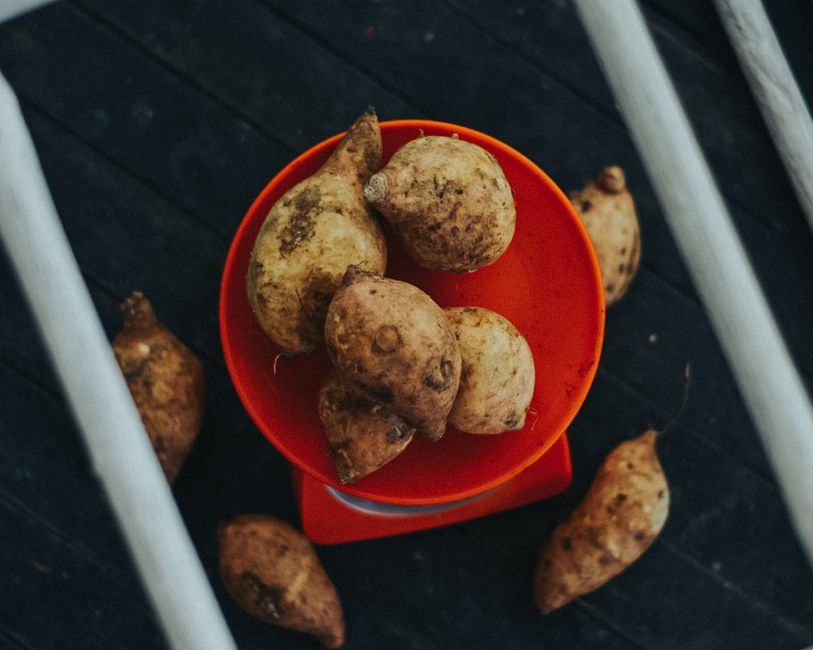
Sweet potatoes are one of the better natural sources of potassium in the produce aisle. A medium baked sweet potato with the skin on delivers roughly 540 to 950 milligrams of potassium, depending on its size and how it is cooked. That places it well above many common vegetables and makes it a meaningful contributor to daily potassium intake for most adults.
Potassium is an essential mineral your body uses for nerve signaling, muscle contraction, and blood pressure regulation. Most Americans fall short of the recommended daily intake, so foods like sweet potatoes can help close that gap. For people with kidney disease or those taking certain medications, however, a high-potassium food like sweet potato can be a genuine concern. This article breaks down the numbers, the cooking effects, and who needs to pay attention.
Is Sweet Potato A High Potassium Food?
Yes. By almost any standard, sweet potato qualifies as a high-potassium food.
The U.S. Department of Agriculture lists a medium baked sweet potato with skin at around 540 milligrams of potassium. Larger sweet potatoes can push past 900 milligrams. For context, a medium banana contains roughly 420 milligrams. So a sweet potato typically delivers more potassium than a banana of similar size.
What counts as “high” depends on the reference point. The FDA considers a food “high” in a nutrient if it provides 20% or more of the Daily Value per serving. The Daily Value for potassium is 4,700 milligrams. That means a food needs about 940 milligrams to qualify as “high” under that rule. A medium sweet potato at 540 milligrams hits roughly 11% of the Daily Value — closer to a “good source” than a “high” source by that specific labeling standard.
But that labeling threshold is strict. In practical terms, sweet potato still ranks among the top potassium contributors in a typical diet. Few single vegetables deliver as much per serving.
How Much Potassium Is in a Sweet Potato?
The amount varies with size and preparation. Here are approximate values based on USDA data:
| Sweet Potato Preparation | Approximate Potassium |
|---|---|
| Medium baked, with skin | 540 mg |
| Medium baked, without skin | 450 mg |
| 1 cup mashed, cooked | 750–950 mg |
| 1 cup raw, cubed | 440 mg |
| Medium boiled, with skin | 475 mg |
The skin holds a meaningful share of the mineral content. Peeling removes some potassium along with fiber and other nutrients. Boiling leaches a portion of potassium into the cooking water, which is why boiled sweet potatoes tend to have slightly less than baked ones.
Roasting, steaming, and microwaving preserve more potassium than boiling. If maximizing potassium intake matters to you, baking or microwaving with the skin intact is the better approach.
How Does Sweet Potato Compare to Other Potassium Sources?
Sweet potato holds its own against most common foods, though a few items beat it.
A medium white potato with skin contains about 620 milligrams — slightly more than a sweet potato of similar size. Beans and lentils are strong contenders: a cup of cooked white beans can exceed 1,000 milligrams. Spinach, avocado, and winter squash also rank high. Salmon and other fish contribute potassium too, though in smaller amounts per serving than these plant sources.
What makes sweet potato useful is the combination. It provides potassium alongside fiber, vitamin A, and vitamin C. Very few single foods offer that package. For someone trying to raise potassium intake without adding supplements, sweet potato is an efficient choice.
One clarification worth making: orange-fleshed sweet potatoes and purple-fleshed varieties differ slightly in potassium content, but the difference is small. Color affects antioxidant profiles more than mineral content.





Why Does Potassium Matter for Your Body?
Potassium is the primary positive ion inside your cells. It works opposite sodium, which dominates outside cells. That balance across cell membranes drives nerve impulses and muscle contractions, including the heartbeat.
Research consistently links adequate potassium intake to lower blood pressure. The mechanism is fairly well understood: potassium helps the kidneys excrete sodium and eases tension in blood vessel walls. The American Heart Association and other major health organizations have long emphasized potassium-rich diets as part of blood pressure management.
Low potassium — called hypokalemia — can cause muscle weakness, cramping, fatigue, and in serious cases, irregular heart rhythms. It typically results from medications like diuretics, prolonged vomiting or diarrhea, or certain medical conditions rather than simply not eating enough sweet potatoes.
Getting potassium from food is generally preferred over supplements for most healthy people. High-dose potassium supplements can cause gastrointestinal irritation and, in people with impaired kidney function, dangerous elevations in blood potassium.
Who Needs to Be Careful With High-Potassium Foods?
People with chronic kidney disease need to monitor potassium intake carefully. Damaged kidneys cannot filter excess potassium efficiently, and levels can rise to dangerous heights. This condition, called hyperkalemia, can disrupt heart rhythm and become life-threatening.
If you have kidney disease, your doctor or dietitian may recommend limiting sweet potatoes or adjusting portion sizes. Some clinical guidance suggests leaching potassium from potatoes by soaking and double-boiling them, which can reduce potassium content. But this is a conversation to have with your care team, not a decision to make on your own.
Certain medications also affect potassium balance:
- ACE inhibitors and ARBs, commonly used for blood pressure, can raise potassium levels
- Potassium-sparing diuretics reduce potassium excretion
- Some diuretics, by contrast, lower potassium and may require dietary replacement
If you take any of these medications, ask your doctor whether your potassium intake needs adjustment. Routine blood tests usually catch problems before they become serious.
For most healthy adults with normal kidney function, there is no need to worry about getting too much potassium from food. The kidneys handle excess efficiently. The bigger problem in the general population is not getting enough.
How Much Potassium Do You Need Each Day?
The recommended daily intake for adults is 4,700 milligrams of potassium, according to the National Academies of Sciences, Engineering, and Medicine. Most Americans consume far less — often around half that amount.
One medium sweet potato provides roughly 11% of that target. Pair it with beans, leafy greens, or avocado, and you can make a substantial dent in your daily needs without supplements.
There is no established upper limit for potassium from food in healthy people. The tolerable upper intake level applies only to supplemental potassium, not dietary sources. That distinction matters: food-based potassium is handled differently by the body than concentrated doses from pills.
Does Cooking Change the Potassium in Sweet Potatoes?
Yes, cooking method affects how much potassium remains in the potato when you eat it.
Boiling causes the most loss because potassium is water-soluble. When you boil a sweet potato, some potassium migrates into the water. If you discard that water, you discard the mineral. Steaming causes less loss because the potato has less direct contact with water. Baking and microwaving preserve the most potassium since no water is involved.
For most people, the difference is not large enough to matter. A boiled sweet potato still delivers hundreds of milligrams. But for someone actively trying to increase potassium intake — or for a kidney patient trying to reduce it — cooking method becomes relevant.
Interestingly, the same water-soluble property that causes potassium loss during boiling is what makes leaching techniques work for people who need to lower potassium in their potatoes. Soaking cut potatoes in water and then boiling them in fresh water can reduce potassium content significantly. Some renal dietitians recommend this approach, though individual guidance varies.
Frequently Asked Questions
Is sweet potato higher in potassium than banana?
Yes, a medium baked sweet potato with skin contains roughly 540 milligrams of potassium, compared to about 420 milligrams in a medium banana. The exact amounts depend on the size of each food.
Can eating too much sweet potato raise potassium to dangerous levels?
For healthy adults with normal kidney function, food sources of potassium rarely cause dangerous levels because the kidneys excrete the excess. People with kidney disease or those taking certain blood pressure medications may need to limit high-potassium foods and should follow their doctor’s guidance.
Does peeling a sweet potato reduce its potassium?
Yes, peeling removes some potassium because the skin and the layer just beneath it contain minerals. A baked sweet potato without skin has roughly 450 milligrams compared to about 540 milligrams with skin.
Is sweet potato a good potassium source for people with high blood pressure?
Potassium-rich foods are generally recommended as part of a blood pressure-lowering eating pattern, and sweet potato fits that category. However, anyone taking blood pressure medication that affects potassium levels should check with their doctor before significantly increasing intake.
