
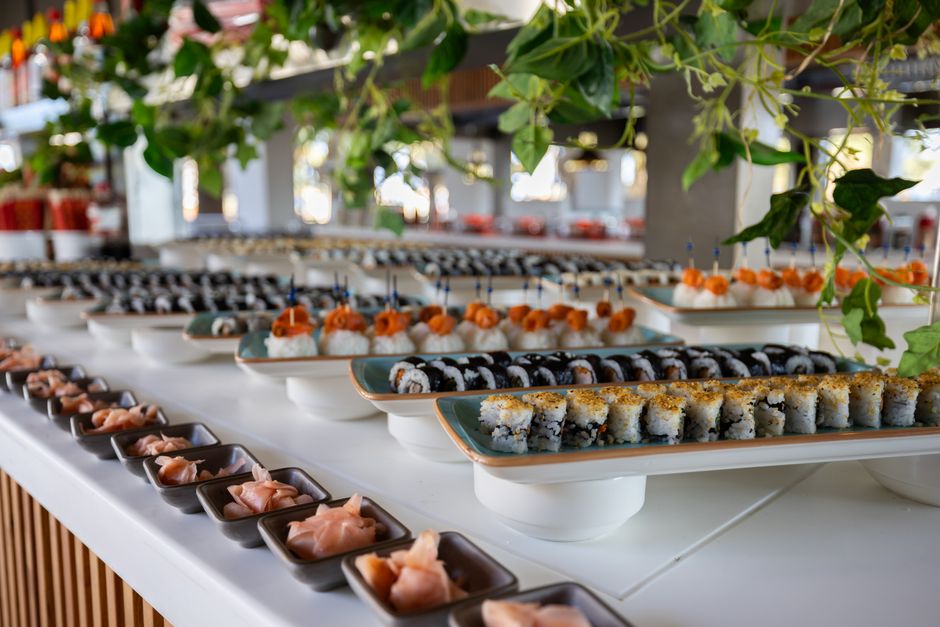
A sushi buffet can be part of a healthy diet, but the buffet format makes it easy to overeat and to load up on fried items, creamy sauces, and white rice. The healthiest approach is to treat it like any other meal: fill most of your plate with fish, vegetables, and plain rice, and keep the fried and saucy options to small portions. Sushi itself is generally a lean, nutrient-dense food. The risks at a buffet come from volume, selection, and food safety rather than from sushi as a concept.
What Makes Sushi Healthy in the First Place?
Fish is the nutritional centerpiece of most sushi. It provides high-quality protein, and oily fish such as salmon, mackerel, and sardines are among the best dietary sources of omega-3 fatty acids. Those fats are well established in heart health research, and most dietary guidelines recommend eating fish regularly for this reason.
Fish also supplies iodine, selenium, and vitamin D, though amounts vary by species. The seaweed wrapper, nori, contributes iodine as well. A typical piece of nigiri — a slice of fish over a small mound of rice — is a modest bite of food, not a heavy one. That is part of why sushi can fit comfortably into a balanced diet.
The rice matters too. White sushi rice is a refined carbohydrate, so it digests quickly and offers little fiber. It is not a health problem on its own, but it does mean sushi is not a high-fiber meal unless you add vegetables or choose brown rice where available.
Is Sushi Buffet Healthy? Where the Buffet Format Goes Wrong
The buffet format changes the math. At a restaurant you order a set amount. At a buffet, the amount is set by your appetite and the effort of walking back for more. Research on eating behavior consistently shows that people eat more when larger portions are in front of them and when variety is high. A buffet offers both at once.
Variety is a specific trigger. Studies on food intake have found that people eat more when offered many different foods in one meal compared with a single food, even when they rate the single food as equally enjoyable. A sushi buffet lines up dozens of options, and each new item resets your interest a little.
Then there is what gets fried and sauced. Tempura rolls, spider rolls, spicy mayo, eel sauce, and cream cheese fillings add fat, sugar, and sodium quickly. None of these are dangerous in a single meal. The issue is that they are often the most appealing items on the line, and they add up without feeling like much food.
Rice adds up too. A single maki roll may contain the equivalent of a cup of cooked rice or more, depending on size. Several rolls in, the carbohydrate load is substantial even before you count the fried fillings.
How Many Calories Are in a Sushi Buffet Meal?
There is no standard calorie count for a buffet meal, because it depends entirely on what you choose. What can be said with confidence is that the range is wide. A plate of sashimi, seaweed salad, and a few vegetable rolls looks very different from a plate of fried rolls with spicy mayo.
Rather than counting, pay attention to the composition of your plate. The table below compares common buffet choices by their general nutritional profile. These are qualitative descriptions, not precise figures, because recipes and portion sizes vary widely between restaurants.
| Buffet Item | General Nutritional Profile |
|---|---|
| Sashimi (plain fish) | High protein, low carbohydrate, no added sauce |
| Nigiri (fish over rice) | Protein plus a small portion of refined carbohydrate |
| Vegetable maki | Low fat, some fiber from vegetables, still refined rice |
| Tempura rolls | Higher fat from frying, often higher sodium |
| Rolls with spicy mayo or eel sauce | Added fat and added sugar |
| Seaweed salad | Low calorie, but often high in sodium from dressing |
| Miso soup | Low calorie, notable sodium content |
Sodium deserves a mention. Soy sauce is high in salt, and a few tablespoons can carry a large share of a day’s recommended intake. The Dietary Guidelines for Americans recommend keeping sodium under 2,300 mg per day for most adults. A buffet meal with soy sauce, miso soup, and seasoned rolls can approach that number in one sitting.
What About Raw Fish and Food Safety?
Raw fish carries a real, if manageable, risk. The main concerns are parasites and bacteria. Fish served raw in the United States is supposed to be frozen first under specific conditions to kill parasites, a practice the FDA outlines in its guidance on fish and fishery products. That freezing step is what makes most commercial sushi safer than fish straight from the water.
Bacteria are a separate issue. Raw fish can carry Listeria, Vibrio, and other organisms. Buffets add risk because food sits out. Sushi is meant to be kept cold, and fish that has been at room temperature for an extended period is a genuine concern. If the buffet looks poorly maintained — warm plates, fish that smells off, ice melting under the display — that is a reason to choose cooked items or leave.
Some people should avoid raw fish entirely. That includes pregnant women, young children, older adults, and anyone with a weakened immune system. These groups are at higher risk of serious illness from foodborne pathogens, and the standard public health guidance is to avoid raw or undercooked fish. Cooked sushi options such as cooked shrimp, eel, or vegetable rolls are the safer choice for these groups.
Is There Mercury in Sushi?
Mercury is a legitimate consideration, particularly for people who eat large fish often. Large predatory fish such as tuna, swordfish, shark, and king mackerel accumulate more mercury than smaller fish. The FDA and EPA publish advice on fish consumption for people who are pregnant or breastfeeding and for young children, and it specifically recommends limiting or avoiding high-mercury species.
For most healthy adults, occasional tuna sushi is not a concern. The bigger issue is frequency and volume. Someone eating tuna at a buffet every week is taking in more mercury than someone who has it occasionally. Salmon, which is lower in mercury, is a reasonable everyday choice. If you eat fish several times a week, varying the species is sensible.
How Do You Eat a Sushi Buffet Without Overdoing It?
Strategy matters more than willpower at a buffet. A few practical habits make a real difference.
- Walk the entire line before you take anything. Decide what you actually want, then go back once.
- Start with sashimi, seaweed salad, and edamame. These fill you up with protein and fiber before the fried items.
- Use a smaller plate. Larger plates reliably lead to larger portions.
- Put soy sauce in a small dish and dip lightly rather than pouring it over the rice.
- Limit fried rolls to one or two pieces rather than a full plate.
- Drink water rather than sugary drinks, which add calories without satiety.
- Pause before going back for a second plate. Buffets reward speed, and slowing down helps.
The single most useful habit is choosing sashimi over rolls. Sashimi is fish without rice, sauce, or frying. It delivers the protein and omega-3s that make sushi worth eating, with none of the extras that pile on calories and sodium.
The Bottom Line on Sushi Buffets
Sushi can be a genuinely healthy food. A buffet is not inherently unhealthy either. What determines the outcome is what lands on your plate and how much of it. A buffet built around sashimi, vegetables, and modest portions of rice is a balanced meal. One built around fried rolls, creamy sauces, and repeated trips back to the line is closer to fast food with a Japanese label.
Food safety is the other variable. Choose buffets that look well run, keep raw fish cold, and avoid raw items if you are in a higher-risk group. Those two factors — selection and safety — matter far more than any single nutrient in the fish.
Frequently Asked Questions
Is sushi buffet healthy?
It can be, depending on what you choose. A buffet heavy in sashimi, vegetables, and plain rice is a balanced meal, while one built around fried rolls and creamy sauces adds substantial fat, sugar, and sodium.
Is it safe to eat raw fish at a buffet?
It is generally safe when the fish has been properly frozen beforehand and kept cold on display. Buffets carry more risk than made-to-order sushi because food sits out, so avoid raw items if the display looks poorly maintained.
Can pregnant women eat sushi from a buffet?
Public health guidance advises pregnant women to avoid raw fish because of the risk of foodborne illness. Cooked options such as cooked shrimp, eel, or vegetable rolls are the safer choice.
How many calories are in a sushi buffet?
There is no standard figure, since it depends entirely on what you eat. Choosing sashimi and vegetables over fried rolls and sauces keeps the total much lower.
