
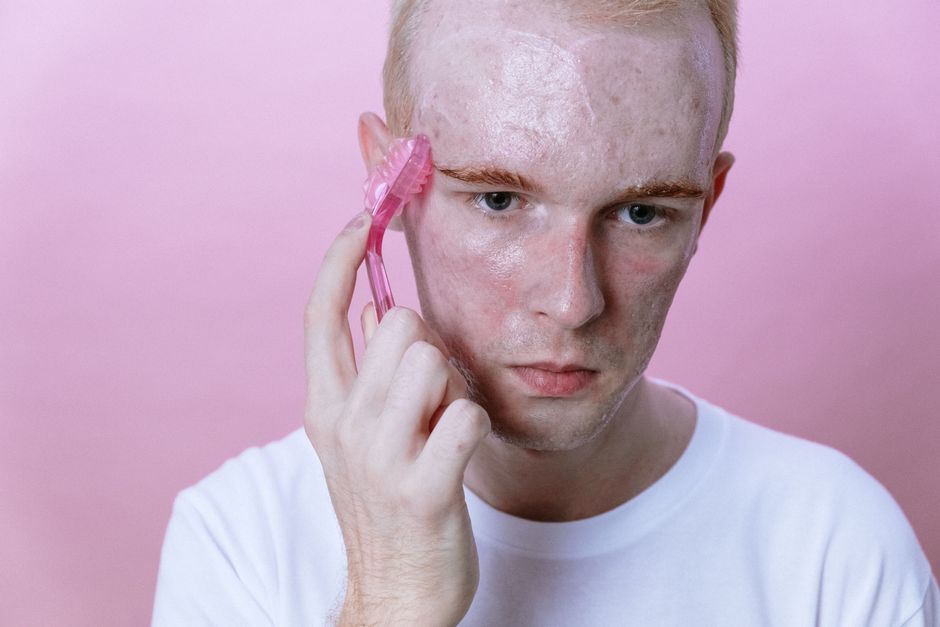
Yes, sudden acne can be a sign of either pregnancy or an upcoming period. Both conditions involve hormonal shifts that increase oil production in your skin. But acne alone cannot tell you which one is happening. You need to look at timing, other symptoms, and a pregnancy test for a clear answer.
What Causes Sudden Acne Before a Period?
In the week or two before your period, your hormone levels change. Estrogen drops and progesterone rises. This shift signals your sebaceous glands to make more oil. Extra oil can clog pores and lead to breakouts.
Progesterone also makes your skin swell slightly. This can trap oil and bacteria inside pores. The result is the acne many women experience in the luteal phase, the time between ovulation and your period.
Research consistently shows that premenstrual acne is real. Studies have found that about half of women who get acne notice it worsens in the days before their period. These breakouts usually appear on the lower face, especially the chin and jawline.
What Causes Acne in Early Pregnancy?
Pregnancy brings a similar but longer-lasting hormone surge. Levels of progesterone and estrogen rise quickly after implantation. The hormone hCG (human chorionic gonadotropin) also increases, which can affect oil glands.
For some women, acne is one of the earliest physical signs of pregnancy. It can start before a missed period, as early as weeks 3 or 4 of pregnancy. The mechanism is the same as period acne: hormones stimulate oil production.
Not every pregnant woman gets acne. Some women’s skin actually clears up. The response varies from person to person. If you have a history of hormonal acne, you are more likely to see breakouts in early pregnancy.
Is Sudden Acne a Sign of Pregnancy or Period?
This is the core question, and the honest answer is that sudden acne can point to either. The hormones that cause breakouts are similar in both situations. The timing of the breakouts relative to your expected period gives the strongest clue.
If acne appears 7 to 10 days before your period starts and resolves shortly after bleeding begins, it is most likely period-related. If acne appears around the time your period is due but does not go away, and especially if your period does not arrive, pregnancy becomes a real possibility.
Location alone does not reliably tell them apart. Both period and pregnancy acne tend to cluster on the lower face, chin, and jawline. Some women also get breakouts on the chest or back.
Other early pregnancy symptoms can help point you in the right direction. Breast tenderness, fatigue, nausea, and a missed period together with acne raise the likelihood of pregnancy. But acne by itself is not enough to make that call. A home pregnancy test is the definitive way to know.


How Can You Tell the Difference?
Tracking your cycle is the most practical first step. If you know when you ovulated, you can estimate when your period is due. Acne that consistently appears in the same window each cycle is probably hormonal acne related to your menstrual cycle.
Pay attention to other symptoms. Period-related acne often comes with breast soreness, bloating, mood changes, and food cravings. Pregnancy-related acne can be accompanied by missed period, implantation spotting, morning sickness, or extreme fatigue. But many women have no pregnancy symptoms at all in the first few weeks.
There is one reliable way to settle the question: take a pregnancy test. Most home tests can detect hCG by the first day of a missed period. Some sensitive tests can show a positive result a few days before that. If the test is negative and your period still does not arrive, repeat the test a week later.
No clinical evidence supports using acne alone to diagnose pregnancy. Do not rely on skin changes as a stand-alone sign. If you are actively trying to conceive or worried about an unplanned pregnancy, a test is the safest approach.
When Should You See a Dermatologist or Doctor?
Most cases of sudden acne related to hormones are mild and temporary. Over-the-counter products with benzoyl peroxide, salicylic acid, or gentle retinoids can help manage breakouts. But if you are pregnant or might be pregnant, check with your doctor before using any acne treatment. Some ingredients, like isotretinoin and high-dose vitamin A, are not safe during pregnancy.
See a dermatologist if your acne is severe, painful, or leaving scars. A doctor or dermatologist can also help if you have irregular periods and acne, which might point to a hormonal condition like polycystic ovary syndrome (PCOS). This is a well-established cause of persistent acne and irregular cycles that requires medical evaluation.
If you are unsure whether you are pregnant and your period does not come, see your primary care provider or visit a women’s health clinic. They can perform a blood test that is more sensitive than a home test. Early prenatal care matters if you are pregnant.
Frequently Asked Questions
Can acne be the first sign of pregnancy?
Yes, for some women, acne is an early symptom that can appear before a missed period. But it is not a reliable sign on its own because many women also get premenstrual breakouts.
How soon after conception does acne start?
Acne can start as early as 3 to 4 weeks after the first day of your last menstrual period, which is about 1 to 2 weeks after conception. Hormone levels rise quickly after implantation.
Does pregnancy acne look different from period acne?
No, they look very similar. Both tend to appear as inflammatory red bumps or whiteheads, most often on the chin and jawline. Location and appearance do not reliably tell them apart.
What should I do if I have sudden acne and my period is late?
Take a home pregnancy test. If it is positive, make an appointment with your healthcare provider. If it is negative and your period does not arrive in a week, repeat the test or see your doctor.
