
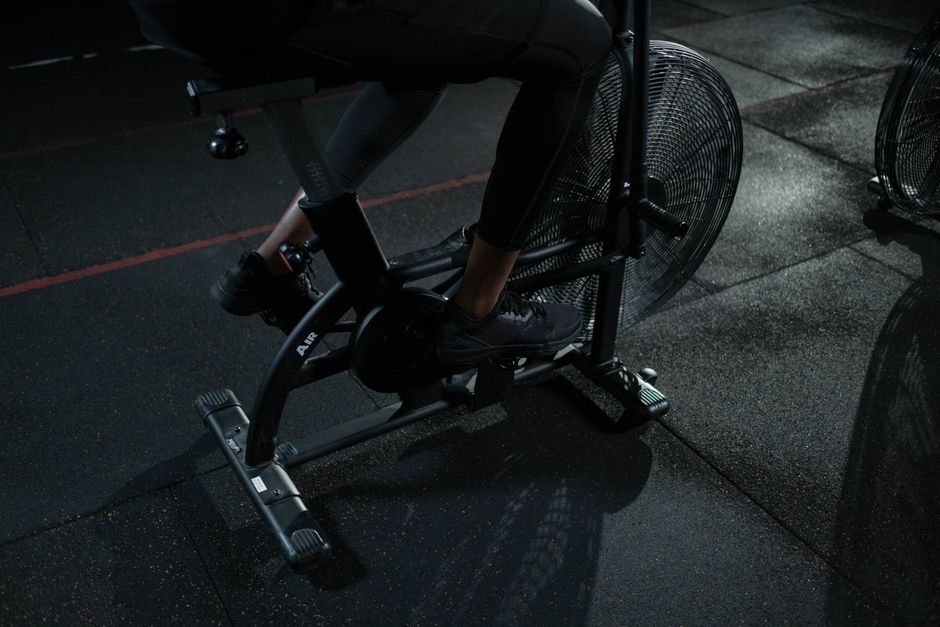
Yes, a stationary bike is a highly effective tool for weight loss. It allows you to burn a significant number of calories, is easy on your joints, and fits into almost any schedule. The key to success is consistency and pairing your rides with a calorie-conscious diet.
How Does Stationary Biking Burn Calories?
Weight loss comes down to burning more calories than you consume. A stationary bike helps you create that calorie deficit. The exact number of calories you burn depends on your weight, the intensity of your ride, and the duration.
When you pedal, your large leg muscles—the quadriceps, hamstrings, and glutes—require energy. This energy comes from calories. A harder workout makes your muscles work more, which burns more calories. Research consistently shows that moderate to vigorous cycling can burn anywhere from 400 to 600 calories per hour for a person of average weight. This makes it comparable to jogging or using an elliptical machine.
The beauty of a stationary bike is that you can control the resistance. You can do a gentle recovery ride or a high-intensity interval session. Both have a place in a weight loss plan, but the harder you work, the more calories you burn per minute.
Is Stationary Bike Good For Weight Loss Compared to Other Cardio?
Many people wonder how the bike stacks up against the treadmill or the elliptical. The stationary bike is a legitimate competitor. It offers a unique advantage: low impact. Running on a treadmill sends shockwaves through your ankles, knees, and hips. The bike eliminates that impact entirely.
This makes it an excellent choice if you have joint pain, are overweight, or are recovering from an injury. You can push your cardiovascular system hard without worrying about your joints giving out. In fact, because it is low impact, you may be able to exercise longer and more frequently than you could with running.
Compared to the elliptical, the bike is often more straightforward to use correctly. It is easier to maintain proper form, which reduces the risk of injury. Most people find it easier to sustain a high intensity on a bike for a longer period than on a treadmill. The ability to sit down and pedal also makes it easier to read or watch television, which can help you stick with your routine.
What Is the Best Way to Use a Stationary Bike for Weight Loss?
Simply sitting on the bike and pedaling slowly will not maximize your results. To lose weight efficiently, you need to structure your workouts. A combination of steady-state cardio and interval training works best.
Steady-state cardio means maintaining a moderate pace for a longer duration, like 30 to 45 minutes. This builds your aerobic base and burns a steady number of calories. You should be working hard enough that you can talk, but only in short sentences. This is often called Zone 2 training.
Interval training, or HIIT (High-Intensity Interval Training), involves short bursts of all-out effort followed by recovery periods. For example, you might sprint for 30 seconds and then pedal slowly for 60 seconds. Repeat this cycle for 15 to 20 minutes. HIIT is incredibly efficient. Some studies indicate that HIIT can burn more calories in a shorter period than steady-state exercise. It also creates an “afterburn” effect, where your body continues to burn calories for hours after you finish.
A practical weekly plan might look like this:
- Day 1: 30 minutes of steady-state cycling at a moderate pace.
- Day 2: 20 minutes of HIIT intervals.
- Day 3: Rest or light walking.
- Day 4: 45 minutes of steady-state cycling.
- Day 5: 20 minutes of HIIT intervals.
- Day 6: 30 minutes of easy, recovery cycling.
- Day 7: Rest.
Listen to your body. If you are new to exercise, start with shorter sessions and gradually increase the time and intensity.





Why Is Diet More Important Than Exercise for Weight Loss?
This is a critical point that is often overlooked. You cannot out-exercise a poor diet. Exercise burns calories, but it is much easier to consume calories than to burn them. A single slice of pizza might take 45 minutes of cycling to burn off.
For weight loss to happen, your diet must be in a calorie deficit. This means eating fewer calories than your body uses each day. The stationary bike helps widen that deficit, allowing you to lose weight faster or eat slightly more while still losing weight.
Focus on whole foods like vegetables, fruits, lean proteins, and whole grains. These foods are filling and nutrient-dense, making it easier to stay within your calorie budget. Protein is particularly important because it helps preserve muscle mass while you lose fat. A higher protein intake also keeps you feeling full longer.
No specific diet is required for cycling to work. Any diet that creates a sustainable calorie deficit will lead to weight loss. The best diet is the one you can stick with long-term.
How Long Does It Take to See Results from Stationary Biking?
Results depend on your starting point and your consistency. If you are new to exercise and you ride three to four times per week while eating a sensible diet, you may notice changes in how your clothes fit within a few weeks. Visible changes on the scale may take a month or more.
It is important to be patient. Rapid weight loss is often water weight or muscle loss, which is not healthy. Aim for a slow, steady loss of about 1 to 2 pounds per week. This is considered a safe and sustainable rate.
One non-obvious insight is that the scale can be misleading. As you build muscle in your legs, you may gain a small amount of weight even as you lose fat. Muscle is denser than fat, so you might look leaner and smaller even if the number on the scale does not change much. Pay attention to how your clothes fit and how you feel rather than obsessing over the scale.
Can You Lose Belly Fat by Riding a Stationary Bike?
You cannot spot-reduce fat. This is a common myth. Doing hundreds of crunches will not specifically burn belly fat, and cycling will not specifically burn leg fat. When you lose weight, your body decides where it pulls fat from based on your genetics.
For many people, belly fat is the last place they lose weight. This can be frustrating, but it is normal. The good news is that regular aerobic exercise like cycling is effective at reducing overall body fat, which will eventually include belly fat. Research consistently shows that aerobic exercise reduces visceral fat—the dangerous fat stored around your organs.
The best approach is to focus on overall fat loss. Stick with your cycling routine, maintain a calorie deficit, and be consistent. Eventually, your body will mobilize the fat stores, including those in your midsection.
What Are the Common Mistakes to Avoid?
Several mistakes can slow your progress or lead to injury. Avoid these to get the most out of your workouts.
Mistake 1: Riding at the same pace every day. Your body adapts quickly. If you always pedal at the same resistance and speed, you will plateau. You need to vary your intensity to keep challenging your body.
Mistake 2: Slouching. Poor posture on the bike can cause back and neck pain. Keep your shoulders relaxed, your core engaged, and your back straight. Adjust the seat height so your knee is slightly bent at the bottom of the pedal stroke.
Mistake 3: Gripping the handlebars too tightly. You should not be putting your full body weight on the handlebars. Your legs should do the work. A light grip helps prevent wrist and shoulder strain.
Mistake 4: Skipping rest days. Your muscles need time to recover and rebuild. Riding hard every single day can lead to burnout and overuse injuries. Rest days are essential for long-term progress.
Mistake 5: Ignoring your diet. As mentioned, exercise alone is rarely enough. If you are not losing weight, look at your food intake first. Track your calories for a few days to see where you actually are.
Frequently Asked Questions
How many minutes a day should I ride a stationary bike to lose weight?
Aim for at least 30 minutes of moderate cycling most days of the week. For faster results, combine 30-minute sessions with 20-minute interval workouts a few times per week.
Is it better to use a stationary bike or walk for weight loss?
Both burn calories, but a stationary bike allows for higher intensity with less joint stress. You can often burn more calories per minute on a bike than walking at a brisk pace.
Will a stationary bike make my legs bulky?
No, cycling builds endurance and tones muscle without adding significant bulk for most people. It primarily burns fat and improves muscle definition rather than increasing leg size.
Can I lose weight using a stationary bike every day?
Yes, but vary your intensity and take at least one or two easy days per week. Riding hard every day can lead to burnout and injury, which will set back your progress.
