
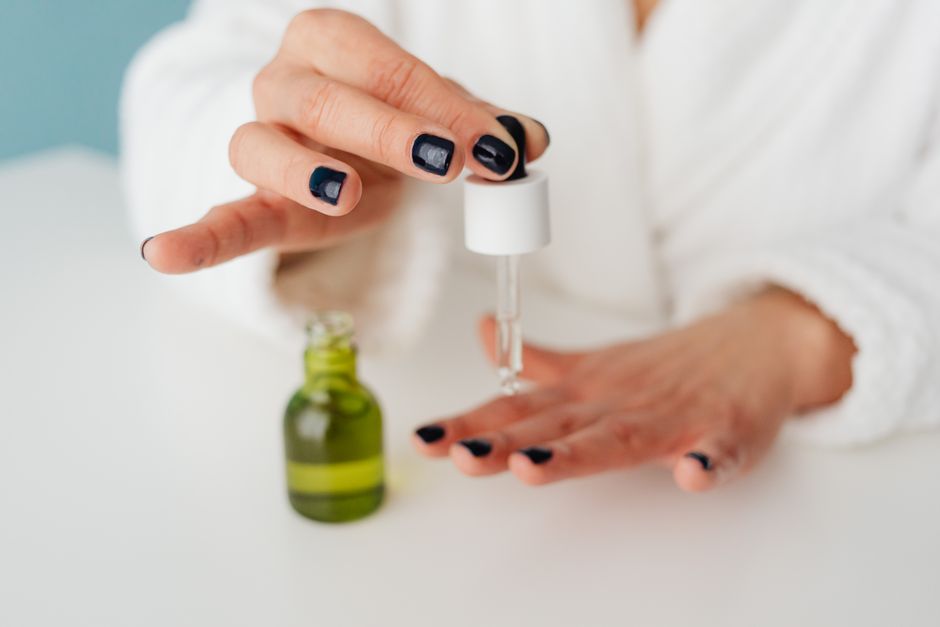
Squalane is generally considered safe for fungal acne-prone skin because it does not feed the yeast that causes most cases of this condition. It is a saturated hydrocarbon, which means it contains no fatty acid chains that Malassezia yeast can metabolize. This is the key reason it appears on most ingredient lists for people managing fungal acne.
That said, “safe” and “helpful” are not the same thing. Squalane does not treat fungal acne, and using it will not clear an active flare. It is a moisturizer, not an antifungal.
What Is Fungal Acne, and Why Does It Change Which Products You Can Use?
Fungal acne is a misleading name. It is not acne at all. The clinical term is Malassezia folliculitis, an inflammatory condition caused by an overgrowth of Malassezia yeast inside hair follicles.
Malassezia is a genus of yeast that lives on human skin as part of the normal microbiome. It is present on most adults. Problems start when the yeast multiplies beyond its usual balance, often in warm, humid conditions or on oily skin. The result is clusters of small, itchy bumps that look a lot like acne but behave differently.
The reason this matters for product choices comes down to what the yeast eats. Malassezia is lipid-dependent. It cannot synthesize its own long-chain fatty acids and must absorb them from the skin’s surface. Ingredients that contain or break down into these fatty acids can fuel its growth.
This is why standard acne treatments sometimes make fungal acne worse. Many creams and cleansers contain oils, esters, and fatty acid derivatives that feed the yeast rather than starve it. The reaction is not an allergy. It is a food source.
Why Squalane Does Not Feed Malassezia
Squalane is a saturated hydrocarbon. It is chemically inert in the sense that it contains no double bonds and no fatty acid structure. Malassezia needs carbon chains it can break down into usable fatty acids. Squalane does not offer that.
This is the central reason squalane is widely regarded as safe for fungal acne-prone skin. The yeast has no metabolic pathway to consume it. In practical terms, applying squalane does not add fuel to a Malassezia overgrowth.
It helps to understand where squalane comes from. The human body produces squalene, an unsaturated lipid that is a precursor to cholesterol and a natural component of sebum. Squalene is not the same as squalane. Squalene has double bonds and can oxidize. Squalane is the hydrogenated, saturated version, which is far more stable.
Most squalane in skincare today is made from plant sources, often sugarcane or olive oil, through a process that saturates the molecule. Some is still derived from shark liver oil, though plant-derived versions now dominate the market.
Is Squalane Safe for Fungal Acne Prone Skin? What the Evidence Shows
The evidence here is indirect but consistent. There is no large clinical trial testing squalane specifically in people with confirmed Malassezia folliculitis. What exists instead is a clear understanding of the yeast’s nutritional requirements and the chemistry of squalane.
Because Malassezia cannot use saturated hydrocarbons as a carbon source, squalane does not meet the criteria for a problematic ingredient. This is a mechanistic argument, not a trial result, and it is worth being honest about that distinction.
What clinicians and researchers generally agree on is that the ingredients most likely to worsen fungal acne are those containing carbon chain lengths that Malassezia can metabolize. These include many plant oils, fatty acids, fatty alcohols, and polysorbates. Squalane is not in that category.
Some sources note that squalane can still cause irritation or clogged pores in certain people for unrelated reasons. That is a separate issue from feeding the yeast. A product can be fungal-acne safe and still not suit your skin.
How Squalane Compares to Other Common Emollients
Not all moisturizing ingredients behave the same way around Malassezia. The table below summarizes the general pattern, based on the yeast’s known nutritional needs.
| Ingredient | Generally Considered Fungal-Acne Safe? | Notes |
|---|---|---|
| Squalane | Yes | Saturated hydrocarbon; no fatty acid structure |
| Caprylic/capric triglyceride | Often cited as safe | Medium-chain; widely used in fungal-acne-friendly products |
| Mineral oil | Yes | Hydrocarbon; not metabolized by Malassezia |
| Coconut oil | No | Rich in lauric acid, a known Malassezia fuel |
| Olive oil | No | Contains oleic and other fatty acids |
| Most plant oils | Usually no | Contain fatty acids the yeast can use |
The pattern is straightforward. Ingredients built on saturated hydrocarbons tend to be fine. Ingredients built on fatty acids tend to be a problem. Squalane sits firmly in the first group.
One clarification worth making: “fungal-acne safe” is not an official regulatory category. It is a practical label the skincare community uses, based on whether an ingredient can feed Malassezia. Different sources sometimes disagree at the margins, particularly for ingredients that are chemically borderline.
What Squalane Can and Cannot Do
Squalane is an emollient. It softens and smooths the skin surface by filling in the gaps between skin cells. It is lightweight, generally non-greasy, and well tolerated by most skin types, including sensitive skin.
What it cannot do is treat fungal acne. It has no antifungal activity. It will not kill Malassezia, reduce an overgrowth, or resolve an active flare. If you are dealing with an active case, squalane is not the solution. It is simply an ingredient that will not make things worse.
This distinction matters because some marketing implies that “fungal-acne-safe” products actively help the condition. They do not. They avoid adding fuel. That is the entire benefit.
For active fungal acne, the ingredients with actual antifungal activity are different. These include ketoconazole, zinc pyrithione, selenium sulfide, and certain other agents used in medicated shampoos and washes. Some clinicians recommend using these as body or face washes for a period of weeks. This is common clinical practice, though the strength of evidence varies by specific agent and formulation.
How to Use Squalane If You Have Fungal Acne
If your fungal acne is under control and you are looking for a moisturizer that will not trigger a flare, squalane is a reasonable option. A few practical points apply.
- Patch test first. Even safe ingredients can irritate individual skin.
- Choose a product with a short ingredient list. Squalane itself is fine, but it is often combined with other ingredients that may not be.
- Check the full formula, not just the headline ingredient. A “squalane moisturizer” can still contain fatty alcohols or oils that feed the yeast.
- Do not expect it to clear bumps. It maintains skin comfort, not treats the condition.
The ingredient list is where problems usually hide. Squalane on its own is low risk. A product that lists squalane first but also contains coconut oil, olive oil, or certain esters is a different story.
When to See a Doctor
Fungal acne is frequently misdiagnosed. It looks like acne, and it often does not respond to standard acne treatments. If you have tried acne products for several weeks with no improvement, or if the bumps are itchy and clustered on the chest, back, or upper arms, that pattern points more toward Malassezia folliculitis.
A dermatologist can confirm the diagnosis and prescribe appropriate treatment. Self-treating with the wrong products can prolong the problem. If you are unsure what you are dealing with, getting a proper diagnosis is worth the visit.
Frequently Asked Questions
Is squalane safe for fungal acne prone skin?
Yes, squalane is generally considered safe because it is a saturated hydrocarbon that Malassezia yeast cannot metabolize. It does not feed the yeast or worsen the condition.
Does squalane treat fungal acne?
No, squalane has no antifungal activity and will not clear an active flare. It is a moisturizer that avoids adding fuel, not a treatment.
Can squalane cause breakouts?
Squalane is generally well tolerated and considered low-comedogenic, though individual reactions vary. If you notice clogged pores after using it, stop and reassess the full product formula.
What ingredients should I avoid if I have fungal acne?
Ingredients containing fatty acids that Malassezia can use are the main concern, including coconut oil, olive oil, and many other plant oils. Checking full ingredient lists matters more than any single headline ingredient.
