
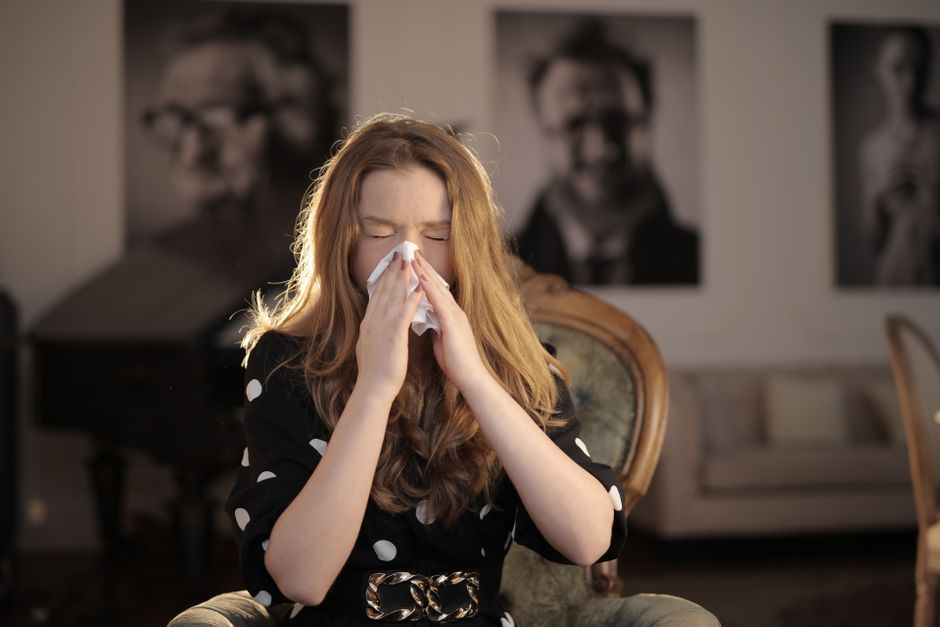
Sneezing is a protective reflex, not a health treatment. It is your body’s way of forcefully clearing irritants from your nose and airways. While a good sneeze can feel satisfying, the idea that suppressing a sneeze is dangerous or that sneezing itself provides specific health benefits requires a closer look at what the reflex actually does.
What Actually Happens When You Sneeze
A sneeze is a coordinated reflex. It starts when something irritates the lining of your nasal passages. That irritation triggers a signal through the trigeminal nerve, which is a major nerve in your face. Your brain then sends signals to your chest muscles, diaphragm, and throat to produce a forceful blast of air.
That blast can travel at high speed, although specific speed measurements vary widely in research. The purpose is simple: eject the irritant — dust, pollen, viruses, or other particles — out of your airways. It is a mechanical cleaning process, not a metabolic or immune boost.
Some research suggests that sneezing may also reset the cilia, which are tiny hair-like structures lining your nasal passages. Cilia move mucus and trapped particles toward the back of your throat. A sneeze may help restore their function after they have been overwhelmed by irritants. This is an emerging area of study, not a firmly established clinical fact.
Is Sneezing Good For You? The Evidence
The most honest answer is that sneezing is good for you in the sense that it is a functioning defense mechanism. It clears irritants and helps protect your respiratory tract from inhaled debris. If you could not sneeze, your airways would be less effective at removing particles that could cause infection or blockage.
That does not mean sneezing has direct health benefits beyond this clearing function. It does not boost your immune system, detoxify your body, or improve your overall health. Those claims are not supported by evidence.
What matters more is whether you sneeze normally and without complications. A healthy sneeze that clears your nose is doing its job. A sneeze that is frequent, painful, or accompanied by other symptoms points to an underlying issue that needs attention, not a benefit to embrace.
Should You Hold In a Sneeze?
Holding in a sneeze is not recommended. When you pinch your nose and close your mouth to suppress a sneeze, you trap pressure inside your upper airways. This pressure has nowhere to go and can cause injury.
Documented cases in medical literature describe injuries from suppressed sneezes. These include ruptured eardrums, damage to the throat, and in rare cases, injury to the blood vessels in the brain. These are uncommon events, but they are serious enough that clinicians advise against forcefully holding sneezes in.
The safe approach is to let the sneeze happen. If you are concerned about spreading germs, sneeze into your elbow or a tissue. That contains droplets without creating dangerous internal pressure.
Some people worry about sneezing with their mouth open. There is no good evidence that sneezing with your mouth open is harmful. The reflex is designed to release pressure, and letting it happen naturally is the safest course.
Can You Stop a Sneeze Safely?
If you feel a sneeze coming on and want to prevent it, there are techniques that some people find helpful. Pressing your tongue against the roof of your mouth, pinching the bridge of your nose, or breathing through your nose slowly may help in some cases. These are not guaranteed methods, and no clinical trials have rigorously tested them.
The distinction matters. Gently trying to prevent a sneeze by redirecting your breathing is different from forcefully clamping your nose and mouth shut. The forceful suppression is the dangerous behavior. The gentle prevention techniques carry little risk, but they are also not reliably effective.
If you have a condition that makes sneezing painful — such as a recent rib injury, abdominal surgery, or a hernia — talk to your doctor about strategies that are safe for your specific situation. There is no one-size-fits-all guidance for these cases.
Why Do Some People Sneeze More Than Others?
Sneezing frequency varies widely from person to person. Common triggers include allergies, viral infections, dust, strong odors, and sudden temperature changes. Some people have a reflex called the photic sneeze reflex, where bright light triggers sneezing. This affects a notable portion of the population and is a genetic trait, not a disorder.
Frequent sneezing alone is not necessarily a sign of a problem. If sneezing is accompanied by a runny nose, itchy eyes, or congestion, allergies are a likely cause. If it comes with fever or body aches, a viral infection may be the culprit.
Persistent sneezing that interferes with daily life warrants a medical evaluation. An allergist or an ear, nose, and throat specialist can help identify triggers. Antihistamines and nasal steroid sprays are common treatments for allergic sneezing, but you should discuss options with a clinician before starting any medication.
When Sneezing Is a Warning Sign
Most sneezes are harmless. But certain patterns deserve medical attention.
- Sneezing accompanied by severe facial pain or pressure, which could indicate a sinus infection.
- Sneezing with bloody nasal discharge that does not stop quickly.
- Sneezing that follows a head injury, especially if it is new or worsening.
- Sneezing with neurological symptoms like weakness, numbness, or vision changes.
These symptoms are not caused by the sneeze itself. They point to an underlying condition that needs evaluation. Do not ignore them because you assume sneezing is a healthy reflex.
In rare cases, sneezing can trigger complications in people with certain conditions. For example, someone with a weakened blood vessel in the brain may face a higher risk of bleeding during a forceful sneeze. This is extremely rare and not something most people need to worry about.
Does Sneezing Spread Disease?
Yes. Sneezing propels respiratory droplets into the air. Those droplets can carry viruses and bacteria. This is a primary way respiratory infections spread from person to person.
Covering your mouth and nose when you sneeze is a public health measure, not just a courtesy. Sneezing into your elbow or a tissue reduces the distance those droplets travel. Washing your hands after sneezing into them is essential because your hands then touch surfaces that others may touch.
This matters because the same reflex that protects you can harm others. A sneeze is not inherently good or bad for public health — it depends on how you handle it.
Is There Any Benefit to Suppressing Sneezes?
There is no evidence that suppressing sneezes provides any health benefit. The only reasons to suppress a sneeze are social or situational — staying quiet in a meeting or avoiding a loud noise in a quiet room. Those are practical reasons, not health reasons.
If you find yourself suppressing sneezes frequently, it may be worth addressing the underlying trigger. If allergies cause your sneezing, treating the allergy may reduce how often you need to sneeze in the first place.
Some people believe that holding in a sneeze preserves energy or prevents the spread of germs. Neither belief is supported by evidence. The reflex exists to protect you, and interfering with it carries more risk than benefit.
Frequently Asked Questions
Is it dangerous to hold in a sneeze?
Yes, forcefully holding in a sneeze can cause injury. Documented cases include ruptured eardrums and damage to throat tissues from trapped pressure.
Does sneezing clear your lungs?
No, sneezing clears your nasal passages and upper airways. It does not clear your lungs, which is the job of coughing.
Can sneezing be a sign of a serious condition?
Usually not, but sneezing with severe facial pain, bleeding, or neurological symptoms warrants medical evaluation. These symptoms point to an underlying issue, not the sneeze itself.
Why do I sneeze when I look at bright lights?
This is called the photic sneeze reflex, a genetic trait that affects a notable portion of the population. It is harmless and does not require treatment.
