
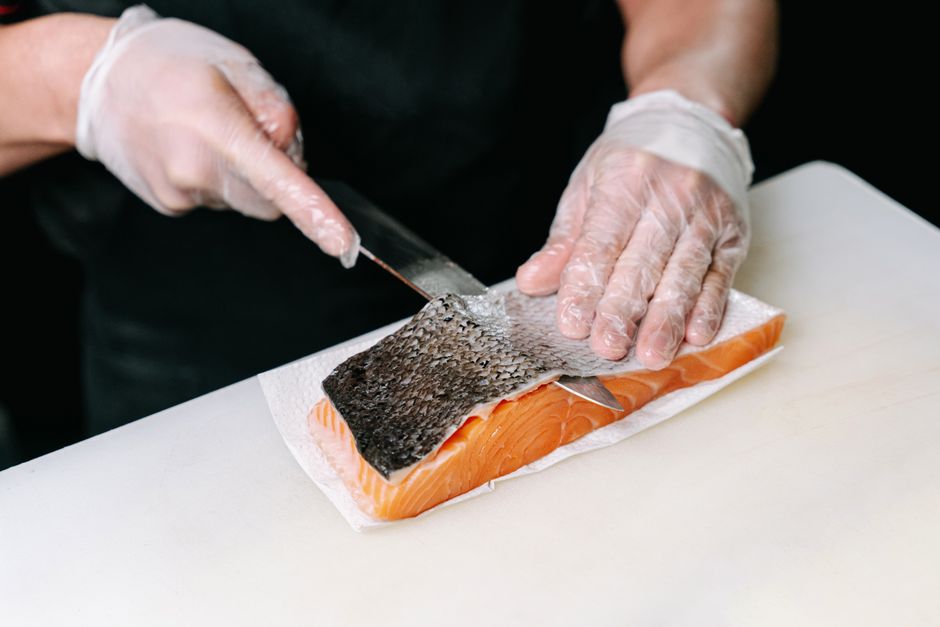
Salmon skin is edible, nutritious, and safe to eat when the fish has been properly cooked or handled. It contains a concentrated share of the same omega-3 fats found in the flesh, along with collagen and several minerals. The main reasons people avoid it are texture and a mistaken belief that it is dirty or toxic. Neither concern holds up under scrutiny.
That said, “healthy” is not the same as “always the best choice.” How the salmon was farmed or caught, and how it is cooked, changes the picture. Here is what the evidence actually supports.
What Is Actually in Salmon Skin?
Salmon skin is mostly protein, fat, and water, with collagen making up a large share of the protein. Collagen is the structural protein that gives skin its toughness. When salmon is cooked, that collagen softens, which is why crisp salmon skin has a distinct texture rather than a rubbery one.
The fat content is the interesting part. Salmon stores much of its omega-3 fatty acids in the layer of tissue just under the skin, and the skin itself sits directly on top of that fat. Omega-3s — mainly EPA and DHA — are the nutrients most strongly linked to salmon’s heart and brain benefits.
The skin also carries small amounts of vitamin D, vitamin B12, and minerals including selenium. These are present in the flesh too. The skin is not a dramatically different food; it is a slightly more concentrated version of what is already in the fish.
One clarification worth making: salmon skin is not a “superfood” that delivers benefits the flesh does not. It is simply part of the same fish, and eating it means you are not throwing away nutrients you already paid for.
Is Salmon Skin Healthy to Eat?
Yes, for most people. The nutrients in salmon skin are real and absorbable. Cooking the skin does not destroy its omega-3 content in any meaningful way, and the protein and collagen are digested normally.
The nutritional case is straightforward. If you eat the skin, you get more of the fat-soluble nutrients and more total protein per serving than if you scrape it off. There is nothing in salmon skin that is inherently harmful to a healthy adult.
Where the answer gets more careful is with contaminants. Fish can accumulate environmental pollutants such as PCBs and dioxins in their fat. These compounds tend to concentrate in fatty tissue, and the skin sits against that fat. This is a real consideration, not a myth.
However, the levels found in commercially sold salmon in the United States are regulated, and federal dietary guidance continues to recommend salmon as part of a healthy diet, including for people who are pregnant. The benefits of eating fish are generally judged to outweigh contaminant risks at typical consumption levels. If you eat salmon frequently and want to reduce fat-soluble contaminant intake, trimming the skin and the gray fat underneath is a reasonable step — but it is a modest reduction, not a dramatic one.
Does Cooking Method Change Whether the Skin Is Healthy?
Cooking method changes the skin more than it changes the fish. The nutrients survive most cooking methods. What changes is the fat content and the formation of cooking-related compounds.
Grilling, broiling, and pan-searing at high heat can cause some of the skin’s fat to render and drip away. That reduces calories slightly and also reduces some fat-soluble contaminants. It also creates the crisp texture many people enjoy.
High-heat cooking of any protein can form compounds such as heterocyclic amines, which are associated with increased cancer risk in some studies when meat is charred or cooked at very high temperatures over long periods. This is a general cooking consideration, not something specific to salmon skin. Avoiding heavy charring is a sensible general practice.
Frying in oil adds fat and calories from the oil itself. That is a bigger factor in the health profile of a salmon dish than the skin is.
Raw or lightly cured salmon skin is a different question. Raw fish carries a risk of parasites and bacteria. Freezing according to food-safety standards is what makes raw salmon safe to eat, and that applies to the skin as much as the flesh. If you are not certain the fish was handled to those standards, cook it.





Salmon Skin vs. Salmon Flesh: How Do They Compare?
The two are not rivals. They are parts of the same food, and the differences are modest. The table below reflects general nutritional patterns rather than exact values, which vary by species, diet, and whether the fish was farmed or wild.
| Nutrient | Salmon Skin | Salmon Flesh |
|---|---|---|
| Omega-3 fats (EPA/DHA) | Present, concentrated near skin | High |
| Protein | Mostly collagen | Complete protein, all essential amino acids |
| Vitamin D | Present in small amounts | One of the better food sources |
| Vitamin B12 | Present | High |
| Selenium | Present | High |
| Fat-soluble contaminants | Can concentrate in fatty layer | Can concentrate in fatty layer |
The practical takeaway: the flesh is the more complete protein source, while the skin adds fat and collagen. Eating both gives you the most from the fish.
Are There Reasons to Avoid Salmon Skin?
For some people, yes. The reasons are practical rather than nutritional.
- Calories and fat. Salmon skin is fatty. If you are managing fat intake for a medical reason, removing it trims some calories and fat.
- Contaminant exposure. People who eat fatty fish very often may choose to trim skin and visible fat to lower intake of fat-soluble pollutants. This is a judgment call, not a requirement.
- Texture and preference. Some people simply dislike it. That is a valid reason to skip it.
- Gout or purine sensitivity. Fish contains purines, which can matter for people managing gout. This applies to the whole fish, not the skin alone.
- Raw preparations. Uncooked skin carries the same food-safety risks as uncooked flesh.
None of these make salmon skin dangerous for a generally healthy person. They are reasons an individual might choose not to eat it.
What About Farmed vs. Wild Salmon Skin?
Both are safe to eat when cooked. The differences are in fat content and contaminant profile, and they are not as dramatic as headlines suggest.
Farmed salmon tends to be higher in total fat, which means more omega-3s but also potentially more fat-soluble contaminants. Wild salmon tends to be leaner. Regulatory monitoring in the US and Europe has generally found contaminant levels in both farmed and wild salmon below thresholds of concern for typical consumption.
If you eat salmon often and want to minimize contaminant intake, some research suggests that trimming skin and the dark fat layer can reduce levels of certain pollutants. The reduction is partial, not complete. The fish is still worth eating.
The more important variable is how often you eat fish overall. Federal dietary guidance recommends eating a variety of fish regularly, and salmon is one of the recommended choices because of its omega-3 content and low mercury level relative to many other fish.
How Should You Cook Salmon Skin to Get the Most From It?
Cook it hot and fast if you want it crisp, or gently if you want it soft. Both work. The goal is to cook the fish through and render the skin’s fat so the texture is pleasant.
Pan-searing skin-side down in a hot pan is the most common approach. The skin crisps as its moisture evaporates and its fat renders. Grilling and broiling achieve a similar result. Baking at moderate heat produces softer skin.
Two practical points. First, pat the skin dry before cooking — moisture is the enemy of crispness. Second, do not crowd the pan; trapped steam makes the skin soggy.
If you are cooking for someone who is pregnant, very young, older, or immunocompromised, cook the fish thoroughly. Those groups face higher risk from foodborne illness, and the guidance for them is well established: cook fish to a safe internal temperature and avoid raw or undercooked preparations.
Frequently Asked Questions
Is salmon skin healthy to eat?
Yes, for most healthy adults, salmon skin is nutritious and safe when properly cooked. It contains omega-3 fats, collagen, and minerals similar to those in the flesh.
Is salmon skin bad for you because of mercury?
No. Salmon is a low-mercury fish, and the skin does not concentrate mercury the way some other contaminants can concentrate in fat. Mercury risk from salmon is low for typical eaters.
Can you eat salmon skin raw?
Only if the fish was frozen to food-safety standards first, which is what makes raw salmon safe. Otherwise, cook it to avoid parasites and bacteria.
Does salmon skin have more omega-3s than the flesh?
The omega-3 fats are concentrated in the fatty tissue just beneath the skin, so eating the skin along with that layer gives you more of them. The flesh on its own is still an excellent source.
