
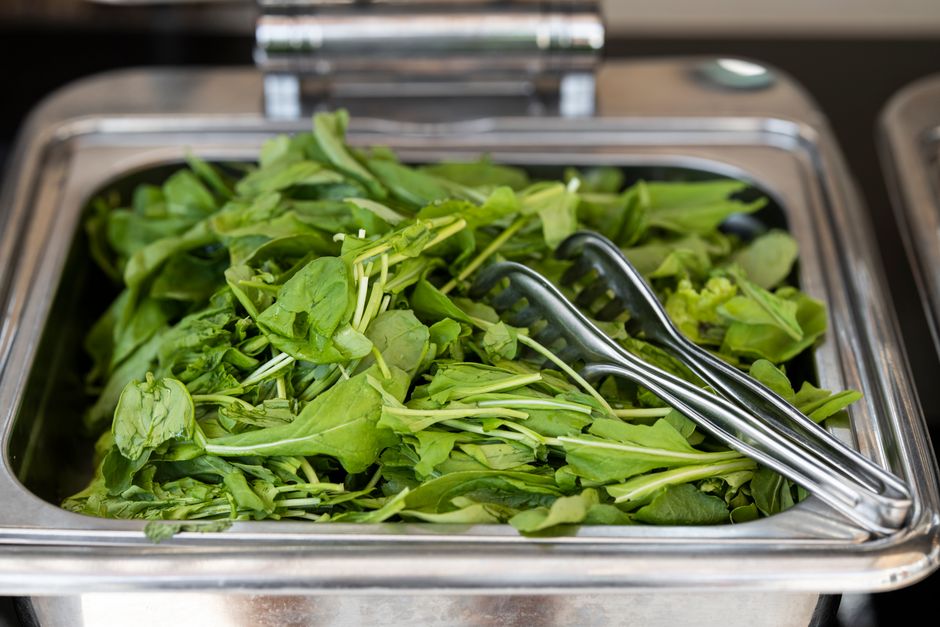
Spinach wins on most nutrients, but romaine holds its own in a few areas that matter. Ounce for ounce, raw spinach delivers more vitamin K, vitamin A, folate, iron, and magnesium than romaine. Romaine, though, is higher in vitamin C and beta-carotene on a per-calorie basis, and its milder flavor makes it easier to eat in larger amounts. The honest answer is that both are genuinely healthy greens, and the “better” one depends on what you are trying to get from your salad.
Is Romaine Or Spinach Healthier Nutrition Compared?
If you put a cup of raw spinach next to a cup of raw romaine, spinach comes out ahead on the majority of vitamins and minerals. That is the straightforward comparison most people are looking for.
But there is a catch that rarely gets mentioned. The two greens have very different water content and leaf density. A cup of raw spinach weighs roughly 30 grams. A cup of shredded romaine weighs about 47 grams. So a “cup for cup” comparison is not the same as an ounce for ounce comparison, and most nutrient databases report values per 100 grams.
When you compare them per 100 grams of raw leaves, spinach leads in vitamin K, vitamin A, folate, iron, magnesium, and potassium. Romaine leads in vitamin C. Both are low in calories, both provide fiber, and both contain carotenoids like lutein and zeaxanthin that concentrate in the retina.
Here is the comparison table using USDA nutrient data per 100 grams of raw leaves:
| Nutrient (per 100g raw) | Spinach | Romaine |
|---|---|---|
| Calories | 23 kcal | 17 kcal |
| Vitamin K | ~483 mcg | ~103 mcg |
| Vitamin A (RAE) | ~469 mcg | ~436 mcg |
| Folate | ~194 mcg | ~136 mcg |
| Vitamin C | ~28 mg | ~4 mg |
| Iron | ~2.7 mg | ~1.0 mg |
| Calcium | ~99 mg | ~33 mg |
| Magnesium | ~79 mg | ~14 mg |
| Potassium | ~558 mg | ~247 mg |
One clarification worth making: the USDA values for vitamin C in spinach and romaine vary depending on freshness, storage, and whether the leaves are raw or cooked. Vitamin C degrades over time after harvest. The numbers above reflect typical raw values, but a bag of spinach sitting in your fridge for a week will have less than a fresh bunch.
Why Does Spinach Have More Nutrients Than Romaine?
Spinach is a darker, denser leaf. That color comes from higher concentrations of chlorophyll and carotenoid pigments, which tend to track with higher concentrations of other plant compounds. Romaine is lighter green with a more watery, crisp texture, and that water dilutes its nutrient density per gram.
Spinach also has a deeper root system and grows as a cool-season crop, which affects how it stores minerals. It accumulates more iron, magnesium, and calcium in its tissues than romaine does. This is a plant biology difference, not a processing one.
However, density cuts both ways. Spinach contains higher levels of oxalates, natural compounds that bind to minerals like calcium and iron and reduce how much your body absorbs. Romaine has much lower oxalate levels. So spinach delivers more iron and calcium on paper, but you absorb a smaller fraction of them than the label suggests.
This is a genuinely underappreciated point. The nutrient label tells you what is in the leaf, not what reaches your bloodstream. For oxalate-sensitive people, that gap matters.
Does Cooking Change the Comparison?
Cooking changes spinach more than it changes romaine. Spinach shrinks dramatically when cooked because of its high water content, so a cup of cooked spinach represents a much larger amount of raw leaves. That concentrates nutrients per serving.
Cooking also reduces oxalates somewhat, which can improve mineral absorption. But heat destroys a meaningful portion of vitamin C. Since spinach is not a major vitamin C source anyway, that loss is not a big deal for most people.
Romaine is almost always eaten raw. Cooking it turns it limp and bitter, and most people do not bother. So in practice, the “cooked vs raw” question applies mainly to spinach.
One caution: spinach is one of the vegetables frequently linked to foodborne illness outbreaks. Romaine has also been implicated in several high-profile recalls. Both are leafy greens grown close to the ground and irrigated with water that can carry pathogens. Washing reduces risk but does not eliminate it. People with weakened immune systems, young children, pregnant women, and older adults should be aware of this and follow current food safety guidance from public health authorities.




Which Green Is Better for Specific Health Goals?
For eye health, both are strong choices. Spinach and romaine both contain lutein and zeaxanthin, the carotenoids that accumulate in the macula. Spinach has more of both per gram, but romaine is still a meaningful source.
For bone health, spinach looks better on paper because of its calcium and vitamin K content. Vitamin K is involved in bone metabolism and blood clotting. But the oxalate issue means the calcium in spinach is poorly absorbed. Romaine’s calcium is lower but more bioavailable. Neither green is a primary calcium source compared to dairy, fortified plant milks, or certain other vegetables.
For heart health, both provide potassium, fiber, and folate. Potassium helps counterbalance sodium and supports healthy blood pressure. The amounts in a single serving of either green are modest compared to what you get from beans, potatoes, or bananas, but they add up across a day of eating.
For iron, spinach has more, but it is non-heme iron, which the body absorbs less efficiently than the heme iron in meat. Pairing spinach with a source of vitamin C improves absorption. Squeezing lemon on your spinach salad is not just a flavor choice.
For people on blood-thinning medication like warfarin, the vitamin K content of spinach is a real consideration. Romaine has less vitamin K, but it is not negligible. Anyone on these medications should talk to their clinician about consistent intake rather than avoiding greens altogether. Dramatic swings in vitamin K intake are the problem, not the greens themselves.
Is One Green Safer Than the Other?
Neither is inherently safer. Both have been involved in contamination events. Both are grown in similar conditions. The safety difference comes down to how they are handled after harvest, not the plant itself.
Spinach is more likely to be sold as pre-washed baby leaves in sealed bags, while romaine is often sold as whole heads. Whole heads require more handling to break down, but they also give you the chance to discard outer leaves and wash thoroughly. Bagged greens labeled “triple washed” generally do not need re-washing, though some people do anyway.
For anyone in a high-risk group, the general guidance from public health agencies is to avoid raw sprouts and to be cautious with raw leafy greens during outbreaks. When there is no active outbreak, the risk from either green is low for most healthy adults.
Which Should You Actually Eat?
Eat both. That is not a dodge. The nutritional differences between spinach and romaine are real but small compared to the difference between eating greens and not eating greens at all.
If you had to pick one for maximum nutrient density per bite, spinach is the answer. If you want a green you will actually eat in large quantities because it tastes mild and stays crisp, romaine is the answer. Most people do better rotating them.
Spinach works cooked into eggs, soups, and pasta. Romaine works raw in salads and wraps. Using each where it performs best gets you more total greens than forcing yourself to eat one you dislike.
The bigger question is not which green wins. It is whether you are eating enough vegetables overall. A salad with romaine and a side of sautéed spinach beats a debate about which one is superior.
Frequently Asked Questions
Is spinach healthier than romaine lettuce?
Yes, spinach is higher in most nutrients per gram, including vitamin K, folate, iron, magnesium, and potassium. Romaine is higher in vitamin C, but spinach wins on overall nutrient density.
Can I eat spinach and romaine every day?
Yes, both are safe to eat daily for most people. If you take blood-thinning medication, talk to your doctor about keeping your vitamin K intake consistent rather than cutting out greens.
Which has more iron, spinach or romaine?
Spinach has roughly two to three times more iron than romaine per gram. However, spinach also contains oxalates that reduce how much of that iron your body actually absorbs.
Is romaine or spinach better for a low-calorie diet?
Romaine has slightly fewer calories per 100 grams, but both are very low in calories. The difference is small enough that it rarely matters compared to what you put on top of the salad.
