
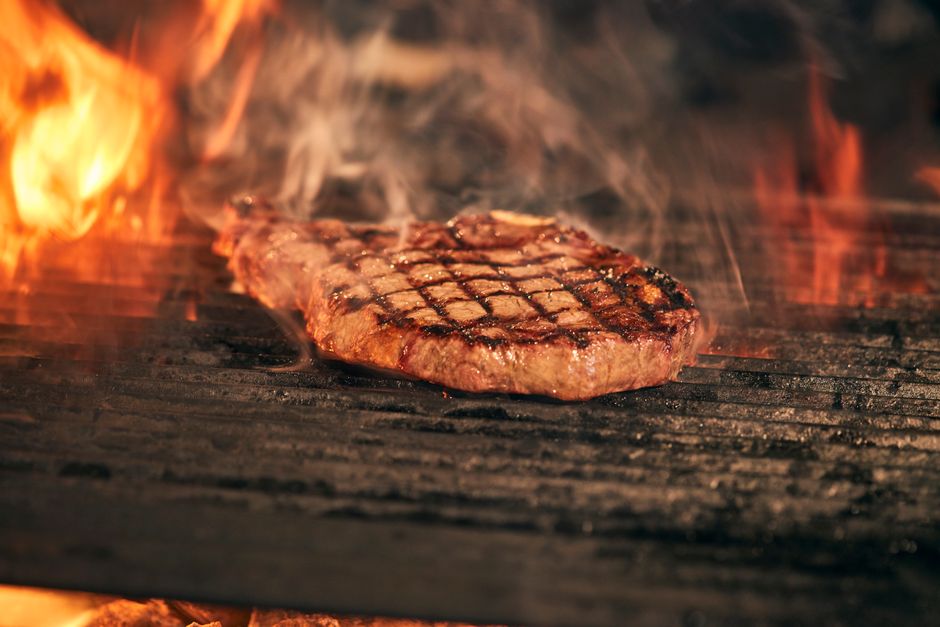
Yes, ribeye steak is one of the fattier cuts of beef. Its defining feature is heavy marbling — thin threads of fat woven through the muscle — and that intramuscular fat is a big part of why the steak tastes the way it does. The “fat breakdown” part is where things get interesting: some of that fat melts with heat, and some of it breaks down inside your body during digestion.
Ribeye comes from the rib section of the cow, a part of the animal that does relatively little work compared to the legs and shoulders. Less work means more fat stored within the muscle tissue. That is the whole reason ribeye is prized for flavor and tenderness, and also the reason it carries more calories and saturated fat than leaner cuts like sirloin or tenderloin.
What Makes Ribeye Steak Fatty?
Fat in beef shows up in two main places. The first is marbling, the fine web of fat distributed inside the muscle itself. The second is external fat, the thicker layer around the outside of the cut, often called the fat cap.
Ribeye has both, and it has a lot of them. The muscle that makes up the ribeye — the longissimus dorsi and related muscles — sits in a region that does not bear much weight or do much movement. Cattle genetics, diet, and age all influence how much marbling develops, which is why the USDA grades beef partly on marbling.
The USDA grading system runs from Prime at the top, through Choice and Select, down to lower grades. Prime has the most marbling, Select has the least of the three. A Prime ribeye can look almost lacy with white fat running through the red muscle. A Select ribeye is noticeably leaner but also less tender and less flavorful.
So when someone asks whether ribeye is fatty, the answer depends partly on the grade. A Select ribeye is meaningfully leaner than a Prime one. But across the board, ribeye sits on the fatty end of the beef spectrum compared to most other steak cuts.
How Much Fat and Saturated Fat Is in Ribeye?
The numbers vary by grade, trim, and how much of the external fat is left on. According to USDA nutritional data, a 3-ounce cooked portion of ribeye with the fat trimmed to a typical retail level contains roughly 200 to 250 calories and about 15 to 20 grams of total fat, with a substantial share of that being saturated fat.
That is a meaningful amount. For context, a 3-ounce portion of cooked sirloin or tenderloin tends to run lower in both total fat and saturated fat. The difference is not enormous, but it is real, and it adds up if beef is a regular part of your diet.
One clarification worth making: the marbling fat and the external fat are not nutritionally identical in practice. Much of the external fat can be trimmed away before or after cooking. Marbling cannot be removed — it is inside the muscle. So a “trimmed” ribeye still carries most of its marbling fat.
Ribeye also delivers protein, iron, zinc, and vitamin B12. It is not an empty-calorie food. The question is really about balance, not about whether ribeye is “good” or “bad.”
What Happens to Ribeye Fat During Cooking?
Heat does two things to beef fat. It melts it, and at higher temperatures it drives chemical reactions that create flavor and aroma.
Beef fat starts to melt at a relatively low temperature, well below the point where the muscle proteins fully cook. As the steak heats, marbling fat liquefies and spreads through the muscle fibers, which is a major reason a well-marbled ribeye tastes juicy rather than dry. That rendered fat also carries fat-soluble flavor compounds.
At higher heat — grilling, searing, broiling — you get browning reactions between amino acids and sugars, plus breakdown of fats into aromatic compounds. These reactions produce the savory, roasted notes people associate with a good steak. They also produce some compounds that are worth being aware of.
Cooking meat at high temperatures, especially over an open flame or directly on a hot surface, can form substances including heterocyclic amines and polycyclic aromatic hydrocarbons. These have been studied for potential health concerns. The evidence linking them to human cancer risk is largely from observational studies and animal research, not from controlled human trials, so the picture is not fully settled. Practical steps that some sources suggest include avoiding charring, trimming visible fat before grilling, and not letting flames directly contact the meat. These are reasonable precautions, not proven guarantees.
What does not happen during normal cooking is any meaningful “breakdown” of fat into something fundamentally different. Fat melts and renders. It does not transform into protein or carbohydrate. The fat you see in the pan is largely the fat that was in the steak.




How Does Your Body Break Down Ribeye Fat?
Digestion is where “fat breakdown” becomes literal. The process is well understood.
- Chewing and stomach churning physically separate fat from the meat fibers.
- In the small intestine, bile acids from the gallbladder emulsify the fat into tiny droplets.
- Pancreatic enzymes called lipases then chemically split those fat molecules apart.
- The breakdown products are absorbed through the intestinal wall and repackaged for transport through the body.
Saturated fat and unsaturated fat are handled by the same basic machinery. The difference is in what happens afterward and how the body uses them. Saturated fat tends to raise LDL cholesterol more than unsaturated fat does, which is a well-established finding across many studies.
This is why dietary guidance generally emphasizes replacing some saturated fat with unsaturated fat rather than simply cutting all fat. The type of fat matters, not just the total amount.
One non-obvious point: the saturated fat in beef is not a single substance. It is a mix of different fatty acids, including stearic acid, which behaves somewhat differently in the body than other saturated fats. Stearic acid raises LDL cholesterol less than some other saturated fatty acids do. That does not make ribeye a low-saturated-fat food, but it does mean “saturated fat” is a broader category than a single number suggests.
Is Ribeye Fat Bad for You?
This is where honesty matters more than a tidy answer. The evidence does not support calling any single food “bad,” and it does not support calling ribeye a health food.
What is well established: diets high in saturated fat are associated with higher LDL cholesterol, and elevated LDL cholesterol is a causal factor in cardiovascular disease. That chain of evidence is strong.
What is more complicated: whether eating ribeye specifically, in the context of an otherwise balanced diet, meaningfully changes health outcomes. Observational studies on red meat and health have produced mixed results, and they struggle to separate the meat itself from everything else about the people who eat a lot of it.
So the reasonable position is this. Ribeye is a fatty cut. It is high in saturated fat relative to leaner proteins. Eating it occasionally as part of a varied diet is not the same as eating it daily in large portions. If you have high LDL cholesterol or a history of heart disease, that is a conversation to have with your doctor, not a decision to make from a magazine article.
Some people find that leaner cuts like sirloin, flank, or tenderloin fit their goals better. Others prefer ribeye less often and in smaller portions. Both are reasonable approaches.
How Does Ribeye Compare to Other Steak Cuts?
The table below gives a general sense of how ribeye stacks up. Exact values vary by grade, trim, and cooking method.
| Cut | Marbling Level | Relative Total Fat | Relative Saturated Fat |
|---|---|---|---|
| Ribeye | High | High | High |
| New York Strip | Moderate to high | Moderate to high | Moderate to high |
| Tenderloin | Low to moderate | Low | Low |
| Sirloin | Low to moderate | Low | Low |
| Flank | Low | Low | Low |
These are relative rankings, not precise numbers. A heavily marbled Select ribeye could still be fattier than a poorly marbled strip. Grade matters as much as cut.
Does Marbling Affect More Than Fat Content?
Yes, and this is the part that gets overlooked. Marbling is not just fat sitting there doing nothing. It changes how the meat cooks and how it tastes.
Fat conducts heat differently than muscle and it lubricates the muscle fibers as they contract during cooking. A well-marbled steak tends to be more forgiving of slight overcooking because the melted fat keeps it from drying out. A lean cut like tenderloin can go from perfect to dry quickly because there is less fat to buffer the heat.
Marbling also carries flavor. Fat-soluble compounds released during cooking contribute to the aroma and taste that people describe as rich or beefy. This is why USDA Prime beef commands a higher price — the marbling is both a texture and a flavor feature.
So when you choose ribeye, you are choosing a cut where fat is doing real work. That is not a marketing claim. It is basic meat science.
Frequently Asked Questions
Is ribeye steak high in fat?
Yes, ribeye is one of the higher-fat beef cuts because of its heavy marbling. A 3-ounce cooked portion typically contains roughly 15 to 20 grams of total fat, depending on grade and trim.
Is the fat in ribeye saturated or unsaturated?
It is a mix of both, with a substantial share being saturated fat. Beef fat also contains monounsaturated fat, including oleic acid, which is the same fat found in olive oil.
Does marbling melt during cooking?
Yes, marbling fat melts at a relatively low temperature and spreads through the muscle as the steak cooks. That is a major reason well-marbled ribeye tastes juicy rather than dry.
Can you trim the fat off a ribeye to make it leaner?
You can trim the external fat cap, which removes some fat and calories. You cannot remove the marbling, because it is distributed inside the muscle tissue itself.
