
Red meat can increase your risk of colorectal cancer, and the evidence for this link is strong enough that major health organizations classify processed meat as a carcinogen and red meat as a probable carcinogen. This does not mean eating a steak will give you cancer. It means the risk goes up with higher consumption, and the relationship is consistent across many large studies.
What Does the Research Actually Show?
The most reliable evidence comes from large observational studies that track thousands of people over many years. These studies consistently find that people who eat the most red and processed meat have higher rates of colorectal cancer than people who eat the least.
In 2015, the International Agency for Research on Cancer (IARC), which is part of the World Health Organization, reviewed this evidence. IARC classified processed meat as Group 1, meaning it is carcinogenic to humans. They classified red meat as Group 2A, meaning it probably causes cancer in humans.
That classification often confuses people. Group 1 does not mean processed meat is as dangerous as tobacco. It means the evidence of a cancer link is strong enough to be certain. The size of the risk is much smaller than smoking, but the link is real.
Research published in the British Medical Journal and other major publications has estimated that eating about 50 grams of processed meat per day raises colorectal cancer risk by roughly 18 percent. Fifty grams is about two slices of bacon or one hot dog. For red meat, the increased risk is smaller but still measurable.
How Does Red Meat Cause Cancer?
Scientists have identified several ways red and processed meat can damage cells in the colon. These mechanisms are well studied and biologically plausible.
Heme iron is one key factor. Red meat contains high levels of heme, the iron-containing molecule that gives meat its color. In the gut, heme can trigger the formation of N-nitroso compounds inside the digestive tract. These compounds can damage the DNA in colon cells, and DNA damage is the first step toward cancer.
Processing adds another problem. Curing meat with nitrates and nitrites creates additional N-nitroso compounds directly. When you eat bacon, salami, or deli ham, you are consuming pre-formed carcinogens, not just the precursors that form in your gut.
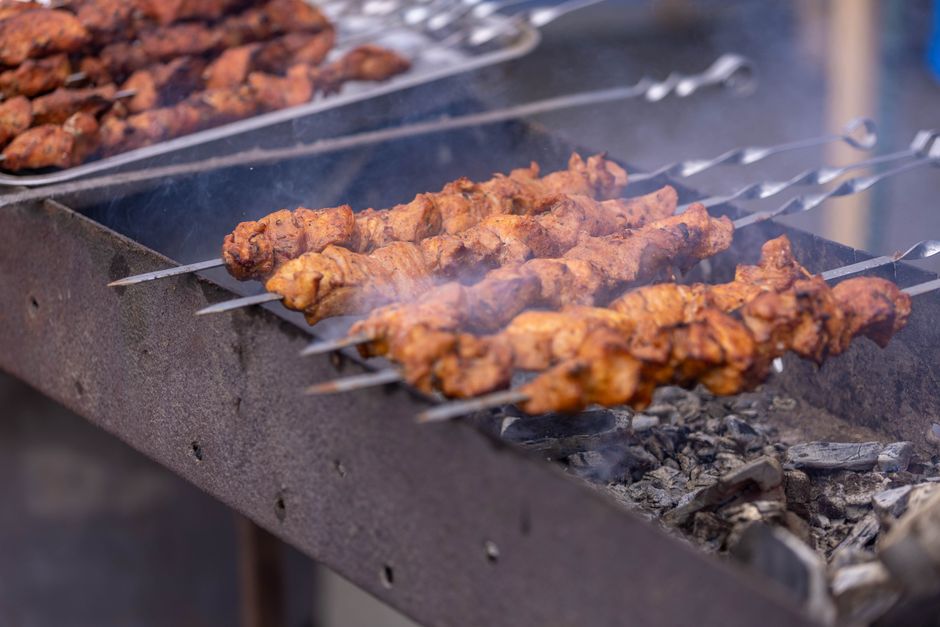
High-temperature cooking also matters. Grilling, pan-frying, and broiling meat at high temperatures creates heterocyclic amines (HCAs) and polycyclic aromatic hydrocarbons (PAHs). These chemicals form when muscle tissue cooks at high heat and when fat drips onto hot surfaces, creating smoke. Both HCAs and PAHs are known mutagens that can damage DNA.
The combination matters. Eating a well-done grilled steak exposes you to heme iron, HCAs, and PAHs all at once. This may explain why the highest risks appear in people who eat red meat frequently and cook it at high temperatures.
How Much Red Meat Is Too Much?
There is no single number that separates safe from unsafe. Cancer risk from red meat follows a dose-response pattern, meaning more meat equals more risk. There is no clear threshold below which risk disappears entirely.
Organizations that issue dietary guidance generally recommend limiting rather than eliminating red meat. The American Cancer Society recommends limiting red and processed meat consumption. The World Cancer Research Fund recommends eating no more than three portions of red meat per week, with a portion being about 350 to 500 grams cooked weight. That works out to roughly 12 to 18 ounces per week.
For processed meat, the guidance is stricter. The World Cancer Research Fund advises eating little, if any, processed meat. This includes bacon, sausage, hot dogs, ham, and deli meats.
These are population-level recommendations, not individual prescriptions. Someone with a family history of colorectal cancer might reasonably choose to eat less. Someone with no risk factors might eat at the upper end of the recommendation. The point is that risk increases gradually, not that one burger is dangerous.





Is All Red Meat the Same?
Red meat includes beef, pork, lamb, and veal. Processed meat includes any meat that has been transformed through salting, curing, fermentation, smoking, or other processes to enhance flavor or preserve it. Most processed meats are made from red meat, but not all red meat is processed.
A fresh pork chop and a slice of bacon both come from pigs. Their cancer risk profiles are different. Fresh pork carries the risk associated with red meat, which is moderate. Bacon carries the additional risk from nitrates, nitrites, and other processing chemicals.
Lean cuts versus fatty cuts may also matter, though the evidence is less clear. Fat content does not appear to be the main driver of cancer risk. Heme iron content, processing, and cooking method matter more.
White meat, such as chicken and turkey, has not been consistently linked to colorectal cancer in large studies. Replacing red meat with poultry or fish is one of the most practical changes a person can make.
Does Cooking Method Change the Risk?
Yes. How you cook meat affects how many carcinogens form. High-heat methods create more HCAs and PAHs than lower-heat methods.
Grilling, broiling, and pan-frying produce the highest levels. Stewing, boiling, and slow cooking at lower temperatures produce far fewer. Marinating meat before grilling may reduce HCA formation, though the evidence for this is not definitive.
Cutting off charred portions before eating also reduces exposure. Avoiding direct contact between meat and open flames reduces PAH formation because PAHs come largely from smoke created when fat drips onto hot coals or burners.
These changes reduce exposure to one class of carcinogens. They do not eliminate the risk from heme iron or nitrates. Cooking method is one factor among several, not the whole story.
Is the Risk the Same for Men and Women?
Colorectal cancer risk from red meat appears in both sexes, but the baseline risk differs. Men have a higher lifetime risk of colorectal cancer than women. This means the absolute increase in risk from red meat consumption is larger for men.
Hormonal factors may play a role. Some research suggests estrogen may have a protective effect against colorectal cancer in women, which could partly explain the sex difference. The evidence for this is not conclusive.
What is clear is that both men and women who eat high amounts of red and processed meat show increased risk compared to those who eat less. No large study has found that one sex is immune to this effect.
What About Other Types of Cancer?
Colorectal cancer has the strongest and most consistent link to red and processed meat. Evidence for other cancers is weaker and more mixed.
Some studies have suggested links to stomach, pancreatic, and prostate cancer. The World Cancer Research Fund has concluded that the evidence for these is limited or suggestive rather than convincing. For gastric cancer, processed meat shows a more consistent association than fresh red meat.
Breast cancer evidence is mixed. Some analyses have found a modest association with high red meat intake, while others have not. No major health organization currently lists red meat as a breast cancer risk factor with the same confidence as colorectal cancer.
When discussing cancer risk, it is important to be specific. Red meat is not linked equally to all cancers. The convincing evidence centers on the colon and rectum.
What Are the Healthiest Alternatives?
Plant-based protein sources carry no heme iron and no nitrates. Beans, lentils, chickpeas, and tofu provide protein without the cancer risk associated with red meat.
Fish and poultry are reasonable alternatives for people who do not want a fully plant-based diet. Neither has been consistently linked to colorectal cancer in large observational studies.
Eggs and dairy are also options. The evidence linking eggs to cancer is mixed, but no major organization currently advises limiting eggs for cancer prevention.
Replacing one serving of red meat per week with another protein source is a realistic starting point. The evidence suggests that the largest benefits come to people who eat red meat most days and reduce to a few times per month. Someone eating red meat twice a week who switches to once a week gains less benefit than someone eating it daily who switches to twice a week.
Should You Stop Eating Red Meat Completely?
No evidence currently shows that eliminating red meat entirely is necessary for cancer prevention. The risk is dose-dependent, and low to moderate intake carries a small absolute risk.
Red meat provides high-quality protein, iron, zinc, and B vitamins. These nutrients are important, particularly for people at risk of iron deficiency. Plant-based iron is less easily absorbed than heme iron from meat.
The most defensible position is moderation, not elimination. If you eat red meat daily, reducing to a few times per week will lower your risk. If you eat processed meat most days, cutting back to occasional consumption will lower your risk more substantially.
People with a personal or strong family history of colorectal cancer may choose to be more restrictive. This is a reasonable individual decision, but it should be made with a clinician who knows your specific risk profile.
Frequently Asked Questions
Is bacon worse than steak for cancer risk?
Yes, bacon is classified as a definite carcinogen while fresh steak is a probable carcinogen. Processing adds nitrates and nitrites that create carcinogens directly in the meat.
How much red meat can I eat safely?
Cancer organizations recommend limiting red meat to about three portions per week and eating little to no processed meat. Risk increases gradually with higher intake, so there is no perfectly safe threshold.
Does organic red meat cause less cancer?
No evidence currently shows that organic red meat carries a lower cancer risk. Heme iron is present in all red meat regardless of farming method, and the cancer link is not driven by antibiotics or pesticides.
Does grilling meat make it more carcinogenic?
Yes, high-heat cooking like grilling creates heterocyclic amines and polycyclic aromatic hydrocarbons that can damage DNA. Lower-heat methods like stewing or baking create fewer of these compounds.
