
Red light therapy is not an established treatment for neuropathy. No major medical guideline recommends it as standard care, and the evidence for it is early and mixed. Some small studies suggest it may ease certain types of nerve pain, but nobody has shown it repairs damaged nerves or reverses neuropathy. If you are considering it, go in with realistic expectations and talk to your doctor first.
Neuropathy is a real and often frustrating condition. The burning, tingling, or numbness can wear you down, and it makes sense to look for anything that might help. This article explains what red light therapy actually is, what the research shows, and where the honest limits of the evidence sit.
What Is Red Light Therapy and How Is It Supposed to Work?
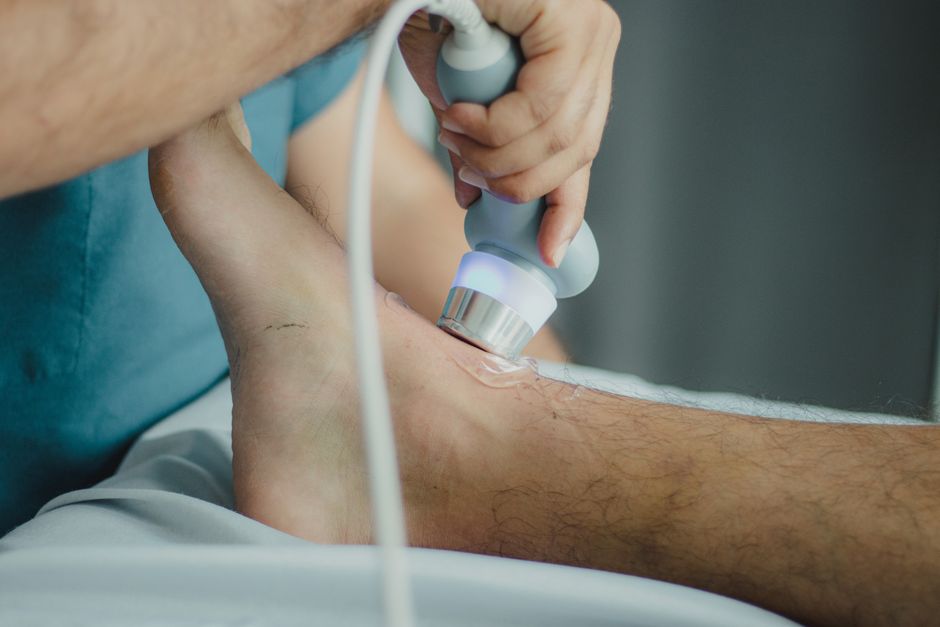
Red light therapy uses low-power red or near-infrared light directed at the skin. It is also called photobiomodulation, low-level laser therapy, or LLLT. You will see it offered in clinics, physiotherapy offices, and increasingly as at-home devices.
The proposed mechanism is fairly well understood at the cellular level. Certain wavelengths of red and near-infrared light can be absorbed by structures inside cells called mitochondria. In laboratory and animal studies, this absorption appears to influence energy production and may reduce markers of inflammation. Some research suggests light exposure can affect blood flow and nerve signaling.
What matters for you is the gap between that cellular story and real-world benefit. A mechanism that looks logical in a petri dish does not automatically translate into less pain in a human being with nerve damage. This is one of the most important things to understand about red light therapy. The biology is plausible. The proof in people is thin.
It is also worth separating red light therapy from other light-based treatments. It is not the same as the intense light used in some dermatology procedures, and it does not involve ultraviolet light. The devices used for neuropathy typically apply low-intensity light for several minutes per session.
What Does the Research Actually Show?
The research on red light therapy for neuropathy is limited and the results are mixed. There is no large, well-controlled trial that clearly establishes it as an effective treatment.
Most of the human studies are small. Many lack a proper control group, meaning participants knew they were getting treatment, which can inflate reported benefits. Some studies have looked specifically at diabetic peripheral neuropathy and reported improvements in pain scores or nerve-related symptoms. Others have found little or no difference compared with sham treatment. When results point in different directions across small studies, that is a signal to be cautious, not optimistic.
Some clinicians who use photobiomodulation report that certain patients seem to respond well. That is worth acknowledging. But individual clinical experience and anecdotal reports are not the same as demonstrated benefit in controlled trials. A treatment can seem to help because symptoms fluctuate on their own, because of the placebo effect, or because people naturally focus on good days.
The honest summary is this: the evidence is early. Some studies suggest possible benefit for pain and symptoms. No clinical evidence currently confirms that red light therapy repairs nerve damage or changes the underlying course of neuropathy.
Is Red Light Therapy Good for Neuropathy?
Red light therapy is not proven to be good for neuropathy in the sense of a reliable, guideline-backed treatment. It sits in the category of promising-but-unproven. That is a meaningfully different place than proven therapy.
For some people, it may reduce pain or tingling enough to notice. For others, it may do nothing. The problem is that current research cannot tell you in advance which group you will fall into. There is no reliable way to predict who responds.
This matters because neuropathy has several causes, and they do not all behave the same way. Diabetic neuropathy, chemotherapy-induced neuropathy, and neuropathy from other causes may respond differently to any given treatment. Most studies have looked at one type at a time, usually in small numbers, which makes it hard to draw broad conclusions.
If your goal is reducing symptoms and your doctor thinks it is reasonable to try, a time-limited trial with clear expectations is a fair approach. If your goal is reversing nerve damage, the evidence does not support that hope, and it is kinder to say so plainly than to imply otherwise.
What Are the Risks and Limitations?
Red light therapy is generally considered low-risk when used as directed. Reported side effects are usually mild and temporary, such as skin redness or mild discomfort at the treatment site. Serious harm from low-intensity devices appears uncommon in the published literature.
Low risk is not the same as no risk, and it is not the same as effective. A few practical points deserve attention.
- Home devices vary widely in power, wavelength, and quality. There is no standard, so what one device delivers may differ substantially from another, or from a clinic device.
- Marketing for at-home devices often runs well ahead of the evidence. Claims that a device “restores nerve function” or “reverses neuropathy” are not supported by current research.
- If you have diabetic neuropathy, do not let a light device replace the fundamentals: blood sugar management, foot care, and regular medical follow-up. Those have strong evidence behind them.
- Check with your doctor before starting, especially if you take medications that increase light sensitivity or have skin conditions.
One clarification that often gets lost: a treatment being safe and a treatment being worthwhile are two separate questions. Low risk does not automatically justify the cost, time, and hope invested in a therapy that may not deliver.
How Does It Compare With Established Neuropathy Care?
Established care for neuropathy rests on a firmer foundation than red light therapy. The specifics depend on the cause, but the core approaches have considerably more evidence behind them.
| Approach | Evidence Strength | Notes |
|---|---|---|
| Blood sugar control (diabetic neuropathy) | Strong | Central to slowing progression; supported by major clinical guidance |
| Prescribed medications for nerve pain | Moderate to strong | Certain antidepressants and anticonvulsants are commonly used; your doctor can discuss options |
| Foot care and regular checkups | Strong | Helps prevent complications, especially with reduced sensation |
| Physical therapy and exercise | Moderate | Can support function, balance, and quality of life |
| Red light therapy | Limited and mixed | Not a standard recommendation; some small studies suggest possible symptom benefit |
This table is not a reason to dismiss red light therapy outright. It is a reason to keep it in perspective. The treatments with the strongest evidence should come first. Anything unproven is best viewed as a possible add-on, discussed with your clinician, not a replacement for care that works.
What Should You Do If You Want to Try It?
Talk to your doctor before you spend money on a device or a course of clinic sessions. Bring the specifics: what type of neuropathy you have, what the device claims, and what you hope to gain. A good clinician will help you weigh the realistic upside against the cost.
Set a clear trial period and a clear way to judge whether it is helping. Decide in advance what improvement would justify continuing, and be honest with yourself if that improvement does not appear. Nerve pain naturally fluctuates, so judging over a few days is unreliable. Give it a fair window, then reassess.
Be wary of anyone who promises reversal or cure. Neuropathy involves nerve damage, and damaged nerves do not reliably regenerate on command. No light device has been shown to change that. Anyone selling certainty is selling something the science does not support.
Keep the basics in place regardless. Manage underlying conditions, protect your feet, stay active within your limits, and keep your medical appointments. Those steps have real evidence behind them, and they matter more than any single add-on therapy.
Your symptoms are real. Wanting relief is reasonable. The most respectful thing anyone can offer you is the truth about what the evidence shows, and that truth is that red light therapy remains unproven for neuropathy. It may be worth a cautious, supervised trial for some people. It is not a proven treatment, and it is not a cure.
Frequently Asked Questions
Does red light therapy really help neuropathy?
Some small studies suggest it may ease nerve pain or tingling, but the evidence is mixed and no major guideline recommends it. It has not been shown to repair nerve damage or reverse neuropathy.
How long does it take for red light therapy to work for nerve pain?
There is no established timeline, because the research does not define one. Any trial should be discussed with your doctor and judged over a reasonable period rather than a few days.
Is red light therapy safe for diabetic neuropathy?
Low-intensity devices are generally considered low-risk when used as directed, with mild skin redness being the most common side effect. It should never replace blood sugar control, foot care, and regular medical follow-up.
Can red light therapy cure neuropathy?
No. No clinical evidence confirms that red light therapy repairs damaged nerves or cures neuropathy, and any product claiming a cure is making a claim the science does not support.
