
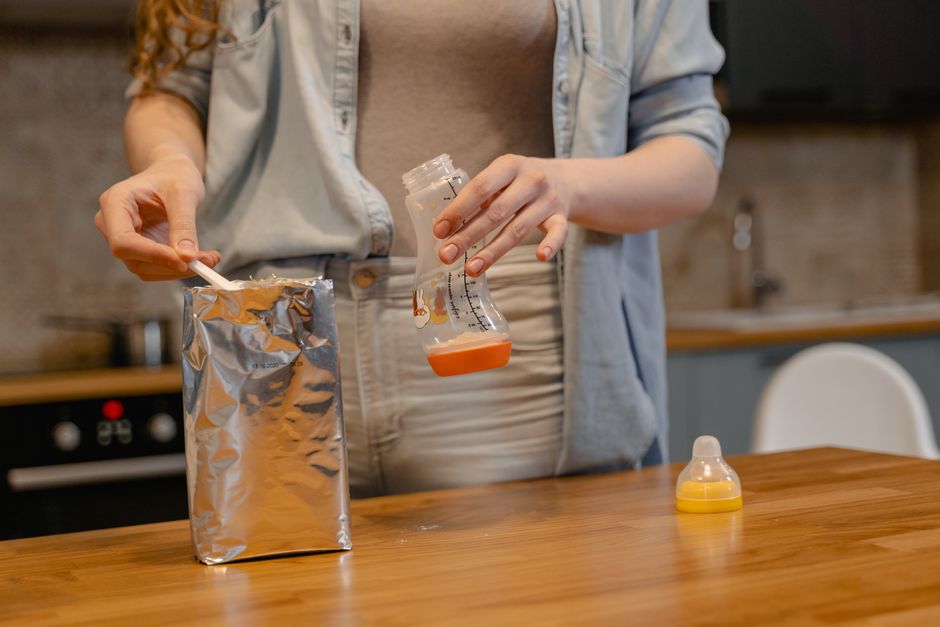
Ready-to-feed formula is not inherently easier to digest than powdered formula made from the same product line. The difference between the two is convenience and safety, not digestion. Both contain the same proteins, fats, and carbohydrates. What changes is how the formula is prepared and how much handling it involves.
That matters because many parents switch formulas hoping to fix gas, fussiness, or spit-up. If the problem is a feeding technique or a sensitivity to a specific ingredient, switching from powder to ready-to-feed will not solve it. Here is what actually determines how well a baby digests formula.
What makes ready to feed formula easier to digest?
Nothing in the formulation makes it easier to digest. The ingredients in ready-to-feed and powdered versions of the same formula are essentially identical.
What ready-to-feed does offer is consistency. There is no mixing, no measuring, and no chance of a bottle that is too concentrated or too diluted. That matters more than most people realize. Powdered formula that is accidentally mixed too strong can cause digestive upset and, in serious cases, dehydration. Formula mixed too weak delivers fewer calories than a baby needs.
The one real digestive advantage is sterility. Ready-to-feed formula is manufactured to be sterile until opened. Powdered formula is not sterile. This is why health authorities, including the World Health Organization and the CDC, advise that powdered formula be mixed with water hot enough to kill Cronobacter bacteria before it is cooled and fed. Ready-to-feed skips that step entirely.
For most healthy, full-term babies, the bacteria risk from properly prepared powder is very low. For premature infants, babies under about two months old, and babies with weakened immune systems, ready-to-feed is often recommended specifically because it removes that risk.
Is ready to feed formula easier to digest than powder?
No. For the same formula, the digestion process is the same whether it comes as a liquid or a powder.
Digestion depends on what is in the formula, not its physical form. The protein source, the type of fat, the carbohydrate, and whether the formula contains intact milk protein or broken-down protein all affect how a baby’s gut handles it. Those factors are set by the product, not the packaging.
Where ready-to-feed can indirectly help is by removing preparation errors. A correctly mixed bottle and a ready-to-feed bottle deliver the same thing. An incorrectly mixed bottle does not. If you have ever been unsure about your scoop-to-water ratio, especially during night feeds, ready-to-feed removes that variable.
Some parents also notice that their baby seems to feed differently from a bottle of ready-to-feed. That is more likely about flow rate, nipple, or temperature than about digestibility.
Which formula types are actually easier to digest?
Formula type matters far more than packaging. The most meaningful differences in digestibility come from how the protein is structured.
Standard cow’s milk-based formulas contain intact proteins. Some babies digest these without trouble. Others show signs of discomfort that may relate to how they handle intact protein or lactose.
Here is how the main categories differ:
- Partially hydrolyzed formula: The protein is broken into smaller pieces. Some evidence suggests this may help with certain feeding difficulties, but results vary and it is not a treatment for confirmed allergy.
- Extensively hydrolyzed formula: The protein is broken down much further. This is used for babies with confirmed cow’s milk protein allergy, under medical guidance.
- Amino acid-based formula: The protein is fully broken into individual amino acids. This is reserved for severe allergy cases and is typically prescribed.
- Lactose-free or reduced-lactose formula: These replace lactose with another carbohydrate. They are used when lactose intolerance is confirmed, which is uncommon in infants.
- Soy-based formula: Plant protein instead of milk protein. It is not a routine first choice and is used in specific situations.
If you suspect a genuine feeding problem, the formula category is the first thing to discuss with your pediatrician, not the packaging.
Does ready to feed formula cause less gas or spit up?
There is no evidence that ready-to-feed formula reduces gas or spit-up compared with correctly prepared powder of the same formula.
Gas and spit-up are extremely common in infants and usually reflect normal development. A baby’s digestive system is still maturing. Swallowing air during feeding, feeding too fast, or overfeeding can all contribute. So can reflux, which is common and usually improves with age.
If a baby seems gassy on powder but better on ready-to-feed, the more likely explanations are:
- The powder was being mixed too concentrated
- The bottle or nipple changed the flow rate
- The baby happened to be at an age when gas naturally improves
- A different formula was used, not just a different format
It is easy to credit the format when something else changed at the same time. That is a common trap when tracking infant feeding.
Are there safety reasons to choose ready to feed?
Yes, and this is where ready-to-feed has a clear, well-established advantage. It is sterile until opened, which removes the risk of contamination from powdered formula.
Powdered formula is not sterile. It can contain Cronobacter sakazakii, a rare but serious bacterium that can cause severe infection in very young infants. The risk is small but real, which is why preparation guidance for powder is specific: mix with water at a temperature hot enough to kill the bacteria, then cool before feeding.
Ready-to-feed avoids this entirely. For these groups, many clinicians recommend ready-to-feed:
- Premature infants
- Infants under about two months old
- Infants with weakened immune systems
- Infants who are hospitalized or have specific medical conditions
For healthy older infants, properly prepared powdered formula is considered safe by major health authorities.
What should parents actually consider when choosing?
The choice usually comes down to cost, convenience, and safety rather than digestion.
Ready-to-feed costs more per ounce than powder. It is heavier, takes up more storage space, and once opened must be used within a set time and kept refrigerated. Powder is cheaper and has a longer shelf life before opening.
Ready-to-feed wins on convenience and on safety for high-risk infants. It also removes preparation errors, which is a genuine benefit for tired parents and for anyone else helping feed the baby.
Neither format is better for digestion when the formula itself is the same. If a baby is struggling with feeding, the answer is usually found in the formula type, the feeding technique, or a conversation with a pediatrician, not in switching from powder to liquid.
Frequently Asked Questions
Is ready to feed formula easier on a baby’s stomach?
No. It contains the same ingredients as the powdered version of the same formula, so it is digested the same way. Any difference is usually about preparation accuracy, not the formula itself.
Can I switch from powder to ready to feed formula?
Yes, as long as it is the same formula type, you can switch between formats without a transition period. If you are changing the formula itself, discuss it with your pediatrician first.
Does ready to feed formula need to be mixed with water?
No. Ready-to-feed formula is already mixed to the correct concentration and should never have water added. Adding water dilutes it and can deprive a baby of needed calories and electrolytes.
Is powdered formula harder to digest than liquid formula?
No. Once correctly mixed, powdered formula is nutritionally the same as ready-to-feed. The only meaningful difference is that powder is not sterile before mixing.
