
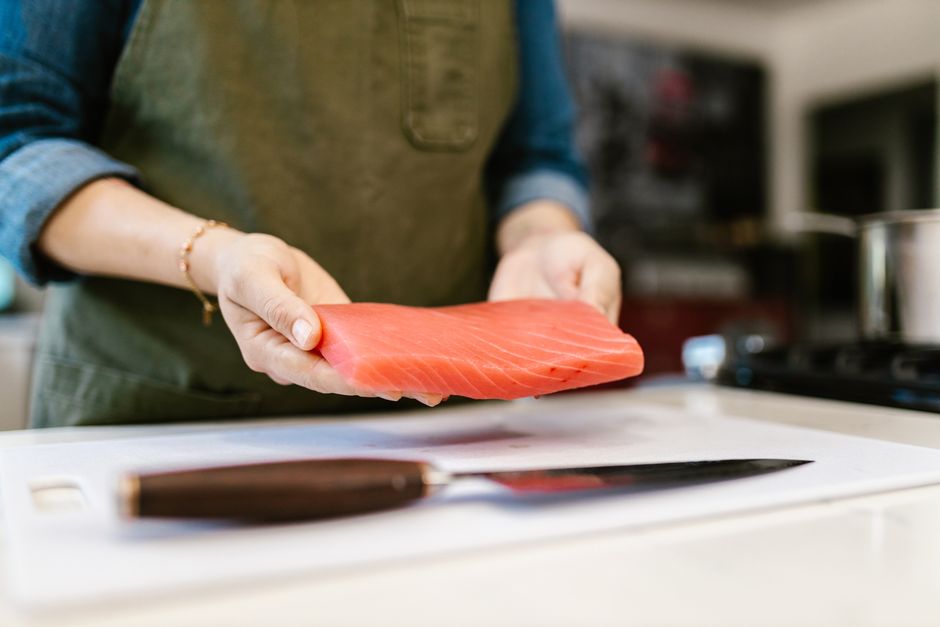
Eating raw or rare salmon is not risk-free. The fish can carry live parasites and several kinds of bacteria that cause human illness. That said, salmon sold as “sushi-grade” or “sashimi-grade” in the United States is usually frozen first under conditions that kill parasites, which removes the worm risk. The bacterial risk does not go away with freezing. So the honest answer is: parasite risk is manageable and mostly controlled by freezing, while bacterial risk depends on how the fish was handled from boat to plate.
Is Rare Salmon Safe To Eat Parasites And Bacteria?
Rare salmon is safer than most people assume on the parasite side, and less safe than most people assume on the bacteria side. Those two risks behave differently and need to be understood separately.
Parasites in salmon are a real and well-documented problem. The main one is Anisakis, a roundworm whose larvae can embed in the stomach or intestinal wall after being eaten. This causes anisakiasis, which produces severe abdominal pain, nausea, and vomiting, sometimes within hours. The larvae do not survive freezing, and they do not survive thorough cooking. This is why the U.S. Food and Drug Administration has a specific freezing standard for fish intended to be eaten raw.
Bacteria are a different story. Freezing does not reliably kill Listeria, and it does not sterilize fish. Salmonella, Vibrio, and Listeria monocytogenes can all be present on raw salmon, and their presence depends on the water, the handling, and the cold chain. A frozen-then-thawed fillet can still carry live bacteria.
So the practical picture is this: proper freezing handles the worms. Nothing about the “sushi-grade” label guarantees the bacteria are gone.
What Does “Sushi-Grade” Actually Mean?
In the United States, “sushi-grade” and “sashimi-grade” are marketing terms. They are not regulated by the FDA, and they do not have a legal definition. A fish labeled this way has no guaranteed inspection behind the label.
What does carry weight is the freezing step. The FDA’s Food Code sets out freezing conditions intended to kill parasites in fish that will be served raw. The two accepted approaches are freezing at a very low temperature for a shorter period, or freezing at a somewhat higher temperature for a longer period. Retailers and restaurants that follow the code are working from a defined standard. A sticker that says “sushi-grade” is not that standard.
This is the non-obvious part most people miss. The label tells you almost nothing. The freezing history tells you almost everything about parasites.
Farmed salmon adds another layer. Salmon raised in closed pens and fed formulated feed generally have a much lower parasite burden than wild salmon, because they are not eating the wild prey that carries the worms. That does not make them bacteria-free. It just changes the parasite math.
Which Bacteria Are Actually a Concern?
The bacteria that matter most in raw salmon fall into a few groups.
- Listeria monocytogenes — found in cold, wet environments and can grow at refrigerator temperatures. It is the reason pregnant women, older adults, and people with weakened immune systems are advised to avoid raw fish.
- Vibrio species — naturally present in marine and brackish water. Risk rises with warmer water and with fish that was not kept cold.
- Salmonella — can be introduced during handling and processing. Not unique to fish, but a documented concern in raw seafood.
- Aeromonas and other spoilage organisms — less often discussed, but part of why temperature control matters.
The pattern here is that most bacterial risk is about handling and temperature, not about the fish species itself. A salmon that was caught, chilled quickly, and kept cold throughout has a much lower bacterial load than one that sat warm on a dock.
Who Should Not Eat Rare Salmon?
Some groups should avoid raw or rare salmon entirely, and this is not a gray area.
Pregnant women are advised against raw fish by major public health bodies, because of Listeria. Listeriosis can cross the placenta and cause miscarriage, stillbirth, or serious infection in a newborn. This is one of the clearest and most consistent recommendations in food safety.
People with weakened immune systems — including those on chemotherapy, organ transplant recipients, and people with advanced HIV — face a higher risk of severe outcomes from the same organisms that cause mild illness in healthy adults.
Older adults and young children are also generally advised to avoid raw fish, because their immune defenses are less able to contain an infection that a healthy adult might fight off.
For healthy adults, the risk is lower but not zero. “Lower” is not the same as “none,” and it is worth being clear about that.
How Does Freezing Change the Risk?
Freezing is the single most effective step for parasite control in fish eaten raw. The FDA freezing standard is designed specifically to kill Anisakis and related parasites, and it works when the temperature and time are actually met.
Home freezers are a problem here. A typical home freezer runs around 0°F, and the FDA’s shorter-duration standard requires a temperature colder than that. Many home freezers cannot reach the colder setting the standard calls for. So a fish frozen at home for a few days may not meet the parasite-killing threshold.
Freezing does not kill Listeria. It does not kill Salmonella. It does not sterilize the fish. It only addresses the parasites. This is the key distinction, and it is why a frozen-then-thawed raw salmon can still make you sick.
Cooking to a safe internal temperature kills both parasites and bacteria. That is the only method that addresses both risks at once.
What About Cold-Smoked and “Raw” Salmon Products?
Cold-smoked salmon is not cooked. It is cured and smoked at low temperatures that do not kill parasites or bacteria. It carries the same risks as other raw salmon, and it is on the list of foods that pregnant women and immunocompromised people are advised to avoid.
Products labeled “gravlax,” “lox,” and “nova” are typically cold-smoked or cured, not cooked. They look and taste like a ready-to-eat product, which makes the raw risk easy to overlook.
Hot-smoked salmon is different. It is cooked through during smoking and reaches temperatures that kill parasites and bacteria. That distinction matters, and the packaging does not always make it obvious.
How Can You Lower the Risk?
If you choose to eat rare salmon, the steps that actually reduce risk are mostly about sourcing and temperature.
- Buy from a supplier that can tell you the fish was frozen to the FDA parasite-control standard before sale.
- Keep the fish cold from purchase to plate. Do not let it sit at room temperature.
- Use a dedicated cutting board and clean surfaces and hands after handling raw fish.
- If you are pregnant, immunocompromised, older, or feeding a young child, choose cooked salmon instead.
None of these steps eliminates bacterial risk. They reduce it. The only way to remove both parasite and bacterial risk is to cook the fish thoroughly.
One more point worth stating plainly: biological reasoning is not the same as demonstrated safety. It seems logical that a fresh, well-handled fish should be safe raw. In practice, the evidence for raw fish safety rests on freezing standards and cold-chain control, not on how fresh the fish looks.
Frequently Asked Questions
Can you get parasites from eating raw salmon?
Yes. Anisakis larvae can be present in raw salmon and cause anisakiasis, which produces severe abdominal pain and vomiting. Proper freezing to the FDA standard kills these parasites.
Does freezing kill bacteria in salmon?
No. Freezing kills parasites but does not reliably kill Listeria, Salmonella, or Vibrio. Only thorough cooking kills both parasites and bacteria.
Is sushi-grade salmon safe to eat raw?
Not guaranteed. “Sushi-grade” is an unregulated marketing term in the U.S. and does not confirm the fish met any parasite-control standard. Ask the supplier about freezing instead.
Who should avoid eating rare salmon?
Pregnant women, people with weakened immune systems, older adults, and young children are advised to avoid raw or rare salmon because of the risk of severe infection.
