
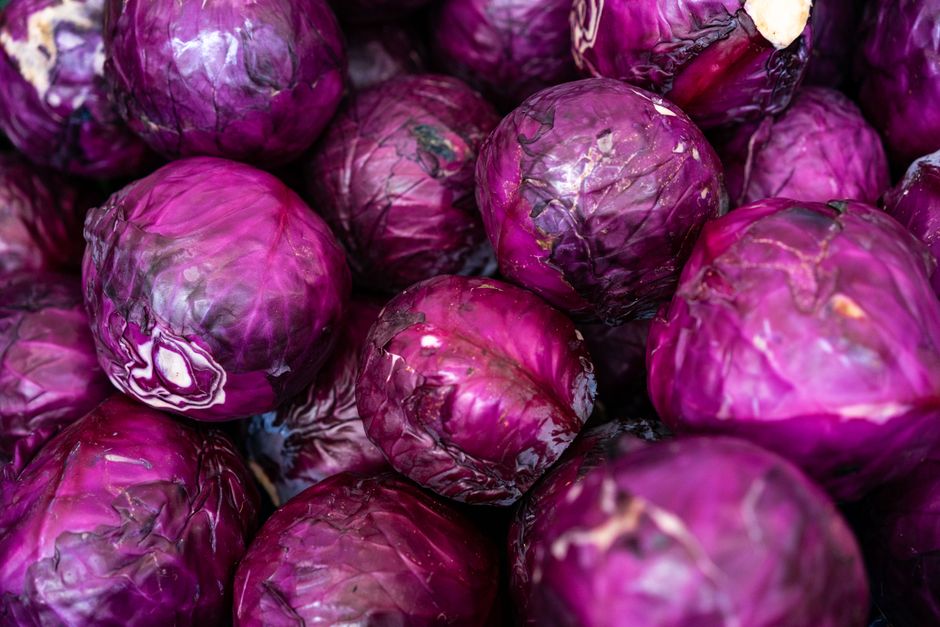
Purple cabbage is good for you. It delivers fiber, vitamin C, vitamin K, and a group of plant pigments called anthocyanins that have been studied for their role in cell protection. It is low in calories, cheap, and holds up well in the fridge. The one honest caveat is that a vegetable this good is still just one vegetable — it works as part of a varied diet, not as a standalone fix.
Here is what the evidence actually supports, what it only hints at, and where the marketing gets ahead of the science.
What Makes Purple Cabbage Different From Green Cabbage?
The color is the difference, and the color is chemistry. Purple cabbage gets its deep violet-red from anthocyanins, a class of water-soluble pigments in the flavonoid family. Green cabbage contains far less of them. That single shift in pigment changes the nutrient profile in ways that matter.
Anthocyanins are antioxidants. In the body, antioxidants help neutralize free radicals — unstable molecules that can damage cells and DNA. That much is well established. What is less settled is how much of that activity carries over from a plate of cabbage into meaningful health protection in a person. Eating anthocyanin-rich food raises antioxidant levels in the blood, but the body absorbs and metabolizes these compounds in complex ways, and the amounts reaching tissues are modest.
One practical detail people miss: the color is pH-sensitive. Purple cabbage juice turns red in acid and blue-green in alkaline conditions. This is why it sometimes dyes other ingredients in a salad or soup. It is harmless and a sign the pigments are intact.
Is Purple Cabbage Good For You Nutritionally?
Yes, and the numbers back it up. Per the USDA nutrient database, a cup of raw purple cabbage (about 89 grams) is a strong source of several vitamins at very few calories.
Here is a general comparison of raw purple and raw green cabbage per cup:
| Nutrient (per 1 cup raw) | Purple cabbage | Green cabbage |
|---|---|---|
| Calories | About 22 | About 22 |
| Vitamin C | Roughly 50 mg | Roughly 30 mg |
| Vitamin K | Meaningful amount | Meaningful amount |
| Fiber | About 1.5 g | About 1.5 g |
| Anthocyanins | High | Low |
Exact values shift with variety, growing conditions, and freshness, so treat these as general ranges rather than fixed figures. The takeaway is clear: purple cabbage edges out green on vitamin C and anthocyanins while matching it on calories and fiber.
Vitamin K matters for blood clotting and bone health. Vitamin C supports immune function and helps the body absorb iron from plant foods. Fiber supports digestion and feeds gut bacteria. None of this is dramatic — it is the quiet, reliable work of a good vegetable.
What Does the Research Say About Purple Cabbage and Disease?
This is where honesty matters most. The evidence for anthocyanins and health is promising but not settled, and no study has shown that eating purple cabbage prevents any specific disease.
Some research suggests diets high in anthocyanin-rich foods are associated with lower rates of certain chronic conditions, including cardiovascular disease. Much of this comes from population studies, which can show a link but cannot prove cause and effect. People who eat more colorful vegetables tend to differ from those who do not in many other ways.
Laboratory studies have found that anthocyanins can reduce oxidative stress and influence inflammation in cells and animals. Those findings are real but do not automatically translate to humans eating normal amounts of food. Doses in lab studies are often far higher than what a serving of cabbage provides.
The most defensible statement is this: purple cabbage is a nutritious food that fits a pattern of eating linked to better health outcomes. It is not a treatment, and no clinical evidence currently confirms it cures or prevents disease on its own.
Does Cooking Purple Cabbage Destroy Its Benefits?
Cooking reduces some nutrients and helps others. Anthocyanins are water-soluble and heat-sensitive, so boiling leaches color and pigment into the water and lowers the anthocyanin content. Vitamin C is also heat-sensitive and declines with prolonged cooking.
That does not mean cooked purple cabbage is worthless. It still provides fiber, minerals, and some vitamins. How you cook it changes the loss:
- Steaming or stir-frying quickly preserves more color and nutrients than boiling.
- Roasting at high heat keeps anthocyanins largely in the vegetable since nothing leaches into water.
- Boiling for a long time produces the greatest loss of water-soluble nutrients.
- Raw in slaws and salads retains the most vitamin C and anthocyanins.
One useful trick: save the cooking water if you boil it. The purple color in the water is pigment you paid for. It can go into soups or grains. And adding an acid like lemon juice or vinegar helps stabilize the color and, in some preparations, the pigments themselves.
Who Should Be Careful With Purple Cabbage?
For most people, purple cabbage is safe and easy to include. A few groups should pay attention.
People taking blood-thinning medication such as warfarin need to keep vitamin K intake steady. Cabbage is a meaningful vitamin K source, and sudden large changes in intake can affect how the medication works. This does not mean avoiding cabbage — it means keeping intake consistent and talking with a clinician or pharmacist. This is well-established clinical guidance.
Cabbage, like other cruciferous vegetables, contains compounds called goitrogens that can interfere with thyroid function in large amounts, particularly in people with an existing thyroid condition and low iodine intake. Normal servings are not a concern for most people. Very high intakes combined with iodine deficiency are the scenario to watch.
Raw cabbage and other cruciferous vegetables can cause gas and bloating in some people because of their fiber and natural sugars. Cooking reduces this for many. Anyone with a known digestive condition should judge by their own response.
No clinical guidelines currently exist for specific cabbage intake in pregnancy, breastfeeding, or young children beyond general healthy-eating advice. Standard servings of vegetables are part of normal diets in these groups.
How Should You Add Purple Cabbage to Your Diet?
Treat it as a flexible ingredient, not a supplement. A handful in a salad, a few leaves in a wrap, or a cup shredded into a stir-fry all count toward your vegetable intake.
Raw slaws hold their color and crunch. Quick pickling with vinegar keeps the purple vivid and adds flavor without much effort. Roasted wedges turn tender and sweet. It also lasts well — a head of cabbage can keep for weeks in the fridge, which makes it one of the more practical vegetables to buy.
The bigger point is variety. Purple cabbage is one color on a plate that should have several. Its value comes from what it adds to an overall pattern of eating, not from any single compound isolated in a lab.
Frequently Asked Questions
Is purple cabbage healthier than green cabbage?
Purple cabbage has more vitamin C and far more anthocyanins than green cabbage, while calories and fiber are similar. Both are healthy, so the better choice is whichever you will actually eat.
Does purple cabbage lose nutrients when cooked?
Cooking, especially boiling, lowers vitamin C and anthocyanin content because both are heat- and water-sensitive. Steaming, stir-frying, or roasting preserves more than long boiling.
Can you eat purple cabbage every day?
Yes, for most people a normal serving daily is fine and fits healthy eating patterns. People on blood thinners should keep vitamin K intake consistent and check with their clinician.
Why does purple cabbage turn blue or green?
The anthocyanin pigments change color with pH, turning red in acid and blue-green in alkaline conditions. It is harmless and simply reflects the chemistry of the pigments.
