
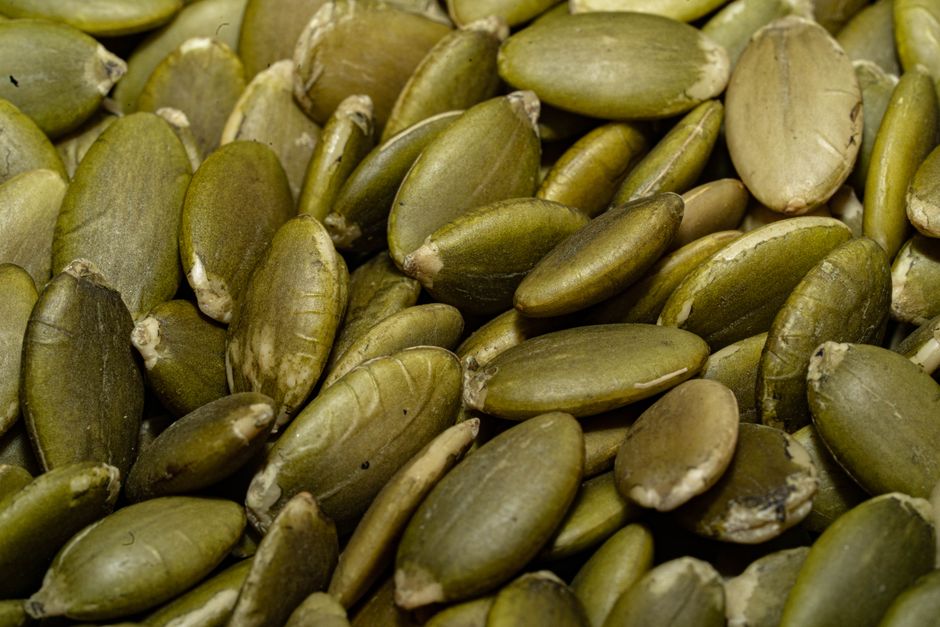
Pumpkin seed oil is not a carrier oil in the way most people use the term. In aromatherapy and DIY skincare, a carrier oil is a neutral, stable base used to dilute essential oils and other actives. Pumpkin seed oil is a specialty botanical oil — rich, dark, and chemically reactive. It is usually blended into a base rather than serving as the base itself. You can use it on skin and hair, but it works best as an add-in at a modest share of a formula, not as the whole bottle.
What Makes An Oil A Carrier Oil?
A carrier oil is defined by function, not by origin. It needs to spread easily, stay stable for a reasonable shelf life, and carry other ingredients without reacting badly to them.
Jojoba, sweet almond, fractionated coconut, and grapeseed are the classic examples. They are relatively light, fairly shelf-stable, and low in compounds that oxidize quickly. That makes them predictable mixers.
Pumpkin seed oil is different. It is pressed from the seeds of Cucurbita species and is known for its deep green-brown color and strong, slightly nutty smell. Those traits come from its natural chemistry, and they affect how it behaves in a blend.
The key point: “carrier oil” is a role in a formula. Any oil can technically carry another ingredient. The real question is whether it does that job well. Pumpkin seed oil has real limitations there.
Is Pumpkin Seed Oil A Carrier Oil For Skin And Hair?
Not a good standalone one. Pumpkin seed oil is too rich, too dark, and too prone to oxidation to serve as a neutral base for essential oils or as a daily all-over moisturizer for most people.
That does not make it a bad ingredient. It makes it a concentrated one. Think of it more like a serum or a booster than a base lotion.
Here is where the chemistry matters. Pumpkin seed oil is high in polyunsaturated fats, especially linoleic acid. Polyunsaturated fats are chemically unstable — they react with oxygen and light more readily than the saturated and monounsaturated fats that dominate stable carrier oils. That instability is why pumpkin seed oil has a shorter shelf life and goes rancid faster than jojoba or almond oil.
A carrier oil that spoils quickly makes a poor carrier, because it can turn a whole blend rancid. That is the core reason it does not fit the carrier role well.
What Does Pumpkin Seed Oil Do For Skin?
Pumpkin seed oil is an emollient. It softens and smooths the outer layer of skin by helping to reduce water loss and by filling in the tiny gaps between skin cells.
That is a well-established, unglamorous function shared by most plant oils. Emollients do not “feed” skin or repair it at a cellular level. They sit on the surface and improve how skin feels and how well it holds moisture.
Beyond that basic role, the marketing gets ahead of the evidence. You will see claims that pumpkin seed oil treats acne, fades scars, or reverses signs of aging. The evidence for those specific outcomes is thin. Some small studies have looked at pumpkin seed oil and skin, but they are not large or strong enough to support confident claims.
What is reasonable to say: it is a rich emollient that some people find pleasant and moisturizing. What is not reasonable to say: it is a proven treatment for any skin condition.
One practical caution. Because it is heavy and high in polyunsaturated fats, it can feel greasy and may not suit oily or acne-prone skin. Patch test first, especially if your skin is reactive.
How Does Pumpkin Seed Oil Behave On Hair?
On hair, pumpkin seed oil works as a conditioning oil. It coats the hair shaft, which can reduce friction, add shine, and make hair feel softer and easier to comb.
That coating effect is real and well understood. Oils smooth the outer layer of the hair strand, and smoother strands tangle less and reflect more light.
What it will not do is “repair” damaged hair in a lasting structural sense. No oil rebuilds broken bonds inside the hair shaft. Conditioning oils improve feel and manageability; they do not undo chemical or heat damage.
There is a widely repeated claim that pumpkin seed oil blocks DHT, the hormone linked to male pattern hair loss, and therefore regrows hair. Treat this with real skepticism. Some laboratory and animal research has looked at pumpkin seed oil and hair, but the human evidence is limited and does not establish that it regrows hair or treats baldness. It is not a proven hair-loss treatment.
For hair, a little goes a long way. It is heavy, so a few drops worked through the ends is usually enough. Applying it heavily to the scalp can leave hair greasy and may not suit everyone.
How Should You Use Pumpkin Seed Oil In A Blend?
Use it as a small part of a formula, not the whole thing. A common approach is to add pumpkin seed oil to a stable base oil at a modest share — enough to get its richness without letting it dominate or turn the blend rancid.
For a facial or body blend, that might mean a small proportion of pumpkin seed oil mixed into jojoba, sweet almond, or another stable carrier. For hair, a few drops added to a lighter oil or used on the ends alone works well.
If you are diluting essential oils, follow established dilution guidance rather than improvising. Essential oils are potent, and the carrier oil does not make them safe at any concentration. Standard aromatherapy guidance calls for low dilutions, and some oils are not appropriate for certain people, including pregnant women and children. If you are unsure, check with a qualified practitioner.
- Store it cold and dark. Pumpkin seed oil oxidizes quickly. Keep it in a dark bottle, away from heat and light, and use it within its shelf life.
- Smell it before use. A sharp, paint-like, or stale smell means it has gone rancid. Discard it.
- Patch test. Apply a small amount to your inner arm and wait before using it more widely.
- Do not rely on it as a treatment. It is a cosmetic emollient and conditioning oil, not a medicine.
How Does It Compare To Common Carrier Oils?
The differences come down to stability, weight, and how neutral each oil is. Pumpkin seed oil is the outlier on all three.
| Oil | General Character | Stability | Typical Role |
|---|---|---|---|
| Jojoba | Light, low odor, resembles skin sebum | High | Everyday carrier |
| Sweet almond | Light to medium, mild scent | Moderate to high | Common carrier |
| Grapeseed | Light, thin, low odor | Moderate | Carrier for lighter blends |
| Pumpkin seed | Rich, dark, strong scent | Low | Add-in booster, not a base |
The pattern is clear. The oils people reach for as carriers are chosen for being light, stable, and low-odor. Pumpkin seed oil is the opposite on each count — which is exactly why it plays a supporting role.
Who Should Be Careful With Pumpkin Seed Oil?
Anyone with sensitive or acne-prone skin should start cautiously. Rich oils can clog pores in some people, and pumpkin seed oil is on the heavier side.
People with known allergies to seeds or to plants in the squash family should be careful. Seed oils can trigger reactions in sensitive individuals, and a patch test is the sensible first step.
If you are pregnant or breastfeeding, or considering using it on a child, be conservative. There are no clinical guidelines specifically for using pumpkin seed oil on skin or hair in these groups. That does not mean it is dangerous — it means the specific evidence is not there, so treat it as you would any new cosmetic and test it first.
And if you have a skin condition or are losing hair, see a clinician. A cosmetic oil is not a substitute for a diagnosis.
Frequently Asked Questions
Is pumpkin seed oil a carrier oil?
Not in the usual sense. It is a rich, unstable specialty oil that is better used as a small add-in to a stable carrier like jojoba or sweet almond oil.
Can you use pumpkin seed oil directly on skin?
Yes, some people apply it directly, but it is heavy and can feel greasy. Patch test first, especially if your skin is oily or sensitive.
Does pumpkin seed oil help hair growth?
The human evidence does not establish that it regrows hair or treats hair loss. It works as a conditioning oil that can improve shine and manageability.
How should I store pumpkin seed oil?
Keep it in a dark bottle away from heat and light, and use it within its shelf life. Discard it if it smells sharp or stale, which means it has gone rancid.
