
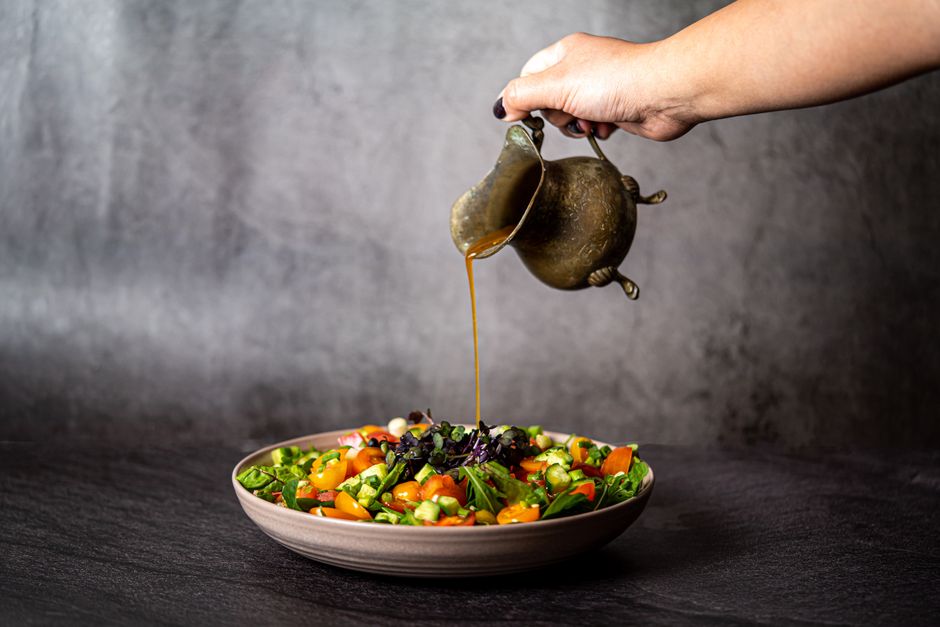
Ponzu sauce is a Japanese citrus-soy condiment that adds a bright, tangy flavor to food without the heaviness of many creamy dressings or sugary glazes. Whether it is healthy depends almost entirely on how much you use and what you compare it to. It is relatively low in calories, but it is high in sodium, so portion size matters more than most people expect.
What Is Ponzu Sauce Made Of?
Traditional ponzu is built on soy sauce, citrus juice, and rice vinegar. The citrus is usually yuzu in Japan, though many commercial versions use lemon, lime, or a blend. Some recipes add mirin, a sweet rice wine, or a small amount of sugar and bonito flakes for depth.
That base matters for nutrition. Soy sauce is the dominant ingredient by volume, which means sodium is the main nutritional concern. The citrus and vinegar contribute almost no calories and no fat. Sweeteners, when present, add a modest amount of carbohydrate.
There is a meaningful difference between traditional ponzu and the bottled products sold in most US grocery stores. Many commercial brands are not brewed in the traditional way. Some are essentially soy sauce with citrus flavoring, added sugar, and preservatives. Reading the label tells you which one you are holding.
A non-obvious point: the word “ponzu” on a bottle does not guarantee any particular recipe or ingredient standard in the US. Unlike some regulated food categories, ponzu has no fixed legal definition here, so two bottles with the same name can differ widely in sodium and sugar content.
How Much Sodium Is in Ponzu Sauce?
Ponzu is a high-sodium condiment. That is the single most important fact for most people watching their blood pressure or fluid balance.
The exact number varies by brand. Regular soy sauce typically contains roughly 900 to 1,000 milligrams of sodium per tablespoon. Ponzu is usually diluted with citrus juice and vinegar, so it tends to run lower than straight soy sauce, but many bottled versions still land in the range of several hundred milligrams of sodium per tablespoon. Some brands are higher than others, and low-sodium versions exist.
Because the range is wide, the label is the only reliable source. Sodium content is listed on the Nutrition Facts panel in milligrams per serving, and the serving size is often one tablespoon.
For context, US dietary guidance generally recommends keeping sodium intake below 2,300 milligrams per day for most adults, and lower for people with high blood pressure or other conditions. A single tablespoon of a typical ponzu can account for a noticeable share of that daily limit. A few tablespoons poured freely over a rice bowl can add up quickly.
This does not make ponzu a bad choice. It makes it a condiment to measure rather than pour. Used as a dip or a light drizzle, it delivers flavor with far less sodium than a heavy pour of soy sauce or a salty teriyaki glaze.
How Many Calories Are in Ponzu Sauce?
Ponzu is low in calories. Most versions contain very little fat and modest carbohydrate, so a typical serving contributes only a small number of calories.
Calories come mainly from any sugar or mirin in the recipe. A basic ponzu made from soy sauce, citrus, and vinegar has almost none beyond what the soy sauce itself contributes. Sweeter commercial versions can be higher, but still modest compared with mayonnaise-based dressings, which are largely oil.
The practical takeaway is that calories are rarely the reason to limit ponzu. Sodium is. Someone counting calories can use ponzu fairly freely as a flavoring. Someone watching sodium cannot.




Ponzu Sauce vs Soy Sauce and Other Condiments
Comparing ponzu to the condiments people usually reach for shows where it fits. The table below reflects typical ranges, not exact figures, because brands vary.
| Condiment (1 tablespoon) | Sodium | Calories | Fat |
|---|---|---|---|
| Soy sauce | High (roughly 900–1,000 mg) | Low | None |
| Ponzu sauce | Moderate to high (varies by brand) | Low | None |
| Ranch dressing | Moderate | Higher | High |
| Teriyaki sauce | Moderate to high | Higher (sugar) | Low |
Against soy sauce, ponzu usually wins on sodium because it is diluted with citrus and vinegar. Against a creamy dressing, ponzu wins on calories and fat by a wide margin. Against a sugary glaze, it wins on added sugar.
That makes ponzu a reasonable middle-ground choice. It is not a low-sodium food. It is a lower-sodium option than several common alternatives.
Is Ponzu Sauce Healthy? Diet Tips
Ponzu can fit into a healthy diet when it is used as a flavoring rather than a base. The main thing to manage is sodium, and the main way to manage it is portion control.
- Measure it. Use a spoon rather than pouring from the bottle so you know how much sodium you are adding.
- Use it as a dip. A small dish on the side delivers flavor with less total volume than a pour over the whole plate.
- Choose low-sodium versions when available, and compare labels across brands.
- Balance it with low-sodium foods. If ponzu is going on vegetables, rice, or plain protein, the rest of the meal can stay light on salt.
- Watch the sugar. Sweeter commercial brands can carry added sugar, so check the ingredients if that matters to you.
One point that gets lost: ponzu is a condiment, not a health food. It does not add meaningful protein, fiber, vitamins, or minerals to a meal in the amounts people typically use. Its value is flavor. Judged on that, it is a useful tool for making vegetables, fish, and lean meats more appealing without much fat or sugar.
For someone with high blood pressure or a condition that requires strict sodium control, ponzu is worth discussing with a doctor or dietitian rather than using freely. The evidence on sodium reduction and blood pressure is well established, and even small daily reductions can matter over time.
Who Should Be Careful With Ponzu Sauce?
Anyone advised to limit sodium should treat ponzu the way they treat soy sauce — as something to measure. That includes people with high blood pressure, heart failure, kidney disease, and those who have been told to watch fluid retention.
People with celiac disease or a wheat sensitivity should check the label carefully. Traditional soy sauce is often made with wheat, and ponzu inherits that. Some brands offer wheat-free or tamari-based versions, but the standard product is not automatically gluten-free.
People following a low-sugar or low-carb diet should check for added sugar or mirin, which raise the carbohydrate content. Basic versions are low in carbs, but sweetened commercial versions are not always.
There is no established safety concern with ponzu for the general population when it is used as a normal condiment. The caution is about sodium and, for some people, gluten and added sugar — not about the sauce being harmful in itself.
Frequently Asked Questions
Is ponzu sauce healthy?
Ponzu can be part of a healthy diet when used in small amounts as a flavoring. It is low in calories but high in sodium, so portion size is what determines whether it helps or hurts your overall intake.
Is ponzu sauce high in sodium?
Yes, ponzu is a high-sodium condiment, though usually lower than straight soy sauce because it is diluted with citrus and vinegar. Exact sodium content varies by brand, so check the Nutrition Facts label.
How many calories are in ponzu sauce?
Ponzu is low in calories, with most of them coming from any sugar or mirin in the recipe. A basic version made from soy sauce, citrus, and vinegar has very few calories per serving.
Is ponzu sauce gluten-free?
Not usually. Traditional soy sauce is often made with wheat, so standard ponzu is not automatically gluten-free. Look for brands specifically labeled gluten-free or made with tamari.
