
Polyvinyl alcohol is not a microplastic. It is a synthetic polymer, but it is manufactured as a water-soluble plastic, and that single property separates it from the insoluble plastic fragments that scientists define as microplastics. The confusion is understandable: both are man-made polymers, and both turn up in conversations about water pollution. But the chemistry, the behavior in water, and the environmental concerns are different.
Polyvinyl alcohol, often shortened to PVA or PVOH, is used in laundry detergent pods, dishwasher tablets, and some personal care products. It also has a long history in medicine and manufacturing. Whether it counts as a microplastic depends entirely on how you define the term, and that definition matters more than most people realize.
Is Polyvinyl Alcohol A Microplastic?
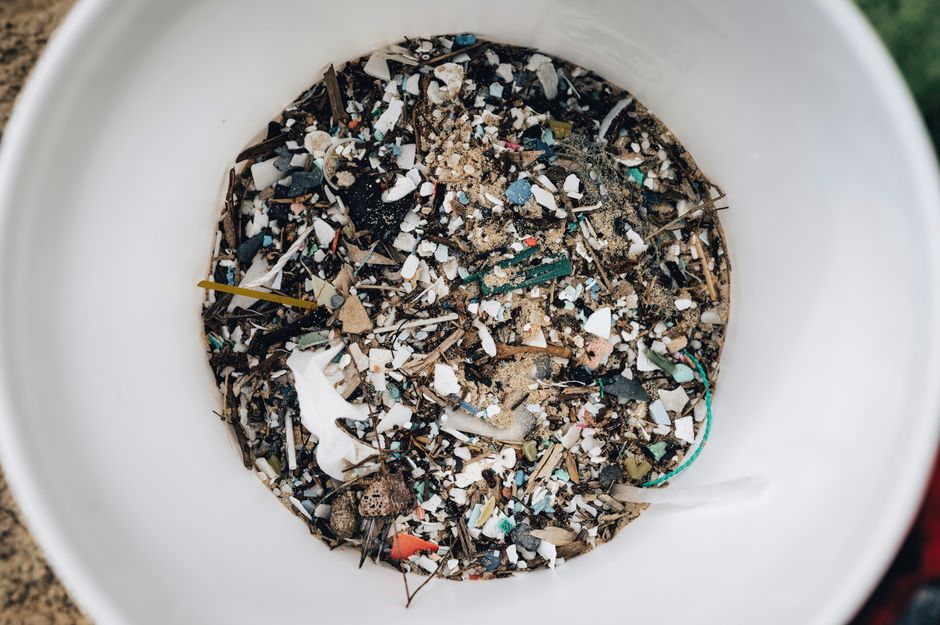
No. Under the definitions used by environmental scientists and regulators, polyvinyl alcohol does not qualify as a microplastic. Microplastics are defined as plastic particles smaller than 5 millimeters that do not dissolve. They persist in water and soil for years, sometimes centuries.
PVA is different. It dissolves in water. That is its defining commercial property. A laundry pod film that disappears in your washing machine is doing exactly what it was designed to do.
There is a real debate about whether “soluble plastic” should be treated differently under environmental rules. Some researchers and advocacy groups argue that the soluble-versus-insoluble distinction is doing too much work, and that we should look at what happens after the polymer dissolves rather than treating dissolution as a free pass. That is a legitimate scientific and policy question. It is not the same as calling PVA a microplastic.
The key point: a material that dissolves cannot persist as a particle. Microplastics persist precisely because they do not dissolve. That is what makes them a lasting pollution problem.
What Is Polyvinyl Alcohol And How Is It Made?
Polyvinyl alcohol is a synthetic polymer made from vinyl acetate. The vinyl acetate is polymerized first, then part of it is converted into vinyl alcohol units through a chemical process called hydrolysis. The result is a white, odorless solid that dissolves readily in water.
It has been used commercially for decades. Common applications include:
- Water-soluble film for detergent pods and dishwasher tablets
- Textile sizing and finishing agents
- Paper coatings and adhesives
- Contact lens solutions and eye drops
- Surgical and medical products, including some wound dressings
- Thickeners in cosmetics and personal care items
Its solubility is the reason it is chosen for these uses. In a detergent pod, the film needs to hold the liquid detergent until it reaches the wash cycle, then dissolve completely. PVA delivers that.
Why Do People Confuse PVA With Microplastics?
The confusion comes from a reasonable place. PVA is a plastic. It is synthetic. It ends up in wastewater. Those three facts are true, and it is natural to connect them to the microplastic problem.
But those facts describe a lot of materials. What makes microplastics a distinct environmental concern is persistence. Plastic microbeads in toothpaste, synthetic fibers shed from clothing, and fragments from degrading plastic bags all share one trait: they do not dissolve. They accumulate in waterways, in sediment, and in the bodies of aquatic animals.
PVA behaves differently. When it dissolves, it stops being a particle. The question then becomes what happens to the dissolved polymer, which is a separate scientific question from microplastic pollution.
There is another layer to the confusion. Some marketing materials and social media posts describe any synthetic polymer as a “microplastic” regardless of its properties. That is not how the term is used in peer-reviewed environmental research. Precision matters here, because lumping soluble and insoluble polymers together makes it harder to understand which materials actually pose the biggest risks.
What Happens To PVA After It Goes Down The Drain?
Most PVA that enters wastewater does not reach rivers and oceans as intact polymer. Wastewater treatment plants and the biological processes within them can break it down, though the degree to which this happens varies with conditions.
Some studies suggest that certain microorganisms can degrade dissolved PVA, particularly in environments with the right microbial communities and oxygen levels. The rate and completeness of that degradation is not uniform. It depends on the specific PVA formulation, the treatment system, and environmental conditions.
This is where the evidence gets less tidy. PVA is not a persistent particle the way microplastics are, but it is also not something that vanishes instantly and harmlessly in every setting. The honest position is that its environmental fate is better understood than it was a decade ago, but it is not a settled matter.
Some research has raised questions about the effects of dissolved PVA on aquatic organisms at certain concentrations. The evidence is not strong enough to support firm conclusions about real-world risk, and it does not support the claim that PVA is a microplastic. It does mean that “it dissolves, so it is fine” is an oversimplification.
How Does PVA Compare To Other Plastics?
The comparison is useful because it shows why the soluble-versus-insoluble distinction matters.
| Material | Soluble in water | Persists as particles | Common environmental concern |
|---|---|---|---|
| Polyvinyl alcohol (PVA) | Yes | No, once dissolved | Fate of dissolved polymer; degradation rates |
| Polyethylene (microbeads) | No | Yes | Ingestion by aquatic life; long-term persistence |
| Polyester (textile fibers) | No | Yes | Shedding into waterways; widespread contamination |
| Polystyrene fragments | No | Yes | Fragmentation into ever-smaller particles |
The materials in the bottom three rows are the ones that dominate microplastic research and regulation. PVA is not in that group, because it does not behave the same way in water.
Is PVA Safe For Humans And The Environment?
For human use, PVA has a long record in consumer products and medical applications. It is generally recognized as safe for its intended uses in food-contact films and some medical products, though “generally recognized as safe” is a regulatory category, not a guarantee of zero risk under every condition.
For the environment, the picture is more nuanced than either side of the debate tends to admit. PVA is not a microplastic, and it does not accumulate as persistent particles. That is a meaningful difference. But dissolved PVA still enters wastewater systems, and its breakdown depends on conditions that are not identical everywhere.
What the evidence does not support is the claim that PVA is a dangerous microplastic hiding in your laundry detergent. What the evidence also does not fully support is the claim that dissolved PVA is entirely without environmental consequence. The truth sits between those positions, and the science is still developing.
One clarification worth making: the term “biodegradable” gets used loosely with PVA. Some PVA formulations degrade under specific conditions, but that does not mean every PVA product biodegrades quickly in every environment. The label is not a guarantee.
What Should You Take Away From This?
Polyvinyl alcohol is a soluble synthetic polymer, not a microplastic. The distinction is real and grounded in how the material behaves in water. Microplastics are defined by their persistence as particles, and PVA does not meet that definition once it dissolves.
That does not mean PVA is a non-issue. The environmental fate of dissolved polymers is a legitimate area of research, and the evidence on degradation rates and aquatic effects is not complete. But the viral claim that PVA is a microplastic misrepresents both the material and the term.
If you are trying to reduce microplastic exposure, the bigger sources are the ones research consistently points to: synthetic clothing fibers, certain cosmetics, and the breakdown of larger plastic items. Laundry pod film is not where the evidence points. Understanding the difference helps you focus on what actually matters.
Frequently Asked Questions
Is polyvinyl alcohol considered a microplastic by scientists?
No. Environmental scientists define microplastics as insoluble plastic particles smaller than 5 millimeters, and PVA dissolves in water. Because it does not persist as a particle, it falls outside that definition.
Does PVA from laundry pods pollute the ocean?
Most PVA that enters wastewater does not reach the ocean as intact particles because it dissolves and can be broken down in treatment systems. The rate of breakdown varies with conditions, and the fate of dissolved PVA is still being studied.
Is polyvinyl alcohol safe to use in household products?
PVA has a long history of use in consumer and medical products and is generally recognized as safe for its intended applications. That is a regulatory category, not a guarantee of zero environmental impact.
What is the difference between PVA and microbeads?
Microbeads are solid, insoluble plastic particles that persist in water for years. PVA dissolves in water and does not remain as a particle, which is why it is regulated and studied differently.
