
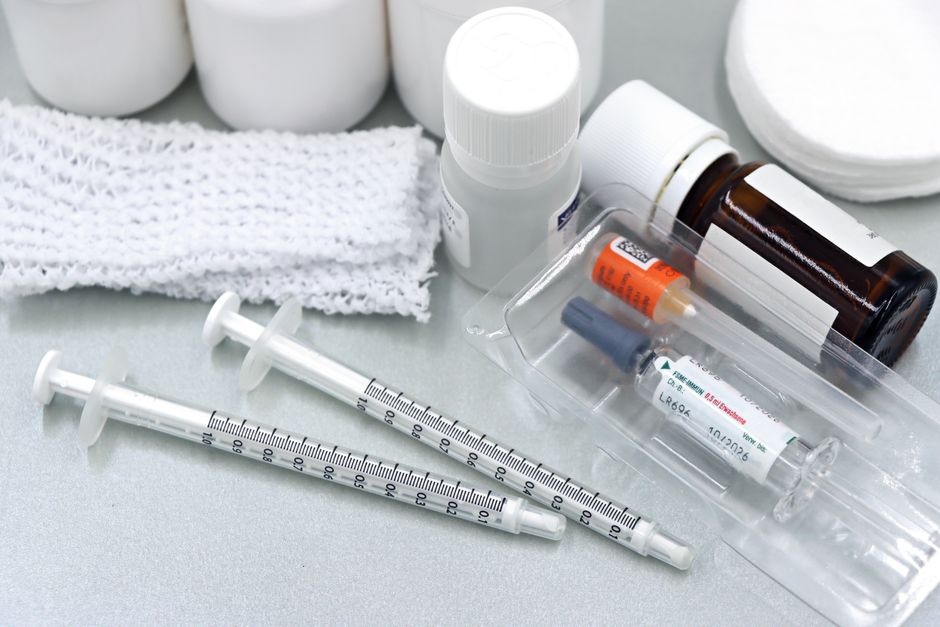
Yes, there is a polio vaccine that uses live virus, and yes, it can cause polio. The oral polio vaccine (OPV) contains weakened but living poliovirus, and in rare cases the virus can regain the ability to cause paralysis. This is called vaccine-associated paralytic polio, or VAPP. The risk is real but extremely small. Most countries, including the United States, no longer use the live vaccine for routine immunization.
What Are The Two Types Of Polio Vaccine?
There are two polio vaccines in the world, and they work in completely different ways. One uses killed virus. The other uses live, weakened virus.
The injectable vaccine, called inactivated poliovirus vaccine (IPV), contains virus that has been killed with formaldehyde. It cannot cause polio because the virus is no longer alive. It is given as a shot, usually in the arm or leg.
The oral vaccine, OPV, contains live virus that has been weakened so it does not normally cause disease. It is given as drops by mouth. It is cheap, easy to give, and it produces strong immunity in the gut, which is where poliovirus enters and multiplies.
That gut immunity matters. OPV can actually stop person-to-person spread of wild poliovirus in a community, not just protect the individual who received it. IPV protects the person who gets it very well, but it does less to interrupt transmission. This is why OPV has been the workhorse of global eradication efforts.
How Can A Live Vaccine Cause Polio?
The weakened virus in OPV is not fully disabled. It is attenuated — a version of the virus that has been altered so it replicates poorly and rarely reaches the nervous system.
In a small number of people, the weakened virus mutates as it replicates in the gut. It can recover the ability to attack nerve cells. When that happens, the person can develop paralysis indistinguishable from wild polio. This is vaccine-associated paralytic polio.
The mechanism is well understood. The virus in OPV has specific genetic changes that keep it weak. During replication in the intestines, those changes can reverse. The longer the virus circulates and the more people it passes through, the more opportunity it has to revert.
This is why the live vaccine carries an inherent, if tiny, risk. It is not a manufacturing defect. It is a consequence of using a living organism.
How Common Is Vaccine-Associated Paralytic Polio?
VAPP is rare. Estimating the exact rate is difficult because reporting varies by country, but the widely cited figure for the traditional oral vaccine is on the order of one case per several million doses. Some estimates put it lower for certain vaccine formulations.
The risk is not spread evenly. It is higher in people receiving their first dose and in people with weakened immune systems. It is also higher when the vaccine is given to adults who were never vaccinated, compared with infants.
I want to be careful here. I am not going to give you a precise number like “one in 2.4 million” because those figures come from different vaccine types, different countries, and different reporting systems, and they do not all agree. The honest statement is that the risk is measured in cases per several million doses.
For context, wild poliovirus paralyzed hundreds of thousands of children every year before vaccines existed. The comparison is not close.
What Is Circulating Vaccine-Derived Poliovirus?
This is the part most people have never heard of, and it matters right now.
When the weakened virus from OPV spreads from a vaccinated person to others, it can circulate in a community with low immunity. As it passes from person to person, it can mutate back toward a form that causes paralysis. This is called circulating vaccine-derived poliovirus, or cVDPV.
cVDPV is not the same as VAPP. VAPP is paralysis in the person who received the vaccine or a close contact. cVDPV is a community outbreak caused by a reverted vaccine strain. In recent years, cVDPV outbreaks have occurred in several countries, and they have become a significant obstacle to global eradication.
This is a non-obvious point worth sitting with. The live vaccine that helped bring wild polio close to elimination has itself seeded outbreaks that now have to be controlled. That is not an argument against the vaccine’s historic role. It is a description of the tradeoff that comes with using a live organism.
Why Did Some Countries Stop Using The Oral Vaccine?
The United States stopped using OPV for routine childhood vaccination in 2000. The reason was simple: once wild polio was eliminated in the US, the only remaining risk of paralysis from polio was the small risk from the vaccine itself.
When a disease is gone from a country, a vaccine that carries even a tiny risk of causing that disease no longer makes sense for routine use. The US switched entirely to IPV, the killed vaccine. Other high-income countries made similar decisions.
Many lower-income countries continued using OPV because it is cheaper, easier to deliver without trained injectors, and better at stopping transmission. That calculation is different when wild virus is still circulating nearby.
This is a genuine tradeoff, not a mistake. The right choice depends on whether wild virus is a present threat or a distant one.
Is The Polio Vaccine Still Recommended?
Yes. Polio vaccination is still recommended for children in the United States and most of the world. The difference is which vaccine is used.
In the US, the recommended schedule uses inactivated poliovirus vaccine (IPV), given by injection. The Centers for Disease Control and Prevention recommends four doses: at 2 months, 4 months, 6 to 18 months, and 4 to 6 years of age. IPV cannot cause polio because it contains no live virus.
Adults who were fully vaccinated as children generally do not need a booster unless they are traveling to an area where polio is still present or will have close contact with someone who has polio. Adults who were never vaccinated or are unsure should talk with a clinician about their situation.
For global eradication efforts, OPV is still used in some settings, often in campaigns rather than routine schedules. Public health agencies weigh the small risk of vaccine-derived outbreaks against the much larger risk of wild polio returning.
What Are The Symptoms Of Polio?
Most poliovirus infections cause no symptoms at all. This is one reason the disease spreads so easily.
When symptoms do appear, they often look like a mild flu: fever, sore throat, headache, nausea, and fatigue. These resolve on their own. A smaller number of people develop more serious symptoms including stiff neck and severe headache, which indicate the virus has reached the nervous system.
Paralysis occurs in a small fraction of infections. It is usually asymmetric, meaning it affects one side of the body more than the other, and it often affects the legs. The paralysis comes from the virus destroying motor neurons in the spinal cord. Those neurons do not regenerate, which is why the paralysis is often permanent.
There is no cure for polio. Treatment is supportive — rest, pain control, and physical therapy. Prevention through vaccination is the only reliable protection.
How Do The Two Vaccines Compare?
The table below summarizes the main differences. These are established characteristics of each vaccine type, not estimates.
| Feature | Inactivated (IPV) | Oral (OPV) |
|---|---|---|
| Virus status | Killed | Live, weakened |
| How it is given | Injection | Drops by mouth |
| Can it cause polio? | No | Yes, rarely |
| Gut immunity | Limited | Strong |
| Stops community spread | Less so | Yes |
| Used in US routine schedule | Yes | No |
The Bottom Line
The live polio vaccine can cause polio. That statement is accurate and it is not a secret. The risk is small, it is well documented, and it is the reason the United States and many other countries now use the killed vaccine instead.
None of that makes the live vaccine a failure. It helped drive wild polio to the edge of eradication. But it is a live organism, and live organisms behave in ways that killed ones do not. Understanding that tradeoff is more useful than either fear or blind trust.
If you have questions about which polio vaccine you or your child should receive, that conversation belongs with a clinician who knows your health history. This article is information, not a recommendation.
Frequently Asked Questions
Is the polio vaccine a live vaccine?
There are two polio vaccines, and only one is live. The oral polio vaccine (OPV) contains live, weakened virus, while the inactivated polio vaccine (IPV) used in the US contains killed virus.
Can the polio vaccine give you polio?
The live oral vaccine can cause polio in rare cases, a condition called vaccine-associated paralytic polio. The inactivated vaccine used in the US cannot cause polio because it contains no live virus.
Why did the US stop using the oral polio vaccine?
The US stopped routine use of OPV in 2000 because wild polio had been eliminated in the country. Once wild virus was no longer a threat, the small risk from the live vaccine outweighed its benefits for routine use.
What is vaccine-derived poliovirus?
It is a form of poliovirus that comes from the weakened virus in the oral vaccine mutating back toward a disease-causing form as it spreads between people. Circulating vaccine-derived poliovirus can cause outbreaks in communities with low vaccination rates.
