
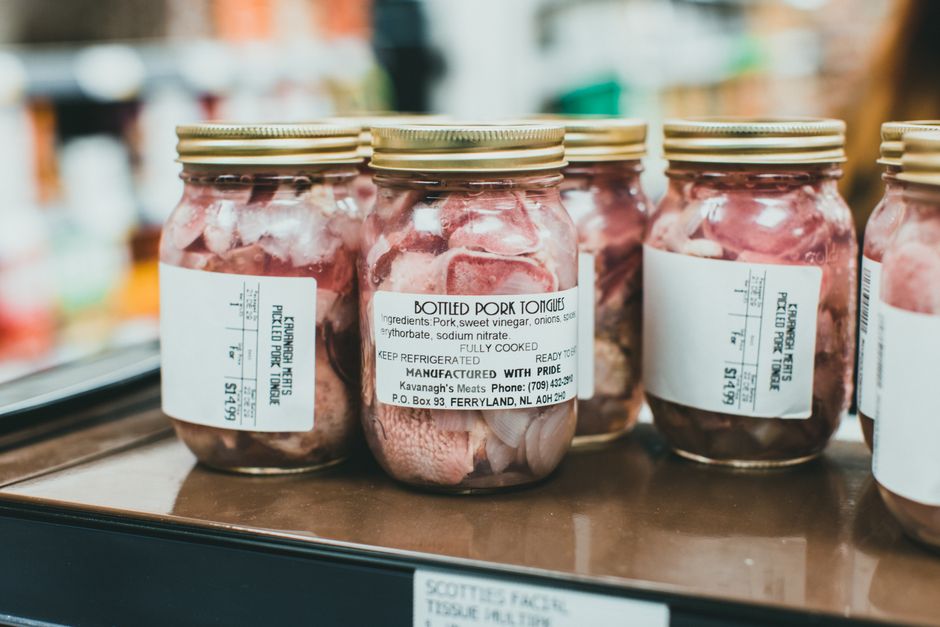
Pickled pork skin is a traditional food in many cultures, from Southern American soul food to Latin American cueritos and Chinese pao pi. The short answer: it is not a health food. It is high in fat and sodium, low in most vitamins, and its main nutritional contribution is collagen protein, which your body does not use efficiently for building muscle or skin. If you enjoy it, small amounts can fit into a varied diet. If you are eating it for health benefits, the evidence does not support that.
What Is Pickled Pork Skin and How Is It Made?
Pickled pork skin starts as pork rind — the outer layer of pig skin. The skin is cleaned, often boiled or fried, then preserved in a vinegar-based brine. Some versions are sold in jars as a ready-to-eat snack or ingredient. Others are made at home.
The pickling liquid usually contains vinegar, salt, water, and spices. Sometimes sugar, garlic, or chili peppers are added. The acid in vinegar lowers the pH of the food, which slows the growth of many spoilage organisms. That is the preservation mechanism. It does not make the food low in fat or sodium.
The texture ranges from chewy to gelatinous, depending on how the skin was prepared before pickling. In Mexican cuisine, cueritos are often sold in jars with vinegar, onion, and chili. In Chinese cooking, pickled pig skin may appear in cold dishes. In the American South, pickled pig’s feet and skin are bar snacks with deep cultural roots.
What Nutrients Does Pickled Pork Skin Contain?
Pickled pork skin is mostly fat and protein, with very little carbohydrate and almost no vitamins or minerals beyond sodium.
Pork skin itself is rich in collagen, a structural protein. When you eat collagen, your digestive system breaks it into amino acids. Those amino acids are not different from the amino acids in other proteins. Your body does not preferentially route them to your skin, joints, or hair.
Collagen is an incomplete protein. It lacks tryptophan, an essential amino acid. That means it cannot support muscle protein synthesis on its own the way a complete protein like eggs, meat, or dairy can.
| Nutrient | General profile in pickled pork skin |
|---|---|
| Calories | Moderate to high, depending on preparation |
| Fat | High, mostly unsaturated but with saturated fat |
| Protein | Moderate, mostly collagen (incomplete) |
| Sodium | High — from both the pork and the brine |
| Carbohydrates | Very low |
| Vitamins and minerals | Minimal, aside from sodium |
Exact numbers vary widely by recipe and brand. Some commercial products add sugar or other ingredients. Check the label if you are tracking intake.
Is Pickled Pork Skin Healthy? Benefits and Risks
There is no strong evidence that pickled pork skin provides meaningful health benefits. The risks are better documented than the benefits.
The main concern is sodium. Pickled pork skin is preserved in salt brine. High sodium intake is linked to elevated blood pressure in salt-sensitive individuals. The American Heart Association recommends no more than 2,300 mg of sodium per day for most adults, and ideally no more than 1,500 mg for those with high blood pressure. A single serving of pickled pork skin can contribute a significant portion of that limit. The exact amount depends on the product.
The fat content is another consideration. Pork skin contains both saturated and unsaturated fat. Diets high in saturated fat are associated with elevated LDL cholesterol, though the relationship is more nuanced than once thought. The 2020–2025 Dietary Guidelines for Americans recommend limiting saturated fat to less than 10% of daily calories.
Collagen is often marketed as a benefit of pork skin. The logic is that eating collagen supports your own collagen. This reasoning does not hold up well. Your body digests dietary collagen into individual amino acids, then uses them wherever they are needed. It does not send them directly to your skin or joints. Some small studies have looked at collagen supplements and skin elasticity or joint pain, but results are mixed and the studies are generally small. No clinical evidence confirms that eating pickled pork skin improves skin, joints, or hair.




Does Pickled Pork Skin Have Any Real Benefits?
The honest answer is that the benefits are limited and largely nutritional, not therapeutic.
It provides calories and some protein. For people in food-insecure situations or with high calorie needs, that matters. It also contains glycine and proline, two amino acids found in collagen. Glycine plays roles in several metabolic processes. But you can get glycine from other protein sources, and there is no evidence that pork skin is a superior source.
Some people eat pickled pork skin for its texture and flavor. That is a valid reason to eat a food. Enjoyment and cultural tradition are real. But they are not the same as health benefits.
If you see claims that pickled pork skin “supports joint health” or “improves skin elasticity,” treat them with skepticism. Those claims are not supported by clinical trials on pickled pork skin specifically.
Who Should Be Careful With Pickled Pork Skin?
Several groups have reason to limit or avoid pickled pork skin.
- People with high blood pressure — the sodium content can work against blood pressure control.
- People with heart failure — sodium restriction is often part of managing fluid balance, and high-sodium foods can worsen symptoms.
- People with kidney disease — sodium and phosphorus intake often need monitoring, and processed meats can be problematic.
- People on a low-sodium diet for any reason — pickled pork skin is not a good fit.
- People watching saturated fat — the fat content may push you over your target.
If you are pregnant or breastfeeding, there is no specific clinical guidance on pickled pork skin. The general advice to limit high-sodium processed foods applies. If the product is not commercially sealed or has been sitting out, food safety becomes a concern. Pregnant women are advised to avoid foods with a higher risk of listeria or other foodborne illness. Pickled products are generally acidic enough to be low-risk, but homemade versions stored improperly are not guaranteed safe.
How Does Pickled Pork Skin Compare to Other Snacks?
Compared to many common snacks, pickled pork skin is not uniquely bad. It is also not uniquely good.
A one-ounce serving of potato chips has roughly 150 calories and about 170 mg of sodium, depending on the brand. Pickled pork skin varies more widely. Some products are lower in sodium than chips. Some are much higher. The fat content is often higher in pork skin.
Compared to a handful of nuts, pickled pork skin loses on almost every measure. Nuts provide unsaturated fat, fiber, vitamins, and minerals. Pork skin provides fat and collagen protein with little micronutrient value.
Compared to fresh meat or fish, pickled pork skin is a poor protein source. It lacks tryptophan and has a less favorable amino acid profile.
If you are choosing a snack and your goal is nutrition, pickled pork skin is not the best choice. If you are choosing a snack and your goal is enjoyment, that is a different calculation.
Can Pickled Pork Skin Fit Into a Healthy Diet?
Yes, in small amounts. No single food makes or breaks a diet. The overall pattern matters more than any one item.
If you eat pickled pork skin occasionally and your diet is otherwise varied and balanced, the impact is likely minimal. If you eat it daily or in large portions, the sodium and saturated fat can add up.
If you are trying to reduce sodium, look for brands with lower sodium content or rinse the product before eating. Rinsing may remove some surface salt, though it will not remove sodium that has penetrated the food.
Pairing pickled pork skin with high-potassium foods like beans, leafy greens, or potatoes can help offset some of the sodium’s effect on blood pressure. Potassium helps the body excrete sodium. This is not a reason to eat more pickled pork skin, but it is a reason not to panic if you enjoy it occasionally.
What About Collagen Supplements vs. Pickled Pork Skin?
Collagen supplements are a different product from pickled pork skin. They are usually hydrolyzed collagen peptides, which are broken down into smaller pieces than intact collagen. Some research suggests hydrolyzed collagen may have modest effects on skin hydration and elasticity, though study quality varies and results are not consistent.
Pickled pork skin is not hydrolyzed. The collagen is largely intact or partially broken down by cooking. Your digestive system still has to break it apart. There is no evidence that pickled pork skin provides the same potential effects as collagen supplements, and even those effects are not firmly established.
If you are interested in collagen for skin or joints, talk to your doctor. Do not assume that eating pickled pork skin will achieve the same thing.
Frequently Asked Questions
Is pickled pork skin high in sodium?
Yes. Pickled pork skin is preserved in a salt brine, so it is typically high in sodium. The exact amount varies by brand and recipe, so check the label if you are limiting sodium.
Does pickled pork skin have collagen?
Yes, pork skin is rich in collagen, but your body breaks it down into amino acids during digestion. It does not go directly to your skin or joints, and collagen is an incomplete protein.
Can you eat pickled pork skin on a low-sodium diet?
It is not a good fit for a low-sodium diet because of the brine. If you are on sodium restriction for blood pressure, heart, or kidney reasons, choose other snacks.
Is pickled pork skin good for your joints?
No clinical evidence confirms that eating pickled pork skin improves joint health. Claims about collagen from pork skin supporting joints are not supported by trials on this specific food.
