
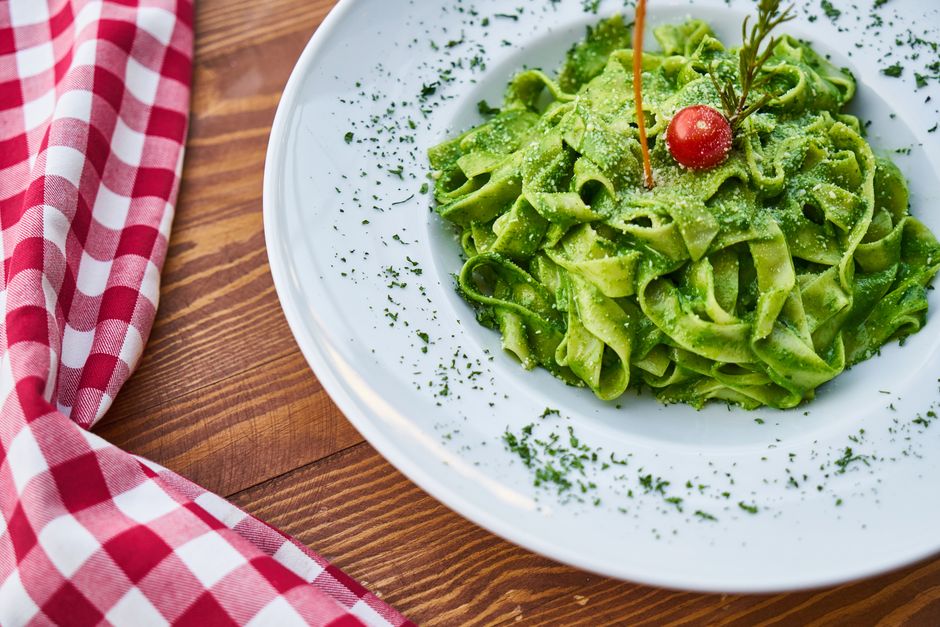
Pesto pasta is a bowl of contradictions. The pasta delivers fast energy, the basil and olive oil bring real nutrients, and the pine nuts add protein and fat — but the same bowl can also carry a lot of calories, sodium, and saturated fat depending on how it is made. Whether it counts as healthy depends almost entirely on portion size and what goes into the pesto.
A standard serving of pesto pasta gives you energy from carbohydrates, fat from olive oil and nuts, some protein from cheese and nuts, and small amounts of vitamins and minerals from basil. It is not a low-calorie food, and it is not a nutritional villain either. The honest answer: it can fit a healthy diet, but it is easy to overdo.
What Nutrients Are Actually in Pesto Pasta?
The nutrition depends on the recipe, so any single number is an estimate. Still, the main ingredients have well-documented profiles.
Pasta is mostly carbohydrate, with some protein and very little fat. A typical serving of cooked pasta provides energy mainly from starch, and whole wheat pasta adds fiber that regular pasta lacks.
Traditional pesto — basil, pine nuts, garlic, Parmesan or Pecorino cheese, and olive oil — brings fat, protein, and a range of micronutrients. Olive oil is high in monounsaturated fat. Pine nuts supply protein, magnesium, and zinc. Basil contributes small amounts of vitamin K and antioxidants. Parmesan adds protein and calcium, but also saturated fat and sodium.
Here is a rough comparison of the core ingredients in a typical pesto:
- Olive oil: mostly monounsaturated fat, calorie-dense at about 120 calories per tablespoon
- Pine nuts: protein, magnesium, zinc, and polyunsaturated fat
- Parmesan cheese: protein and calcium, plus saturated fat and sodium
- Basil: vitamin K and plant antioxidants, in small amounts per serving
- Garlic: flavor compounds with some antioxidant activity
The key point: pesto is a fat-based sauce. Olive oil and nuts mean a small amount of pesto carries a lot of calories. That is not a flaw — fat is a normal part of eating — but it matters for portion control.
Is Pesto Pasta Healthy Heres What Nutrition Says
Pesto pasta can be part of a healthy diet, but it is not a health food in the way a plain vegetable dish is. The honest nutrition picture is mixed: good fats and some protein sit alongside refined carbohydrates, added sodium, and a high calorie load.
The pasta itself is the weaker link. Regular white pasta is a refined carbohydrate — it digests quickly and provides little fiber. Whole wheat pasta is a better choice on that front, since it delivers more fiber and a slower release of energy.
The pesto is where the nutrition is strongest. Olive oil is a cornerstone of the Mediterranean eating pattern, which research has consistently linked to heart health. Pine nuts and cheese add protein. Basil brings antioxidants. These are real nutritional pluses.
The catch is quantity. A generous pour of pesto over a large bowl of pasta can push a single meal past what many people need in a sitting, especially if the goal is weight management. Fat is calorie-dense, and it is easy to eat more of it than you realize.
So the answer is conditional. Pesto pasta is healthy when the portion is reasonable, the pasta is whole grain, and the rest of the day’s eating is balanced. It is less healthy when it is a large refined-carb bowl drenched in oil and cheese.
How Many Calories Are in a Bowl of Pesto Pasta?
A typical restaurant portion of pesto pasta often lands in the range of 600 to 900 calories, though this varies widely by recipe and serving size. A home-cooked serving can be considerably lower if you control the oil and cheese.
Most of the calories come from three places: the pasta, the olive oil, and the cheese. Olive oil alone contributes about 120 calories per tablespoon, and many pesto recipes use several tablespoons per serving. Parmesan adds more on top.
Portion size is the single biggest factor. A modest serving of pasta with a measured spoonful of pesto can fit comfortably into most eating patterns. A restaurant plate often delivers two or three times that amount.
If calories matter to you, measure the pesto rather than spooning it freely. It is one of the easiest ways to keep the meal in a reasonable range without giving up the flavor.





Is Pesto Healthier Than Other Pasta Sauces?
Compared with cream-based Alfredo sauce, pesto is generally the better choice. Cream sauces are high in saturated fat and calories with little nutritional upside. Pesto’s fat comes mostly from olive oil, which is predominantly monounsaturated — a more favorable fat profile.
Compared with a simple tomato sauce, the comparison is closer and depends on your goals. Tomato sauce is lower in calories and fat and provides lycopene, a well-studied antioxidant. Pesto brings more fat and calories but also more protein and the nutritional benefits of olive oil and nuts.
Neither is universally “better.” Tomato sauce suits someone watching calories or saturated fat. Pesto suits someone who wants more flavor and healthy fats and can manage the portion. Both can be part of a balanced diet. The sauce is rarely the deciding factor — the overall pattern of eating is.
What Should You Watch Out For?
Sodium and saturated fat are the two things worth paying attention to. Parmesan and Pecorino are salty cheeses, and many jarred pestos add more sodium for preservation and flavor. If you are watching blood pressure, jarred pesto is worth reading the label on.
Saturated fat comes mainly from the cheese. In moderate amounts this is not a major concern for most people, but a heavy hand with cheese raises it quickly.
There is also a practical point about jarred versus fresh. Jarred pesto often contains added oils, sodium, and preservatives, and some brands use cheaper nuts or fillers in place of pine nuts. Fresh homemade pesto lets you control exactly what goes in. That said, jarred pesto is not unhealthy by default — it is simply worth checking the ingredient list.
One clarification that surprises people: pesto is not a vegetable serving in any meaningful sense. Basil is a leafy herb used in small quantities. The amount in a typical serving of pesto is far too small to count toward vegetable intake the way a cup of spinach or broccoli would.
How Can You Make Pesto Pasta Healthier?
Small changes make a real difference without sacrificing the dish. The goal is not to strip the flavor but to shift the balance toward more fiber, more vegetables, and a sensible portion of sauce.
- Use whole wheat pasta for more fiber and a slower energy release.
- Measure the pesto. A little goes a long way; you do not need to drown the pasta.
- Add vegetables. Cherry tomatoes, spinach, peas, or roasted vegetables bulk up the meal and add nutrients and fiber.
- Add a lean protein like chicken, white beans, or shrimp to make it more filling and balanced.
- Go easy on extra cheese on top, since the pesto already contains cheese.
- Make pesto at home so you control the oil, salt, and cheese.
Adding vegetables is the highest-value change. It lowers the calorie density of the meal, adds fiber and micronutrients, and makes a smaller pasta portion feel satisfying. A bowl of pesto pasta loaded with tomatoes and greens is a genuinely different nutritional package from pasta with sauce alone.
Does Pesto Pasta Fit Special Diets?
It depends on the diet and the recipe. Traditional pesto contains cheese, so it is not vegan unless you use a cheese-free version. It also contains nuts (pine nuts), so anyone with a tree nut allergy should avoid traditional pesto or use a seed-based alternative.
For people managing gluten, standard pasta contains wheat, but gluten-free pasta and pesto without wheat-based additives can work. Always check labels, since some jarred pestos and pasta products vary.
For low-carb or keto eating, pesto pasta is a poor fit because pasta is high in carbohydrate. Zucchini noodles with pesto are a common substitute, though they are a different food entirely in terms of nutrition and satiety.
For anyone with lactose intolerance, the cheese in pesto may cause symptoms. Aged cheeses like Parmesan are lower in lactose than fresh cheeses, but tolerance varies by person.
Frequently Asked Questions
Is pesto pasta healthy?
It can be part of a healthy diet when portions are reasonable and the pasta is whole grain. It is high in calories and fat, so it is not a low-calorie food and is easy to overeat.
Is pesto healthier than tomato sauce?
Neither is universally healthier. Pesto is higher in fat and calories but provides healthy fats and protein, while tomato sauce is lower in calories and fat and provides lycopene.
How many calories are in pesto pasta?
A typical restaurant portion often falls between 600 and 900 calories, though this varies widely. Home-cooked servings are usually lower if you control the oil and cheese.
Is pesto pasta good for weight loss?
It can fit a weight-loss diet if the portion is controlled, since the calories add up quickly from oil and cheese. Measuring the pesto and adding vegetables helps keep it reasonable.
