
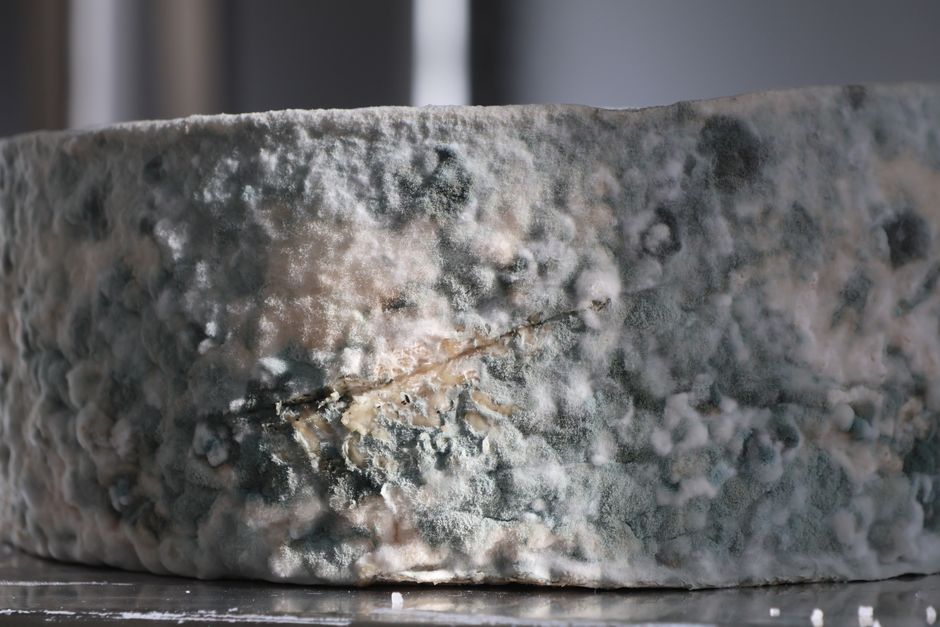
Yes, penicillin comes from a specific type of mold called Penicillium. But no, you cannot treat an infection by eating moldy food or breathing in moldy air. The mold that grows on bread, fruit, or damp walls is not the same as the purified medicine developed in a lab. Eating moldy food will not cure an infection. It could make you sick. Penicillin is a powerful antibiotic, but it must be manufactured, tested, and prescribed by a doctor. The connection between mold and penicillin is real, but it is also widely misunderstood. Let’s look at what the science actually says.
Is Penicillin In Mold And Can It Treat Infections Naturally?
The short answer is no. Penicillin is not sitting in your refrigerator waiting to cure a sore throat. The mold that produces penicillin — Penicillium chrysogenum — is a specific strain. It is not the same fuzzy green or white mold you find on old bread. Even if you happened to have the right strain, the amount of penicillin in a patch of mold is tiny. You would need to consume an unsafe amount of mold to get a meaningful dose. And you would also ingest mycotoxins and other harmful compounds.
Alexander Fleming discovered penicillin in 1928 when he noticed that a mold called Penicillium notatum killed bacteria in a petri dish. That was the starting point. But turning that observation into a usable drug took over a decade of research. Scientists had to figure out how to grow the mold in large quantities, extract the active compound, and purify it. The penicillin you get from a pharmacy today is not the same as what Fleming saw under his microscope. It is a refined, standardized medicine.
Eating moldy food will not treat an infection. It may cause nausea, vomiting, or allergic reactions. Some molds produce toxins that damage the liver or kidneys. The idea that you can self-treat with mold is dangerous. It is based on a misunderstanding of how antibiotics work and how they are made.
What Does Research Say About Penicillin From Mold?
Research published in journals like Nature Reviews Microbiology and Clinical Infectious Diseases confirms that penicillin is derived from mold. But the process is complex. The mold produces penicillin as a natural defense against bacteria. Scientists have spent decades selecting and modifying the Penicillium strains to maximize yield. Modern production uses fermentation tanks, not kitchen counters.
A 2017 study in Antimicrobial Agents and Chemotherapy showed that the original Penicillium strains produced very little penicillin. Through mutation and selection, researchers increased production by thousands of times. The penicillin you take today is the result of industrial biotechnology. It is not a simple natural remedy.
The World Health Organization lists penicillin on its Model List of Essential Medicines. It is one of the most important antibiotics ever discovered. But it is also one of the most misused. Taking penicillin when you do not need it contributes to antibiotic resistance. That is a global health crisis. Using moldy food as a source of penicillin would be both ineffective and risky.
What Are the Risks of Using Mold as a Treatment?
There are several serious risks. First, you cannot identify the type of mold by looking at it. Many molds look similar but produce different compounds. Some produce mycotoxins like aflatoxin, which is a known carcinogen. Others produce allergens that trigger asthma or sinus infections.
Second, you have no way to measure the dose. Penicillin is a drug that requires precise dosing. Too little will not kill the bacteria. Too much can cause side effects like diarrhea, rash, or severe allergic reactions. Anaphylaxis from penicillin is rare but life-threatening. You would not know if you were allergic until it was too late.
Third, moldy food often contains bacteria that cause food poisoning. Listeria, Salmonella, and E. coli can grow alongside mold. Eating that food could give you a second infection while you are trying to treat the first one.
The CDC warns against eating moldy food. They recommend discarding any food with visible mold, especially soft foods like bread, yogurt, and fruit. Hard cheeses can sometimes be saved by cutting off the mold, but that is for food safety, not medicine.




How Is Penicillin Made Today?
Modern penicillin production is a controlled industrial process. It starts with a pure culture of Penicillium chrysogenum. The mold is grown in large fermentation tanks with a sterile nutrient broth. The broth contains sugar, nitrogen, and minerals. The mold produces penicillin and releases it into the broth.
After several days, the broth is filtered to remove the mold. The penicillin is extracted using solvents and then purified through crystallization. The final product is a white powder that is tested for potency and purity. It is then formulated into pills, injections, or liquid suspensions.
This process is nothing like finding mold on bread. The bread mold is a mixture of species, some of which produce penicillin and some of which do not. The environment is not sterile. The nutrients are not optimized. You cannot replicate a pharmaceutical production line in your kitchen.
The table below compares key differences between lab-made penicillin and mold found in homes.
| Feature | Pharmaceutical Penicillin | Household Mold |
|---|---|---|
| Source strain | Penicillium chrysogenum (selected) | Mixed species, often unknown |
| Purity | 99%+ pure active compound | Contains mycotoxins, bacteria, debris |
| Dose control | Measured in milligrams or units | No way to measure |
| Safety testing | Rigorous clinical trials | None |
| Effectiveness | Proven against specific bacteria | Unreliable, likely ineffective |
What Should You Do If You Think You Need Penicillin?
If you have symptoms of a bacterial infection — like a fever that won’t go away, green or yellow mucus, pain in the sinuses or chest, or a wound that looks infected — see a doctor. Do not try to treat yourself with mold. The doctor will determine if you have a bacterial infection and whether penicillin is the right antibiotic.
Many common infections are viral. Antibiotics like penicillin do not work on viruses. Taking them when you have a cold or the flu only increases the risk of resistance. The CDC estimates that at least 30% of antibiotics prescribed in the United States are unnecessary. Using moldy food would add to that problem.
If the doctor prescribes penicillin, take it exactly as directed. Finish the entire course, even if you feel better. Stopping early can leave some bacteria alive, and those survivors may become resistant. That is how antibiotic resistance develops.
Some people report that eating moldy food helped them feel better. That is likely the placebo effect or coincidence. There is no clinical evidence that eating mold treats infections. The risks far outweigh any potential benefit.
Common Misconceptions About Mold and Penicillin
One common myth is that blue cheese contains penicillin. Blue cheese does use Penicillium molds, but they are different strains. Penicillium roqueforti and Penicillium camemberti are used for flavor and texture. They do not produce significant amounts of penicillin. Eating blue cheese will not treat an infection.
Another myth is that breathing in mold from a damp basement can cure a sinus infection. That is false. Inhaling mold spores can irritate your airways and trigger allergies. It will not deliver a therapeutic dose of penicillin to your sinuses. It could make your symptoms worse.
Some people believe that if a little mold is good, more must be better. That is not how medicine works. Penicillin is toxic to bacteria at the right dose, but it can also harm your body’s beneficial bacteria. Overuse or misuse disrupts your microbiome and can lead to secondary infections like C. difficile colitis.
The truth is simple: penicillin is a valuable medicine when used correctly. Mold is not a substitute for medical care. If you need an antibiotic, get it from a pharmacy, not from your pantry.
Frequently Asked Questions
Can eating moldy bread cure a bacterial infection?
No. Eating moldy bread will not cure an infection. It may cause food poisoning or allergic reactions instead.
Is the mold on cheese the same as penicillin mold?
No. The molds used in cheese making are different species that do not produce significant amounts of penicillin.
Can you make penicillin at home from mold?
No. Making penicillin safely requires sterile equipment, precise conditions, and purification steps that are not possible at home.
Does blue cheese contain enough penicillin to treat an infection?
No. Blue cheese contains trace amounts at best, far below any therapeutic level. It will not treat an infection.
