
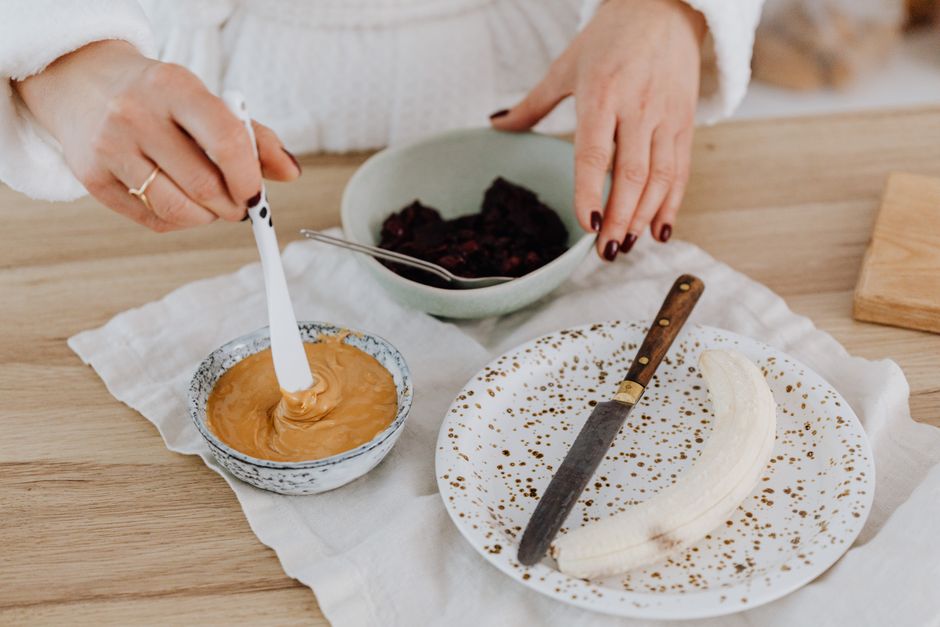
Peanut butter is not bad for weight loss. It is calorie-dense, which means a small amount carries a lot of energy, but that fact alone does not make it fattening. Whether peanut butter helps or hurts your waistline depends almost entirely on how much you eat and what else is on your plate.
That answer surprises people because peanut butter has a reputation problem. It is high in fat. It is easy to overeat. And it is often paired with white bread, jelly, and sugary drinks that do far more damage than the peanut butter itself. Strip away those pairings and you are left with a simple food that can fit into a weight loss plan. It can also quietly work against one if you never measure it.
Why Does Peanut Butter Have a Reputation Problem?
Peanut butter gets blamed for weight gain because it is one of the most calorie-dense foods in the average kitchen. Two tablespoons of standard peanut butter contain roughly 190 calories. That is about the same as a slice of pizza or a small candy bar. The difference is that peanut butter does not feel like a treat, so people rarely count it the way they count dessert.
The math is unforgiving. If you spread peanut butter on toast without measuring, you might use four or five tablespoons instead of two. That is an extra 200 to 300 calories you never noticed. Do that daily and you can wipe out a 300-calorie deficit without changing anything else about your diet.
Fat also carries nine calories per gram, compared with four calories per gram for protein and carbohydrates. Peanut butter is roughly half fat by weight, so the calories add up fast. None of this is unique to peanut butter. Olive oil, almonds, cheese, and avocado all behave the same way. Nutrient-dense, calorie-dense foods require attention.
Is Peanut Butter Bad for Weight Loss or Just Easy to Overeat?
It is easy to overeat. That is the real issue, not the food itself. Peanut butter is soft, creamy, and not especially filling bite for bite relative to its calorie load. Research on satiety has found that solid foods tend to satisfy hunger better than liquids with the same calories, and peanut butter sits somewhere in the middle. It has some protein and fiber, but not enough to offset its calorie density on its own.
What peanut butter does offer matters for weight loss. A two-tablespoon serving provides about 7 grams of protein and around 2 grams of fiber. Protein and fiber both slow digestion and help stabilize appetite between meals. Peanut butter also contains mostly unsaturated fat, the kind associated with better heart health rather than worse.
The problem is the ratio. You get a modest amount of appetite-suppressing nutrients wrapped inside a large calorie package. That makes portion control the deciding factor. Two tablespoons of peanut butter can be a useful part of a meal. Half a jar eaten from the spoon while standing at the counter is a different story entirely.
Does Peanut Butter Help You Feel Full?
Peanut butter can help with fullness, but modestly. The protein and fat slow stomach emptying, which means you feel satisfied for a while after eating. Some studies suggest that nuts and nut butters are associated with lower body weight over time, though researchers debate whether that reflects the food itself or the eating habits of people who choose it.
One detail worth knowing: whole peanuts and crunchy peanut butter take more chewing than smooth peanut butter. Chewing takes time, and time gives your body a chance to register fullness. That is one reason whole nuts tend to satisfy more than nut butter for the same calories. It is not a dramatic effect, but it is real.
If you want peanut butter to work in your favor, pair it with something that adds volume and fiber. An apple with a measured tablespoon of peanut butter will hold you longer than the same tablespoon eaten alone. The fruit adds water, fiber, and chewing time without adding many calories.




How Much Peanut Butter Can You Eat on a Weight Loss Plan?
There is no official daily allowance for peanut butter. What matters is total calories, and peanut butter has to fit inside that budget like any other food. For most adults trying to lose weight, one to two measured tablespoons per sitting is a realistic starting point. That is a general guideline, not a clinical prescription.
Measuring matters more than people expect. A “tablespoon” of peanut butter from a heaping dinner spoon can easily be two or three times the real amount. A kitchen scale removes the guesswork. So does using a measuring tablespoon and leveling it off with a knife.
Watch what comes with the peanut butter. The spread itself is rarely the problem. The problem is the vehicle:
- White toast with butter and jelly adds refined carbs and extra fat
- Peanut butter sandwiches on large rolls can exceed 500 calories before you add anything else
- Peanut butter smoothies with banana, honey, and whole milk can top 700 calories
- Peanut butter cups and flavored spreads often contain added sugar and palm oil
Swap the vehicle and the math changes. A rice cake with a measured tablespoon of peanut butter is around 130 calories. A large bagel with a thick layer is closer to 500. Same spread, very different outcome.
Which Peanut Butter Should You Buy?
Natural peanut butter with two ingredients, peanuts and salt, is the simplest choice. Standard peanut butter usually adds sugar and hydrogenated vegetable oil, which is a source of trans fat. Trans fat raises LDL cholesterol and has no known health benefit. The FDA has banned added trans fats from the food supply, but small amounts can still appear in some products depending on formulation and labeling rules.
Reduced-fat peanut butter is usually a poor trade. Manufacturers remove fat and add sugar or maltodextrin to restore texture. You end up with similar calories and more added sugar. The fat in peanut butter is not the enemy here.
Powdered peanut butter is a different product worth knowing about. It has most of the oil pressed out, so it contains roughly half the calories of regular peanut butter by weight. It works well in smoothies and oatmeal. It does not spread like peanut butter, and it is not a direct substitute on toast. For people who want peanut butter flavor without the calorie load, it is a legitimate option.
What Does the Evidence Actually Say About Nuts and Weight?
Observational studies have repeatedly found that people who eat nuts regularly tend to weigh less and gain less weight over time than people who rarely eat them. That is a consistent pattern across large populations. It is also the kind of finding that can mislead, because people who eat nuts may differ from people who do not in many other ways.
Clinical trials where researchers assign people to eat nuts or not have produced mixed results. Some show small benefits for appetite control or metabolic markers. Others show no meaningful difference in weight. A reasonable reading is that nuts and nut butters are neutral to mildly helpful when they replace other calories, and unhelpful when they are added on top of an unchanged diet.
Peanut butter specifically has less trial evidence than whole nuts. Most of what we know comes from studies of nuts in general, and peanut butter is often grouped with them. It is fair to say the evidence supports including peanut butter in a balanced diet. It does not support treating it as a weight loss aid.
What Actually Matters for Weight Loss
Weight loss comes down to energy balance over time. Eat fewer calories than you burn and you lose weight. Eat more and you gain it. Peanut butter does not change that equation. It sits inside it.
What peanut butter can do is make a weight loss plan easier or harder to stick with. A measured tablespoon adds flavor and satisfaction to foods that might otherwise feel bland. That can help you stay on track. An unmeasured scoop from the jar adds calories you never counted, and that works against you.
The people who do well with peanut butter during weight loss tend to share a few habits. They measure it. They pair it with high-fiber foods. They choose versions without added sugar and hydrogenated oil. And they treat it as part of a meal, not a snack eaten mindlessly.
If you have tried cutting peanut butter out entirely and it made no difference, that is worth noticing. The spread was probably never the problem. If you have been eating it freely and your weight is not moving, the opposite is also worth checking. A food scale and a week of honest tracking will tell you more than any general rule.
Frequently Asked Questions
Is peanut butter bad for weight loss?
No, peanut butter is not bad for weight loss. It is calorie-dense, so portion size determines whether it helps or hurts your daily calorie balance.
How much peanut butter should I eat a day to lose weight?
There is no official daily recommendation for peanut butter. Most adults aiming for weight loss can fit one to two measured tablespoons per sitting into their calorie budget, but total daily calories matter more than any single food.
Is powdered peanut butter better for weight loss than regular peanut butter?
Powdered peanut butter has roughly half the calories of regular peanut butter because most of the oil is removed. It can help if you use it in smoothies or oatmeal, but it does not spread the same way and is not a direct swap on toast.
Does peanut butter slow down weight loss?
It can if you eat more than you realize, because the calories add up quickly and are easy to miss. Measured portions generally do not slow weight loss when they fit within your daily calorie target.
