
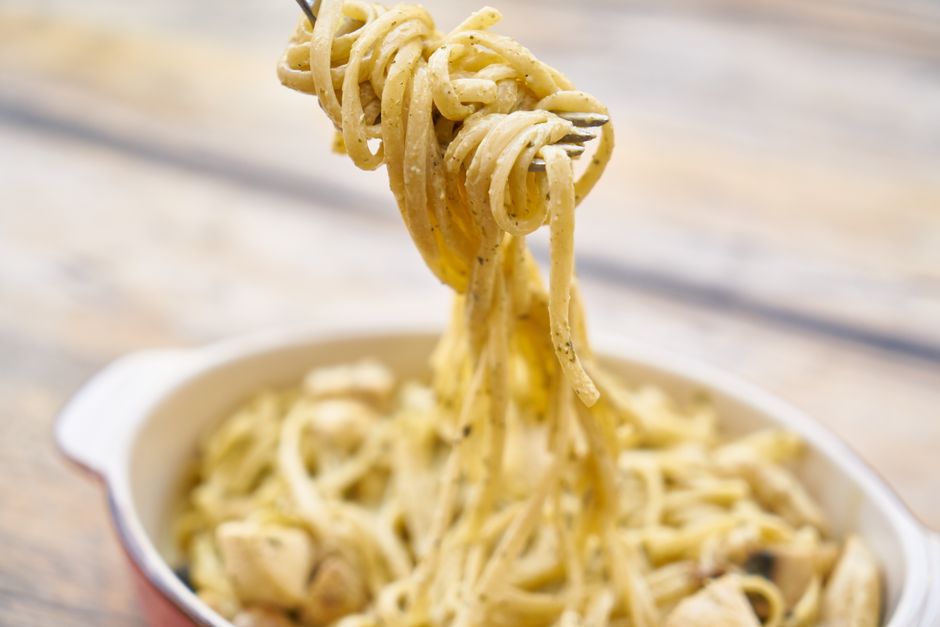
Pasta often gets labeled as a food to avoid, but that label misses the full picture. The honest answer is that pasta can be a healthy part of your diet when you pay attention to portion size, what you put on it, and the type you choose. It is not inherently unhealthy, and it is not a superfood — it is a staple food whose health impact depends almost entirely on how you eat it.
What Is Pasta Made Of?
Traditional pasta is made from durum wheat semolina and water. Semolina is the coarse flour ground from the endosperm of durum wheat, a hard wheat variety with high protein content compared to softer wheats.
Regular white pasta is refined. The bran and germ are removed during milling, leaving mostly starch with some protein. This process gives pasta its smooth texture and long shelf life, but it also removes most of the fiber and several B vitamins.
Whole wheat pasta keeps the entire grain intact. It contains more fiber, more magnesium, more iron, and more B vitamins than refined pasta. The difference in nutrition is real, but both types can fit into a healthy diet.
Is Pasta Healthy Food? The Nutritional Breakdown
A standard serving of cooked pasta is about one cup, or roughly 200 calories. That same serving provides about 7 grams of protein and less than 1 gram of fat. Refined pasta delivers about 2 grams of fiber per cup, while whole wheat pasta delivers about 6 grams.
Pasta is a source of complex carbohydrates. These digest more slowly than simple sugars, providing steady energy rather than a quick spike and crash. The glycemic index of pasta is lower than white bread or white rice, partly because of its dense structure and the way it is processed.
One important detail: pasta is often eaten al dente, meaning cooked firm. Al dente pasta has a lower glycemic response than fully soft, overcooked pasta. The firmer structure slows digestion, which helps keep blood sugar more stable after a meal.
What Matters More: The Pasta or the Sauce?
The health impact of a pasta meal is driven more by what goes on top than by the pasta itself. A plate of pasta with olive oil, garlic, tomatoes, and vegetables is a very different meal than pasta coated in heavy cream sauce with sausage.
Research consistently shows that Mediterranean-style eating patterns — which include pasta in moderate portions — are associated with lower rates of heart disease and better metabolic health. In these patterns, pasta is typically served as a first course in small portions, topped with vegetables, legumes, fish, or lean proteins.
The problem meals are rarely about the pasta. They are about the sauce, the cheese, the portion size, and what else is on the plate. A creamy alfredo sauce can add 400 or more calories to a bowl of pasta. A serving of garlic bread on the side adds more refined carbs and fat. The pasta itself is not the primary issue.


Does Pasta Cause Weight Gain?
No food alone causes weight gain. Weight gain happens when you consistently take in more calories than you burn. Pasta is calorie-dense compared to vegetables, but moderate portions fit easily into a weight management plan.
Some research suggests that pasta consumption is not linked to higher body weight when eaten as part of a balanced diet. Studies examining pasta within Mediterranean dietary patterns have found no association with increased obesity risk. In some cases, pasta eaters in these studies had lower body mass indexes than non-pasta eaters.
The real issue is portion distortion. Many restaurant servings are two to three times the standard one-cup portion. When a plate of pasta becomes 600 to 900 calories before anything is added to it, weight management becomes difficult regardless of the food.
How Pasta Affects Blood Sugar
Pasta has a lower glycemic index than many other refined carbohydrates. This means it raises blood sugar more gradually than white bread, white rice, or sugary cereals. The physical structure of pasta — dense, compact, and slow to break down — is the main reason for this effect.
For people with diabetes or prediabetes, portion control matters more than pasta type. A small serving of pasta with plenty of vegetables and a protein source produces a much gentler blood sugar response than a large bowl of pasta eaten alone.
Whole wheat pasta has a slightly lower glycemic index than refined pasta due to its fiber content. But the difference between whole wheat and refined pasta is smaller than many people assume. Both are acceptable choices when portions are reasonable.
Cooling cooked pasta and reheating it increases resistant starch content. Resistant starch resists digestion in the small intestine and behaves more like fiber. This is not a reason to eat only cold pasta, but it is a genuine nutritional change that occurs in the kitchen.
Gluten: Who Needs to Avoid Pasta?
People with celiac disease must avoid all wheat-based pasta. Celiac disease is an autoimmune condition where gluten triggers damage to the small intestine. This affects about 1 percent of the population.
People with non-celiac gluten sensitivity may also feel better avoiding gluten, though the condition is less clearly defined and less common than internet content suggests. If you suspect gluten sensitivity, work with a doctor before removing gluten from your diet. Testing for celiac disease requires that you are still eating gluten.
For everyone else, gluten is not harmful. There is no credible evidence that gluten causes inflammation or digestive problems in people without celiac disease or a confirmed sensitivity. Gluten-free pasta is a marketing category as much as a medical one.
Is Whole Wheat Pasta Really Better?
Whole wheat pasta has more fiber, more minerals, and more B vitamins than refined pasta. Fiber supports digestion, helps with satiety, and feeds beneficial gut bacteria. These are real advantages.
But whole wheat pasta is not dramatically superior in a way that should make you force yourself to eat something you dislike. The best pasta for you is the one you will eat in reasonable portions with healthy toppings. If whole wheat pasta tastes like cardboard to you and leads to takeout later, refined pasta is the better choice.
A useful middle ground exists. Lentil pasta, chickpea pasta, and other legume-based pastas are higher in protein and fiber than wheat pasta of any kind. They have a different taste and texture, and they are not for everyone. But they are a legitimate option for people who want more protein and fiber from their pasta meal.
How to Eat Pasta Without Guilt
Build your pasta bowl around vegetables. Use pasta as one component rather than the entire base. A bowl that is half vegetables, a quarter protein, and a quarter pasta is more satisfying and more nutritious than a bowl that is mostly noodles.
Watch the sauce. Tomato-based sauces are lower in calories and fat than cream-based sauces. A simple sauce made with olive oil, garlic, and vegetables is a solid choice. Go easy on grated cheese — a tablespoon adds about 20 calories, but a generous handful adds much more.
Choose your protein. Chicken, shrimp, white beans, or lentils turn a pasta dish into a complete meal with staying power. Protein slows digestion and helps you feel full longer.
Control the portion. A standard serving is one cup of cooked pasta. Measure it once or twice to see what that actually looks like on your plate. You may be surprised.
Frequently Asked Questions
Is pasta healthy for weight loss?
Yes, in controlled portions. A one-cup serving of pasta with vegetables and lean protein can fit into a weight loss plan, but large portions and heavy sauces add calories quickly.
Is whole wheat pasta much healthier than white pasta?
Whole wheat pasta has more fiber and nutrients, but both types are acceptable in a balanced diet. The more important factors are portion size and what you put on the pasta.
Can people with diabetes eat pasta?
Yes, with attention to portion size and meal composition. Pairing a small pasta portion with protein, fiber, and healthy fats helps keep blood sugar more stable after the meal.
Is cold pasta healthier than hot pasta?
Cooled and reheated pasta contains more resistant starch, which functions similarly to fiber. This is a modest benefit, not a reason to avoid hot pasta entirely.
