
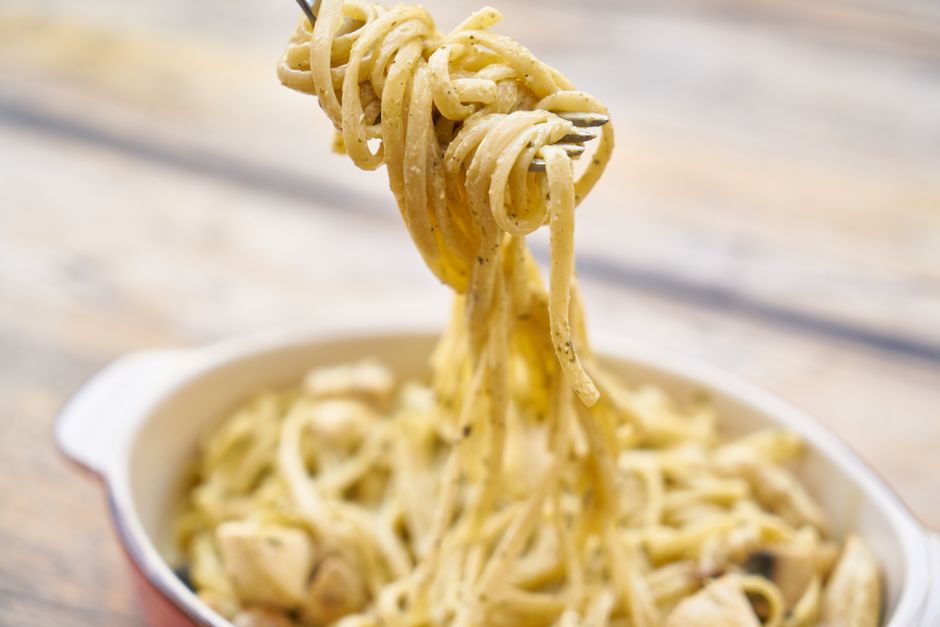
Pasta is not inherently hard to digest. For most people, cooked pasta moves through the stomach and small intestine without difficulty, and the starch it contains is broken down by enzymes your body produces in large amounts. The problems people blame on pasta usually come from something else: how much they ate, what was on top of it, or an underlying digestive condition.
That said, “pasta” covers a lot of ground. White pasta, whole wheat pasta, fresh egg pasta, and pasta cooked al dente do not behave identically in the gut. Portion size and cooking time change how quickly starch is broken down. And for people with specific conditions, pasta genuinely can cause symptoms.
How Does Your Body Break Down Pasta?
Pasta is mostly starch, and starch digestion begins in the mouth and continues in the small intestine. An enzyme called salivary amylase starts the process while you chew. The pancreas releases more amylase into the small intestine, where it breaks starch into smaller sugar units that get absorbed into the bloodstream.
This is a well-understood pathway, and most healthy adults produce plenty of amylase. Cooked pasta is also soft and low in fiber compared to many other starches, which means it does not require much mechanical work from the stomach. The stomach churns food into a semi-liquid paste before releasing it into the small intestine, and pasta fits into that process easily.
One detail worth knowing: pasta cooked al dente takes longer to break down than pasta cooked until soft. That slower breakdown is not a digestive problem. It means glucose enters the bloodstream more gradually, which is generally considered a favorable trait rather than a burden on digestion.
Why Does Pasta Sometimes Cause Bloating or Discomfort?
Most digestive complaints after eating pasta trace back to the meal around the pasta, not the pasta itself. Cream sauces, large amounts of cheese, garlic, onion, and heavy portions of meat can all slow stomach emptying and produce bloating or fullness.
Portion size is a common factor. A large restaurant portion of pasta may contain several times the amount a person would normally eat at home. Eating a very large meal stretches the stomach and can cause discomfort regardless of what the meal contains.
Eating quickly matters too. Swallowing air while eating fast, or eating pasta before it has cooled enough to chew properly, can contribute to gas and bloating.
Some people also react to specific ingredients added to pasta dishes rather than the pasta. Garlic and onion contain fermentable carbohydrates that some people digest poorly. Cream and butter can slow digestion in people who are sensitive to high-fat meals. If pasta alone causes no symptoms but pasta Alfredo does, the sauce is the more likely culprit.
Is Pasta Hard to Digest for People With IBS or Gluten Sensitivity?
For people with irritable bowel syndrome, pasta can be a genuine trigger. Wheat contains fructans, a type of fermentable carbohydrate that draws water into the gut and gets fermented by bacteria in the colon. That fermentation produces gas, which can cause bloating, cramping, and changes in bowel habits in people who are sensitive to it.
This is not the same as saying pasta is hard to digest. The starch is still broken down normally. The issue is how the colon responds to the fermentable carbohydrates in wheat, which is a separate process from starch digestion.
For people with celiac disease, pasta made from wheat is not a matter of difficulty. It is a matter of immune reaction. In celiac disease, the immune system responds to gluten by damaging the lining of the small intestine. This causes malabsorption, which can lead to diarrhea, weight loss, fatigue, and nutrient deficiencies. Anyone with celiac disease should avoid wheat pasta entirely, not just eat less of it.
Non-celiac gluten sensitivity is a different and less well-understood category. Some people report digestive symptoms after eating wheat products without having celiac disease or a wheat allergy. Research on this condition is ongoing, and the mechanisms are not fully established. Some evidence suggests that fermentable carbohydrates in wheat, rather than gluten itself, may explain symptoms in a portion of these people.





Does Whole Wheat Pasta Digest Differently Than White Pasta?
Whole wheat pasta contains more fiber than white pasta, and fiber changes how quickly the food moves through your digestive tract. Soluble fiber can slow stomach emptying and may cause more gas in people who are not used to eating a high-fiber diet. Insoluble fiber adds bulk to stool and can help with regularity in some people.
This does not make whole wheat pasta harder to digest in a general sense. It means the digestive experience is different, and some people tolerate one better than the other. Someone who rarely eats whole grains may notice more gas and bloating when they switch to whole wheat pasta, especially if they make the change suddenly.
For people with IBS who are sensitive to fructans, whole wheat pasta may cause more symptoms than white pasta because the bran layer contains more of these fermentable carbohydrates.
| Type of Pasta | Main Difference | Who May Notice a Difference |
|---|---|---|
| White pasta | Refined flour, lower fiber, faster starch breakdown | Generally easier on the gut for most people |
| Whole wheat pasta | Higher fiber, more fermentable carbohydrates | People with IBS or those not used to high-fiber foods |
| Gluten-free pasta | Made from rice, corn, or legume flours | People with celiac disease or wheat sensitivity |
| Fresh egg pasta | Contains egg, often softer texture | People with egg allergy should avoid |
Does Cooking Time Affect How Pasta Digests?
Cooking time changes the structure of pasta starch, and that changes how quickly your body breaks it down. Pasta cooked al dente retains a firmer structure, and the starch is more tightly packed. This means digestive enzymes have a harder time reaching it, so glucose is released more slowly.
Pasta cooked until very soft has a more open starch structure. Enzymes break it down faster, and glucose enters the bloodstream more quickly. Neither version is “hard to digest” in a clinical sense. The difference is in the speed of starch breakdown, not in whether digestion happens at all.
For people monitoring blood sugar, al dente pasta is often recommended because it produces a slower rise in blood glucose. This is a well-established effect and one of the reasons cooking time is included in some dietary guidelines for diabetes management.
When Should You Talk to a Doctor About Pasta and Digestion?
If you consistently feel unwell after eating pasta, and the symptoms are not explained by portion size or heavy sauces, it is worth mentioning to a doctor. Persistent bloating, diarrhea, cramping, or fatigue after wheat-based meals can point to conditions that need proper evaluation.
Celiac disease affects about 1 in 100 people worldwide according to estimates from celiac research organizations, though many cases go undiagnosed. A simple blood test can screen for it, but it is only accurate if you are still eating gluten when tested. If you have already stopped eating wheat, tell your doctor before testing.
IBS is more common and is diagnosed based on symptom patterns rather than a single test. If your symptoms flare specifically with wheat products and improve when you avoid them, that pattern is useful information for your doctor.
Wheat allergy is different from both of these. It involves an immune response that can cause hives, swelling, or breathing difficulty, and it requires medical attention. It is not a digestive issue in the same way celiac disease or IBS are.
Does Pasta Cause Digestive Problems for Everyone?
No. Most people digest pasta without any issue. The human body is well equipped to handle cooked starch, and pasta has been a dietary staple in many cultures for centuries.
If pasta gives you trouble, the first things to examine are portion size, what you serve with it, and how quickly you eat. If those changes do not help, and symptoms continue, a medical evaluation can rule out conditions that need specific management.
Pasta itself is not the problem for most people. The context of the meal, the amount eaten, and individual digestive health are the factors that usually explain why some people feel worse after eating it than others.
Frequently Asked Questions
Is pasta harder to digest than rice?
No, pasta and rice are both easily digested by most people. Individual tolerance varies, and some people find one sits better than the other.
Does pasta cause bloating?
Pasta can contribute to bloating if you eat a large portion or if you have IBS and are sensitive to wheat fructans. The sauce and portion size are often bigger factors than the pasta itself.
Can you be allergic to pasta?
You can be allergic to wheat or eggs, which are common pasta ingredients, but pasta itself is not an allergen. A wheat allergy involves immune symptoms like hives or swelling and needs medical evaluation.
Is gluten-free pasta easier to digest?
For people with celiac disease or wheat sensitivity, gluten-free pasta is necessary and may improve symptoms. For everyone else, there is no consistent evidence that gluten-free pasta is easier on digestion.
