
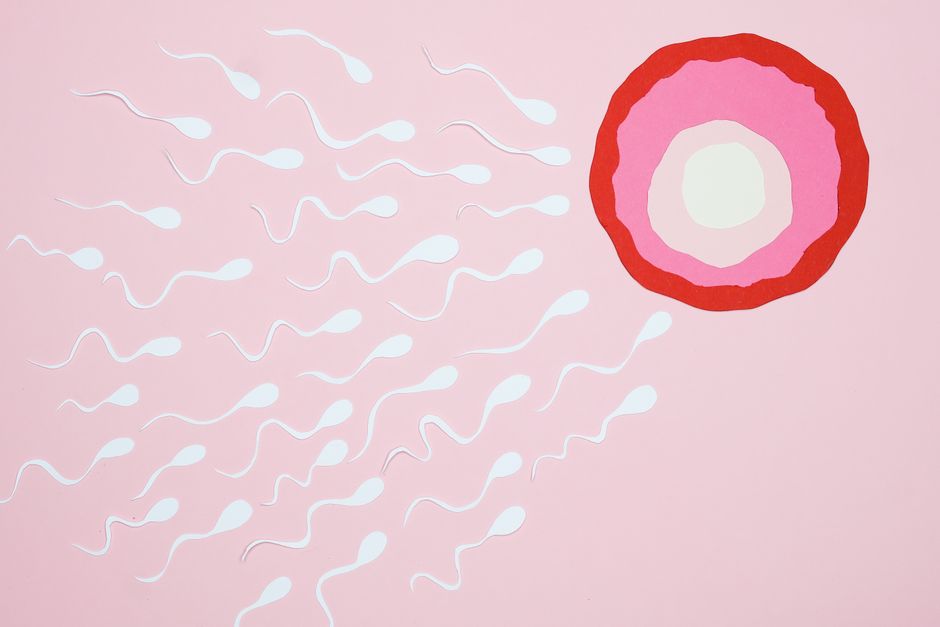
Ovulation happens before your period, not after. In a typical menstrual cycle, ovulation occurs roughly midway between the first day of one period and the first day of the next. The period itself comes about two weeks after ovulation, when the egg has not been fertilized and the uterine lining sheds.
That is the short answer. The longer answer involves hormones, cycle length, and why the “day 14” rule does not fit everyone. Understanding the sequence can help you track fertility, interpret symptoms, and know when something may be off.
Is Ovulation Before Or After Your Period?
Ovulation comes first. Your period comes later in the same cycle.
A menstrual cycle is counted from the first day of bleeding to the day before the next period starts. Ovulation — the release of a mature egg from an ovary — usually happens in the middle of that cycle. The second half of the cycle, called the luteal phase, is the stretch between ovulation and the start of your next period.
The luteal phase is fairly consistent from person to person. Research consistently shows it typically lasts about 12 to 14 days. The first half of the cycle, called the follicular phase, is the part that varies. That is why cycle length differs so much between people — and why ovulation timing shifts with it.
So the order within a single cycle is: period, then follicular phase, then ovulation, then luteal phase, then the next period. Ovulation sits between two periods, but it belongs to the cycle that started with the period before it.
How Long After Your Period Do You Ovulate?
There is no single number. It depends almost entirely on how long your cycle is.
If you have a 28-day cycle, ovulation tends to fall around the middle — roughly day 14, counting the first day of bleeding as day 1. If your cycle runs 32 days, ovulation is more likely closer to day 18. With a 24-day cycle, it may land near day 10, which can be just a few days after bleeding stops.
The reason is the luteal phase stays relatively fixed while the follicular phase stretches or shrinks. A longer cycle usually means a longer first half, not a longer wait after ovulation.
This is where the popular “day 14” idea causes confusion. It is a useful average, not a rule. Many people with regular cycles ovulate somewhere between about 10 and 16 days before their next period begins. Working backward from your expected next period is often more accurate than counting forward from your last one.
What Happens During Ovulation?
Ovulation is the release of a mature egg from one of the ovaries. It is the result of a coordinated rise and fall of hormones, and it happens on a fairly predictable schedule within each cycle.
Here is the sequence in broad strokes:
- Follicle-stimulating hormone (FSH) prompts a group of eggs in the ovary to mature early in the cycle.
- As one follicle becomes dominant, it produces rising levels of estrogen.
- High estrogen triggers a sharp surge in luteinizing hormone (LH).
- That LH surge causes the follicle to rupture and release the egg, usually within a day or so of the surge.
- The empty follicle becomes a structure called the corpus luteum, which produces progesterone.
Progesterone prepares the uterine lining for a possible pregnancy. If no pregnancy occurs, the corpus luteum breaks down, progesterone falls, and the lining sheds as a period.
The egg itself lives only about 12 to 24 hours after release. Sperm can survive in the reproductive tract for several days. That timing is why the days just before ovulation are considered the most fertile window for conception.





Can You Ovulate Right After Your Period Ends?
Yes, it is possible — especially if your cycles are short.
Sperm can survive for several days, so a person who ovulates soon after bleeding stops may still be in a fertile window during or just after their period. This is one reason the rhythm method and calendar-based tracking can fail.
Ovulation during the period itself is uncommon but not impossible, particularly in people with very short cycles. For most people with average-length cycles, ovulation is not immediately after the period. But “most” is not “all,” and cycle timing can vary from month to month.
If you are trying to conceive or avoid pregnancy, tracking actual signs of ovulation is more reliable than assuming a fixed gap between your period and ovulation.
How Can You Tell When You Are Ovulating?
Several body signals can point to ovulation. None is perfect on its own, and combining a few tends to be more useful than relying on any single one.
- Changes in cervical mucus. Around ovulation, mucus often becomes clearer, stretchier, and more slippery — sometimes compared to raw egg white.
- Basal body temperature. A slight rise in resting temperature usually appears after ovulation, not before. It confirms ovulation happened but does not predict it in advance.
- Ovulation predictor kits. These detect the LH surge in urine, which typically occurs about a day before ovulation.
- Mild pelvic pain. Some people notice a one-sided twinge or ache around ovulation. Not everyone feels this.
A common misunderstanding: basal body temperature rises after ovulation, so it is better for confirming that ovulation occurred than for timing intercourse beforehand. If you want to act before ovulation, cervical mucus changes and LH kits are more useful.
Apps and calendar predictions can be helpful, but they rely on averages and past patterns. They cannot confirm that ovulation is happening in a given cycle.
What If You Do Not Ovulate?
When ovulation does not occur, it is called anovulation. It can happen occasionally in otherwise healthy cycles, or it can be a recurring problem.
Signs can include cycles that are very long, very short, or absent altogether. Some people have bleeding without ovulation, which can look like a period but is not the same event. This is one reason irregular bleeding deserves a medical evaluation rather than a guess.
Anovulation has many possible causes. These include polycystic ovary syndrome (PCOS), thyroid disorders, significant weight loss or gain, intense exercise, high stress, and perimenopause. Because these conditions can look similar from the outside, identifying the cause usually requires a clinician’s assessment — not self-diagnosis.
If you are trying to conceive and your cycles are irregular or absent, that is a reasonable point to seek medical advice. Treatment depends entirely on the underlying cause, so there is no single approach that fits everyone.
Does Ovulation Always Happen at the Same Time?
No. Ovulation timing can shift from cycle to cycle, even in people who are usually regular.
Illness, travel, sleep changes, stress, and weight fluctuations can all affect the timing of ovulation. The luteal phase tends to stay steady, but the follicular phase can move — and that moves ovulation with it.
This is why tracking a single cycle tells you only about that cycle. Patterns over several months are more informative than any one data point. It also explains why people who rely on a fixed “safe” window for avoiding pregnancy can be caught off guard.
If your cycles are consistently regular, ovulation is generally more predictable. If they are not, predicting ovulation becomes harder, and medical guidance may be more useful than an app.
When to Talk to a Doctor
See a clinician if your cycles are consistently shorter than 21 days or longer than 35 days, if they stop for several months without pregnancy, or if bleeding is unusually heavy or painful. These can be signs of an underlying issue that affects ovulation.
If you have been trying to conceive without success, that is also a reason to seek advice. The timing of when to seek help depends on your age and history, so a clinician is the right person to guide that decision.
Tracking ovulation can be genuinely useful. It can also become a source of stress. If it is adding anxiety rather than clarity, that is worth mentioning to your doctor.
Frequently Asked Questions
Is ovulation before or after your period?
Ovulation happens before your period. It occurs mid-cycle, and the period follows about two weeks later if the egg is not fertilized.
How many days after your period do you ovulate?
It varies with cycle length, but ovulation often falls somewhere between about 10 and 16 days before your next period begins. Counting backward from your expected next period is usually more accurate than counting forward from your last one.
Can you get pregnant right after your period?
Yes, it is possible, especially with short cycles, because sperm can survive for several days. Ovulation soon after bleeding stops can put you in a fertile window during or just after your period.
Does a rise in basal body temperature predict ovulation?
No. Basal body temperature typically rises after ovulation, so it confirms that ovulation occurred rather than predicting it in advance.
