
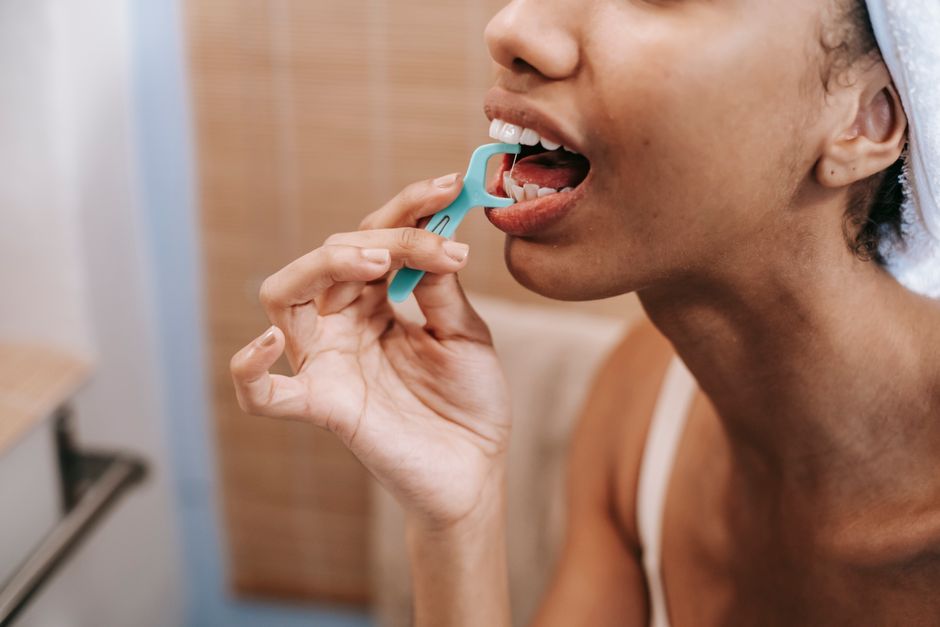
If you use Oral-B Glide floss and have read that it contains PFAS, you are probably wondering whether you should throw it out. The short answer: there is no confirmed evidence that Oral-B Glide floss contains PFAS, but there is also no law requiring floss makers to disclose whether it does. That gap between what is known and what companies must reveal is the real story here.
PFAS stands for per- and polyfluoroalkyl substances, a large family of synthetic chemicals used since the 1940s to make products resist water, grease, and stains. They are often called “forever chemicals” because some break down extremely slowly in the environment and in the human body. The concern about floss traces back to a 2019 study that found certain PFAS compounds in the blood of people who reported using Oral-B Glide and a few other brands. That study could not prove the floss caused the exposure, and no regulator has since declared Glide unsafe. But the question is fair, and the honest answer has more nuance than either side of the internet debate admits.
Where Did the PFAS Floss Concern Come From?
The worry started with a study published in 2019 in the Journal of Exposure Science and Environmental Epidemiology. Researchers looked at blood levels of several PFAS chemicals in a group of women and compared them with self-reported use of certain consumer products, including Oral-B Glide dental floss and other brands marketed as slick or stain-resistant.
They found an association between reporting use of those flosses and higher blood levels of one specific PFAS called PFHxS. An association means two things showed up together. It does not mean one caused the other. The study relied on people remembering which floss they used, which is imperfect. It did not test the floss itself for PFAS. It did not measure how much, if any, PFAS transferred from floss to a person’s body.
That distinction matters. A statistical link in a survey is a signal worth investigating. It is not proof. No follow-up study has since confirmed that using Glide raises PFAS levels in the blood, and no regulatory body has concluded that the floss is a meaningful source of exposure.
Does Oral-B Glide Actually Contain PFAS?
Here is the uncomfortable part: nobody outside the company can say for certain, because floss is not required to list PFAS on its label. Oral-B has not published a full ingredient disclosure for Glide. The brand’s parent company has stated that its products are safe and meet regulatory requirements, but that is not the same as confirming the absence of PFAS.
Some dental flosses are made with PTFE, a fluoropolymer also known as Teflon. PTFE is technically a fluorinated polymer, and it belongs to the broader PFAS family by most definitions. Whether the PTFE in a floss releases PFAS into your mouth or bloodstream during normal use is a separate and largely unstudied question. PTFE is chemically stable and widely used in medical devices, including some surgical implants and catheters. Stability is exactly why it is used — and also why it does not readily break down in the environment.
So the accurate position is this: some flosses may contain fluorinated materials, the health significance of that during flossing is not established, and you cannot currently tell from the packaging. If a company says its floss is PFAS-free, that claim is only as reliable as the testing behind it, which is usually not public.
Is Oral B Glide Floss Safe Pfas Concerns Answered
Based on what is currently known, there is no confirmed health risk from using Oral-B Glide floss, and no health agency has issued a warning against it. The evidence that floss meaningfully contributes to PFAS exposure in people is weak and based mainly on one observational study.
At the same time, “no confirmed risk” is not the same as “proven safe.” The absence of evidence cuts both ways. Floss has not been rigorously tested for PFAS transfer, and companies are not obligated to tell you what is in it. If you want certainty, it does not currently exist in either direction.
What is well established is that flossing helps remove plaque and food from between teeth, areas a toothbrush cannot reach well. That benefit is real. The question is only which floss you choose, not whether cleaning between your teeth matters.

How Much PFAS Exposure Comes From Floss Compared to Other Sources?
This is the question that rarely gets asked, and it reframes the whole issue. PFAS are everywhere. They are in nonstick cookware, water-resistant clothing, stain-resistant carpet, some food packaging, firefighting foam, and — importantly — drinking water in many communities.
For most people, diet and drinking water are considered the largest sources of PFAS exposure, according to assessments from environmental and health agencies. A piece of floss that you use for a minute or two a day is, by any reasonable comparison, a tiny potential source next to what you eat and drink. That does not make floss exposure irrelevant if it exists. It does mean that fixating on floss while ignoring water and food would be misplaced effort.
If you are genuinely concerned about PFAS, the higher-value steps are usually about water filtration and reducing use of grease-resistant food packaging. Those are the levers with more evidence behind them. Floss is a rounding error by comparison — assuming it contributes at all.
What Floss Options Should You Consider?
If you would rather avoid the uncertainty entirely, several alternatives exist. None of them has been proven superior for health, but they sidestep the fluoropolymer question.
- Nylon floss — traditional string floss, often waxed. Wax may be beeswax, carnauba, or a synthetic wax. Check the label if this matters to you.
- Silk floss — a natural fiber option, usually coated with beeswax or a plant wax.
- Water flossers — devices that use a stream of water. They do not use string at all, so the PFAS question is moot, though they clean differently than string floss.
- Interdental brushes — small brushes that fit between teeth. For people with wider gaps or gum recession, some dentists consider these more effective than string floss.
One clarification worth making: “PFAS-free” labels on floss are largely self-reported. There is no universal certification for floss, so the label reflects the company’s claim rather than an independent test. Treat it as a starting point, not a guarantee.
What Should You Do If You Are Worried?
If you have been using Oral-B Glide for years and are now anxious, the honest response is that there is no evidence you have been harmed, and no medical test that would detect floss-related exposure specifically. PFAS blood tests exist, but they measure total body burden from all sources and cannot tell you where exposure came from. They are also not routinely recommended for this kind of concern.
If the uncertainty bothers you, switching floss is a low-cost, low-risk decision. You do not need to switch. You are not required to keep using it either. This is a preference call in the absence of clear evidence, not a medical imperative.
What you should not do is stop cleaning between your teeth altogether. Gum disease and tooth decay are well-documented, common, and preventable. Skipping interdental cleaning to avoid a theoretical chemical exposure trades a known risk for an unproven one.
If you have specific health concerns, or if you are pregnant or breastfeeding and worried about chemical exposures generally, that is a conversation worth having with your dentist or doctor. They can weigh your individual situation better than any general article can.
Frequently Asked Questions
Does Oral-B Glide floss contain PFAS?
There is no confirmed public evidence that it does, but the company has not released a full ingredient list, so it cannot be ruled out. Floss is not required to disclose PFAS on its label.
Is Oral-B Glide floss dangerous?
No health agency has declared it dangerous, and the evidence linking it to meaningful PFAS exposure is weak. The concern rests mainly on one observational study that showed an association, not causation.
What floss is PFAS-free?
Nylon, silk, and water flossers avoid fluoropolymer materials by design. Any “PFAS-free” claim on floss is currently self-reported, since no independent certification standard exists for these products.
Should I stop flossing if I am worried about PFAS?
No, because cleaning between your teeth prevents gum disease and decay, which are well-documented risks. If you want to avoid the uncertainty, switch to a different floss rather than stopping the habit.
