
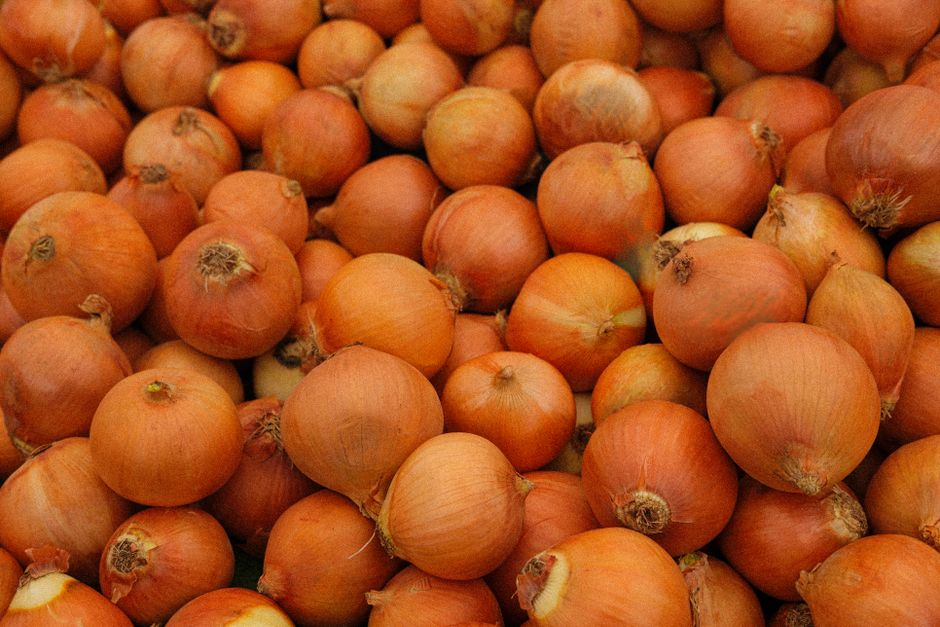
An onion is a vegetable. Specifically, it is the edible bulb of a plant in the genus Allium, and it is used in cooking as a savory ingredient rather than a sweet fruit. The confusion comes from botany: an onion bulb is technically a modified underground stem that stores food for the plant, and it develops from a flower. But in everyday language, nutrition, and cooking, onions sit firmly in the vegetable aisle.
That short answer hides a genuinely interesting question about how we classify foods. Botany and cooking use different rules. Understanding both clears up the onion question and a lot of related ones, from tomatoes to avocados.
Is Onion A Fruit Vegetable?
An onion is a vegetable, not a fruit. In botany, a fruit is the part of a flowering plant that develops from the ovary and contains seeds. An onion bulb does not form from a fertilized ovary and does not enclose seeds. It is a storage organ that grows underground and sends up leaves and, eventually, a flower stalk.
The bulb itself is made of thickened, fleshy leaf bases wrapped around a short central stem. When you cut an onion, the layers you see are those modified leaves. This is why an onion is sometimes described as a “bulb vegetable” rather than a root vegetable — the part we eat is not a root at all.
There is a wrinkle worth knowing. The onion plant does produce a true fruit after it flowers — a small capsule containing black seeds. But nobody eats that. The onion we buy, chop, and cook is the bulb, and the bulb is a vegetable.
What Makes Something a Fruit in Botany?
Botanically, a fruit is the mature ovary of a flower. After pollination, the ovary swells and develops into the structure that protects and disperses seeds. That definition is strict and structural, and it produces some surprising results.
By this rule, a tomato is a fruit. So is a cucumber, a zucchini, a bell pepper, and a pea pod. Each of these develops from a flower’s ovary and contains seeds. An avocado is a fruit. So is a pumpkin. None of these are fruits in the kitchen sense, but botany does not care about the kitchen.
An onion fails this test cleanly. The bulb forms underground from leaf tissue and a compressed stem, not from an ovary. No seeds develop inside it. That single fact settles the botanical question: the onion bulb is not a fruit.
Why Do People Think Onions Might Be Fruit?
The confusion usually comes from mixing up two different classification systems. People hear that “tomatoes are technically fruit” and start applying the same botanical logic to everything in the produce section. Onions get caught in that net even though they do not fit the botanical definition of fruit at all.
Another source of confusion is the onion’s life cycle. An onion is a biennial, meaning it typically takes two growing seasons to complete its life. In the first year it builds the bulb. In the second year it flowers, and the flower produces seeds. Because the plant does flower and make seeds, some people assume the bulb must be a fruit. It is not — the bulb is the plant’s food storage for the winter, built before any flower exists.
There is also the culinary angle. Onions can taste sweet when cooked, especially when caramelized, because heat breaks down their complex carbohydrates into simpler sugars. Sweetness is not a botanical category, though. Carrots and beets can taste sweet too, and no one calls them fruit.
How Do Nutrition Labels and Cooking Treat Onions?
In nutrition and cooking, onions are treated as vegetables without exception. Dietary guidance groups them with other vegetables, and they appear in the vegetable section of every grocery store. This is not just habit — it reflects how onions are used and what they contribute.
Onions are low in calories and provide fiber, vitamin C, and various plant compounds, including sulfur-containing compounds that give them their smell and flavor. They are almost always used in savory dishes as a base flavor, not eaten as a sweet snack or dessert the way fruit usually is.
One clarification that trips people up: “vegetable” is not a strict scientific category the way “fruit” is. It is a broad, practical term that covers edible plant parts — roots, stems, leaves, flowers, and bulbs. That is why the same food can be a fruit to a botanist and a vegetable to a cook. Both can be correct because they answer different questions.
Which Common Foods Are Often Misclassified?
Onions are not the only food that causes confusion. The table below shows how several common foods are classified by botanists versus by cooks and shoppers.
| Food | Botanical classification | Kitchen classification |
|---|---|---|
| Onion | Vegetable (bulb) | Vegetable |
| Tomato | Fruit (berry) | Vegetable |
| Cucumber | Fruit (pepo) | Vegetable |
| Bell pepper | Fruit (berry) | Vegetable |
| Avocado | Fruit (berry) | Often treated as a fat or vegetable |
| Carrot | Vegetable (root) | Vegetable |
| Broccoli | Vegetable (flower) | Vegetable |
Notice the pattern. The foods that flip categories are the ones that develop from a flower’s ovary and contain seeds. Onions, carrots, and broccoli do not, so they stay vegetables under both systems. That is why the onion is a simpler case than the tomato, even though people ask about it just as often.
Does It Matter How You Classify an Onion?
For daily life, the classification makes no practical difference. You cook an onion like a vegetable, you buy it with the vegetables, and you count it toward your vegetable intake. Nothing about your health or your cooking changes based on the label.
The distinction matters mainly for clear thinking. Knowing the difference between botanical and culinary classification helps you understand why a tomato is a fruit to a scientist and a vegetable to a chef without either being wrong. It also stops the spread of half-remembered “facts” that get applied too broadly.
If you want a simple rule to remember: if it develops from a flower and holds seeds, botany calls it a fruit. If it is a root, stem, leaf, flower, or bulb that we eat as part of a savory meal, it is a vegetable in the kitchen sense. An onion is a bulb, so it lands in the vegetable column on both counts.
Frequently Asked Questions
Is an onion a fruit or a vegetable?
An onion is a vegetable. It is the edible bulb of the plant, which forms from leaf tissue and a short stem rather than from a flower’s ovary.
Why do some people say onions are fruit?
They confuse botanical classification with cooking terms, or they assume that because the onion plant flowers and makes seeds, the bulb must be a fruit. The bulb itself is not a fruit.
Is a tomato a fruit but an onion a vegetable?
Yes, by botanical rules. A tomato develops from a flower’s ovary and contains seeds, so it is a fruit, while an onion bulb does not develop from an ovary and contains no seeds.
Are onions good for you?
Onions are low in calories and provide fiber, vitamin C, and plant compounds, and they fit well in a balanced diet. No single food is a treatment for disease, so treat them as one healthy ingredient among many.
