
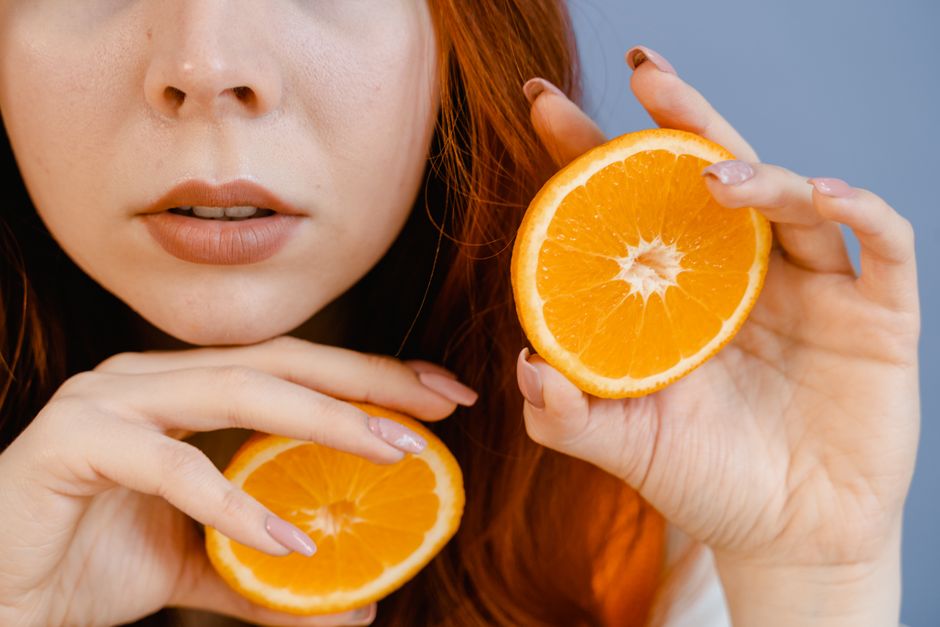
A single medium orange provides roughly 70 milligrams of vitamin C. For most healthy adults, that is close to the daily target — but whether one orange is truly “enough” depends on your age, sex, smoking status, and what else you eat that day. One orange covers the daily requirement for most adults, but it does not cover everyone.
Is One Orange A Day Enough For Your Vitamin C?
For most healthy, non-smoking adults, yes. One medium orange delivers about 70 mg of vitamin C. The recommended daily amount for adult men is 90 mg, and for adult women it is 75 mg. So a single orange gets women to the target and lands men just short — unless other vitamin C sources fill the gap.
This is where the framing matters. The daily recommendation is not a finish line you either cross or miss. It is the amount that keeps most healthy people in good status and prevents deficiency. Falling slightly under it on a given day is not a problem if your intake across the week is steady.
Vitamin C is water-soluble. Your body does not store meaningful reserves of it, so you need a regular supply. But “regular” means most days, not every single day with precision. The body holds onto what it needs and excretes the rest through urine.
How Much Vitamin C Does An Orange Actually Contain?
A medium orange — about the size of a tennis ball — contains roughly 70 mg of vitamin C. That figure comes from USDA nutritional data and is widely used as a reference.
Size changes the number. A small orange might give you around 50 mg. A large one can push past 90 mg. A cup of fresh orange juice contains a similar amount to one or two oranges, depending on how it is prepared.
A few details are worth knowing:
- Most of the vitamin C sits in the flesh and juice, not the peel.
- Fresh fruit holds its vitamin C well, but the amount drops over time with storage.
- Heat and oxygen break vitamin C down, so cooking destroys a meaningful portion of it.
- Juice loses vitamin C as it sits exposed to air, even in the refrigerator.
That last point surprises people. Bottled orange juice may be fortified to replace what is lost during processing, but fresh-squeezed juice left on the counter loses vitamin C as it oxidizes. The whole fruit is more reliable.
How Much Vitamin C Do You Actually Need?
The recommended daily amounts are set by the Institute of Medicine and used as reference values in the United States. They vary mainly by age and sex, with a few specific groups needing more.
| Group | Daily Vitamin C Target |
|---|---|
| Adult men (19+) | 90 mg |
| Adult women (19+) | 75 mg |
| Pregnant women | 85 mg |
| Breastfeeding women | 120 mg |
| Smokers (adults) | Add 35 mg to the standard target |
The smoker adjustment is not a small footnote. Smoking exposes the body to oxidative stress, and vitamin C is used up faster as a result. Adult male smokers need about 125 mg per day, and adult female smokers about 110 mg. One orange alone will not cover that.
Pregnant and breastfeeding women also need more. For breastfeeding women, the target of 120 mg is well above what a single orange provides. No separate clinical guideline exists for infants and young children beyond the age-based reference values, which are much lower.





What Happens If You Do Not Get Enough?
Vitamin C is required to make collagen, the protein that holds skin, blood vessels, and connective tissue together. It also supports the immune system and helps the body absorb iron from plant foods.
When intake falls very low for an extended period, the result is scurvy. This is rare in the United States, but it still occurs. Early signs include fatigue, and later signs include bleeding gums, easy bruising, poor wound healing, and joint pain.
Scurvy does not develop from a few days of low intake. It reflects a prolonged shortfall, typically over weeks to months. This is why occasional days without enough vitamin C are not a concern for most people.
Low-level insufficiency — short of frank scurvy but below optimal — is harder to define and more debated. Some research suggests it may be more common than previously thought, but the clinical significance of mild insufficiency is not fully settled.
Which Foods Beat One Orange For Vitamin C?
Oranges are a strong source, but they are not the highest. Several common foods deliver more vitamin C per serving.
- A medium red bell pepper contains more vitamin C than an orange — often over 100 mg.
- A cup of raw broccoli provides a substantial amount, though cooking reduces it.
- Guava, kiwi, and papaya are all high in vitamin C.
- Strawberries and Brussels sprouts are solid sources.
- Fortified juices and some cereals add vitamin C as well.
This matters because variety is easier than precision. Someone who eats a bell pepper at lunch and a kiwi as a snack has comfortably exceeded the daily target without counting milligrams. One orange is a good contribution, not a sole strategy.
It is also worth noting that vitamin C from whole foods comes packaged with fiber, water, and other nutrients. Supplements isolate the vitamin. For most people eating a varied diet, food sources are the sensible first choice.
Do You Need A Supplement Instead?
Most healthy adults eating a varied diet do not need a vitamin C supplement. The daily target is easy to reach with normal food.
Supplements make sense in specific situations. People who smoke, who have limited diets, who absorb nutrients poorly, or who have been told by a clinician they are deficient may benefit. In those cases, the decision belongs with a healthcare provider, not a general rule.
More is not better here. The tolerable upper intake level for adults is 2,000 mg per day. Amounts above that can cause digestive upset, including diarrhea and stomach cramps. Very high doses are not shown to prevent colds in the general population.
This is the point where marketing and evidence part ways. Vitamin C is genuinely important for immune function. That does not mean large doses prevent illness in well-nourished people. Research on this has been done extensively, and the results do not support routine high-dose supplementation for cold prevention in the general population.
Does One Orange Cover Everyone?
No. It covers most healthy adult women and comes close for most healthy adult men. It falls short for several groups.
Smokers, breastfeeding women, and people with higher needs due to illness or absorption problems may need more than one orange provides. Older adults sometimes eat less and may get less vitamin C as a result.
The practical takeaway is simple. One orange is a genuinely good source of vitamin C and a smart daily habit. It is not a complete plan on its own for everyone. Pairing it with other fruits and vegetables closes the gap easily and reliably.
Frequently Asked Questions
Is one orange a day enough vitamin C?
For most healthy, non-smoking adults, one medium orange provides about 70 mg, which meets the 75 mg target for women and comes close to the 90 mg target for men. Men and smokers may need additional sources to reach their daily amount.
How much vitamin C is in one orange?
A medium orange contains roughly 70 mg of vitamin C, based on USDA nutritional data. Smaller oranges provide less, and larger ones can provide more.
Can you get too much vitamin C from oranges?
No. It is very difficult to exceed safe levels by eating oranges, since the tolerable upper intake level for adults is 2,000 mg per day. You would need to eat an impractical number of oranges to approach that.
What food has more vitamin C than an orange?
A medium red bell pepper contains more vitamin C than an orange, often over 100 mg. Guava, kiwi, and papaya are also higher per serving.
