
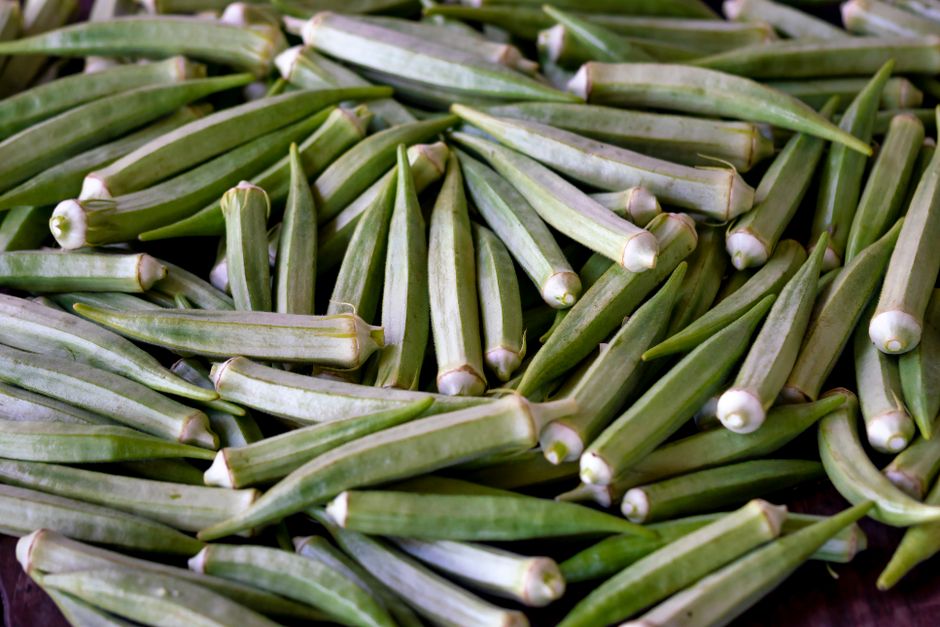
Okra is a moderate source of vitamin K, not a high one. A one-cup serving of raw okra contains roughly 30 micrograms of vitamin K, which is about 25% of the daily adequate intake for adult men and about 33% for adult women. Compare that to a cup of raw kale at over 400 micrograms, and it becomes clear that okra sits in the middle of the pack among vegetables.
That middle position matters for anyone tracking vitamin K. Whether okra helps or complicates your diet depends on why you are paying attention to this nutrient in the first place.
How Much Vitamin K Is in Okra?
A one-cup serving of raw okra, about 100 grams, provides approximately 30 micrograms of vitamin K. That figure comes from USDA nutritional data, the standard reference for food composition in the United States.
Cooking changes the number. Boiled or stewed okra loses some vitamin K into the cooking liquid, so the amount you actually consume depends on how you prepare it and whether you eat the liquid. Fried okra adds calories and fat without adding vitamin K. Frozen okra retains most of its vitamin K content because it is typically blanched and frozen shortly after harvest.
The adequate intake for vitamin K is 120 micrograms per day for adult men and 90 micrograms per day for adult women. These are not minimum requirements in the strict sense. They are intake levels established by the Institute of Medicine (now the National Academy of Medicine) based on what appears to maintain normal blood clotting in healthy people.
So a cup of okra delivers a meaningful but not dominant share of that target. You would need roughly four cups of raw okra to reach the daily adequate intake on okra alone. That is not a realistic or recommended approach.
Is Okra High In Vitamin K Amounts And Effects Compared to Other Vegetables?
Okra ranks in the middle range for vitamin K among common vegetables. It is not a low-K food, and it is not a high-K food. That distinction matters for people who need to manage their intake carefully.
| Vegetable (1 cup, raw) | Vitamin K (approximate) |
|---|---|
| Kale | Over 400 mcg |
| Spinach | About 145 mcg |
| Broccoli | About 90 mcg |
| Okra | About 30 mcg |
| Cucumber | About 17 mcg |
| Tomato | About 8 mcg |
These numbers come from USDA food composition data and represent raw vegetables. Cooking, variety, and growing conditions all affect the final amount. The values are useful as a general guide, not as a precise measurement of what lands on your plate.
What this table shows is that okra is closer to broccoli than to kale. If you are watching vitamin K, okra is a vegetable you can generally include without dramatic swings in intake, as long as your portions are consistent.
What Does Vitamin K Do in the Body?
Vitamin K is best known for its role in blood clotting. Without it, the liver cannot produce several proteins required for coagulation, including prothrombin. This is why severe vitamin K deficiency leads to easy bruising and bleeding.
Vitamin K also activates proteins involved in bone metabolism, including osteocalcin. Some research suggests that adequate vitamin K intake supports bone health, though the evidence for fracture prevention through vitamin K supplementation alone is mixed. The relationship between vitamin K and bone density is an active area of study, not a settled one.
There are two main forms. Vitamin K1, or phylloquinone, comes primarily from leafy green vegetables and is the form found in okra. Vitamin K2, or menaquinone, comes from fermented foods and some animal products. Both forms are biologically active, but they behave differently in the body and are handled differently by the liver.
Most people in the United States get enough vitamin K through diet without trying. Clinical deficiency is uncommon in healthy adults. It shows up mainly in newborns, people with malabsorption conditions, and those on long-term antibiotics that disrupt gut bacteria.





Does Okra Interact With Blood Thinners?
Yes, okra can interact with warfarin and similar blood-thinning medications. The interaction is not unique to okra. It applies to any food containing vitamin K.
Warfarin works by blocking vitamin K-dependent clotting factors. If your vitamin K intake goes up or down suddenly, the drug’s effect can shift. Eating a large amount of okra one day and none the next can create inconsistency that makes warfarin harder to manage.
The standard clinical approach is not to avoid vitamin K entirely. It is to keep intake consistent from day to day. Your doctor adjusts the warfarin dose based on your usual diet, not the other way around. If you want to add okra to your regular meals, tell your prescriber so they can monitor your INR and adjust if needed.
Newer anticoagulants such as apixaban, rivaroxaban, and dabigatran do not work through vitamin K pathways. They do not have the same dietary vitamin K interaction. If you are on one of these medications, okra does not pose the same concern. Always confirm with your prescribing clinician, because individual situations vary.
Some clinicians recommend that patients on warfarin aim for a consistent daily vitamin K intake rather than a low one. This is common clinical practice supported by the pharmacology of the drug, though the specific intake target is not standardized across guidelines.
Who Needs to Pay Attention to Vitamin K in Okra?
People taking warfarin are the main group that needs to track vitamin K from food sources like okra. For everyone else, vitamin K intake from vegetables is not something to worry about under normal circumstances.
Newborns are another group. They are born with low vitamin K stores and are typically given a vitamin K injection at birth to prevent a rare but serious bleeding disorder called vitamin K deficiency bleeding. This is standard pediatric practice. Okra is not relevant to newborn vitamin K status.
People with conditions that impair fat absorption, such as cystic fibrosis, celiac disease, or chronic liver disease, may have trouble absorbing vitamin K. Vitamin K is a fat-soluble vitamin, so anything that interferes with fat digestion can affect its absorption. These individuals should follow their doctor’s guidance on monitoring.
People with kidney disease on dialysis may also need individualized guidance, as vitamin K metabolism and requirements can be affected. Again, this is a clinical conversation, not a dietary decision to make alone.
For the average healthy adult, okra is simply a vegetable with a modest amount of vitamin K. It also provides fiber, vitamin C, and folate, and it fits into most dietary patterns without special consideration.
Does Cooking Okra Destroy Vitamin K?
Cooking does not destroy vitamin K to any large degree. Vitamin K is relatively stable under heat. The bigger loss comes from leaching into cooking water, not from heat degradation.
When you boil okra, some vitamin K dissolves into the water. If you drain the water, you lose that portion. If you use the water in a stew or soup, you retain more. Steaming and roasting tend to preserve more vitamin K than boiling and draining.
Frying okra does not destroy vitamin K either, but it adds significant fat and calories. The vitamin K content remains largely intact. The nutritional trade-off is about the added fat, not the vitamin K.
Freezing has minimal effect on vitamin K content. Frozen okra is a reasonable option if fresh is not available. The nutrient profile is similar enough that it does not change the dietary picture in any meaningful way.
Does Okra Have Other Nutritional Benefits?
Okra provides dietary fiber, including soluble fiber in the form of mucilage, the gel-like substance that gives okra its distinctive texture. Soluble fiber can help with digestion and may support healthy cholesterol levels as part of an overall diet.
Okra also contains vitamin C, folate, and small amounts of magnesium and potassium. It is low in calories. A cup of raw okra has roughly 30 calories.
Some preliminary research has looked at okra extracts and blood sugar, but the evidence is limited and does not support using okra as a treatment for diabetes or any other condition. No large human trials have confirmed that eating okra produces meaningful blood sugar effects. It is a nutritious vegetable, not a medicine.
Claims that okra can cure diabetes, lower blood pressure dramatically, or treat cancer are not supported by clinical evidence. Okra is a healthy food that fits into a balanced diet. It is not a treatment for any disease.
Frequently Asked Questions
Is okra high in vitamin K?
No, okra is a moderate source of vitamin K, providing about 30 micrograms per cup of raw okra. That is roughly 25-33% of the daily adequate intake, far less than kale or spinach.
Can I eat okra while taking warfarin?
You can eat okra while taking warfarin, but you need to keep your vitamin K intake consistent from day to day. Tell your prescriber if you add okra to your regular diet so they can monitor your INR.
Does cooking okra reduce its vitamin K content?
Cooking does not destroy vitamin K, but boiling and draining can leach some into the cooking water. Steaming, roasting, or using the cooking liquid preserves more of the vitamin K content.
How much vitamin K do adults need per day?
The adequate intake is 120 micrograms per day for adult men and 90 micrograms per day for adult women. A cup of raw okra provides about 30 micrograms toward that target.
