
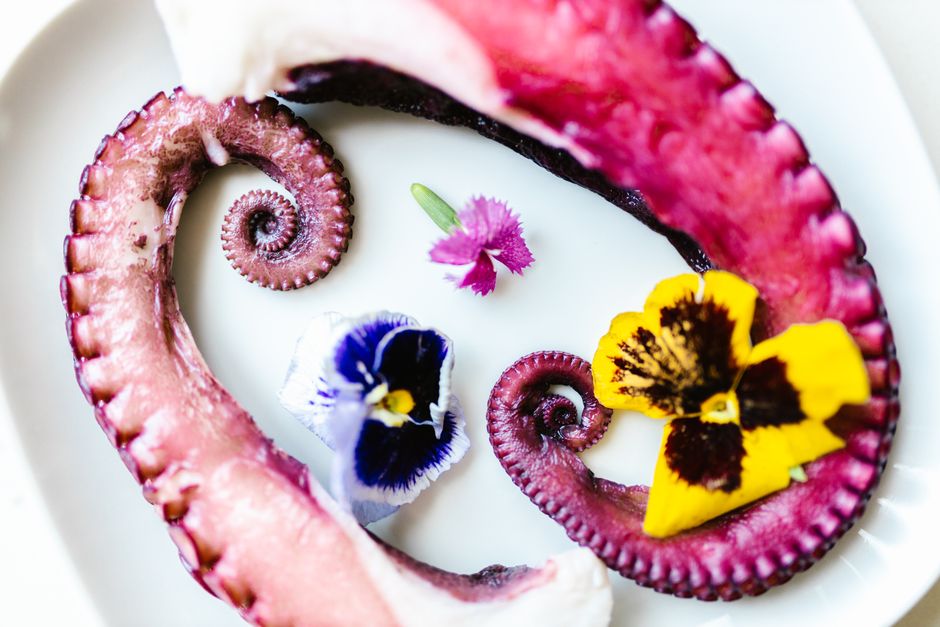
Octopus is a low-mercury seafood choice. It sits among the fish and shellfish that federal dietary guidance lists as “Best Choices” for mercury, which means it can be eaten several times a week by most people. The safety question for octopus is less about mercury and more about how it is cooked and handled.
That is a genuinely useful distinction. Most seafood mercury worries center on large predatory fish like shark, swordfish, and king mackerel. Octopus is a short-lived animal that feeds lower on the food chain, so it does not build up mercury the way those species do. The bigger risks with octopus are bacterial contamination from undercooking and, in some imported products, the way it was processed.
Is Octopus High In Mercury Or Safe To Eat?
Octopus is not high in mercury. The U.S. Food and Drug Administration and the Environmental Protection Agency publish advice on mercury in fish, and octopus falls into the “Best Choices” category — the lowest-mercury tier. That tier is considered safe to eat two to three times per week, or about 8 to 12 ounces total, for most adults.
The reason comes down to biology. Mercury accumulates in fish over time, and it concentrates most in long-lived predators at the top of the food chain. Octopus has a short lifespan, typically one to two years, and feeds on crabs, clams, and small fish. It simply does not live long enough or eat high enough on the food chain to accumulate large amounts of methylmercury.
This is where a lot of people get confused. Octopus is a mollusk, not a fish, and it is often grouped with squid and cuttlefish. None of these are on the “avoid” lists for mercury. The seafood that federal guidance flags for high mercury includes tilefish from the Gulf of Mexico, shark, swordfish, orange roughy, bigeye tuna, marlin, and king mackerel. Octopus is nowhere near that group.
One clarification worth making: octopus is not a universal “eat freely” food. The “Best Choices” rating reflects mercury content specifically. It does not mean every octopus product on the market is safe regardless of how it was caught, stored, or cooked. Those are separate questions, and they matter.
How Much Mercury Does Octopus Actually Contain?
Mercury levels in octopus are consistently low in the testing that regulators and researchers have done. The FDA monitors mercury in commercial seafood, and octopus has measured well below the levels found in high-mercury species. Exact numbers vary by species, region, and sample, so a single figure is not meaningful.
What matters is the pattern. Mercury in seafood is measured as methylmercury, the organic form that is most easily absorbed by the body and the form public health guidance is built around. Predatory fish accumulate far more of it than octopus does. The gap is large, not marginal.
Geography does influence mercury content in seafood generally. Fish from waters with natural mercury deposits or industrial contamination can carry more. But octopus has not emerged as a species of concern in regulatory monitoring, and it does not appear on advisories that warn against frequent consumption.
Who Should Be Careful With Octopus?
Most adults can eat octopus without worrying about mercury. The groups that federal guidance addresses most carefully are pregnant and breastfeeding women, women who may become pregnant, and young children. For these groups, the advice is to choose seafood from the “Best Choices” list and limit it to two to three servings per week. Octopus falls within that list.
There is an important caveat for these groups. The mercury guidance is about mercury. It does not override general food safety rules about cooking seafood thoroughly. Pregnant women, young children, and anyone with a weakened immune system should avoid raw or undercooked seafood, including octopus, because of the risk of foodborne illness. That is a separate recommendation from the mercury advice, and both apply.
People with shellfish allergies should also be cautious. Octopus is a mollusk, and mollusk allergies are a recognized category of shellfish allergy. Someone with a known shellfish allergy should not assume octopus is safe without medical guidance, because reactions to mollusks can occur in people who react to crustaceans like shrimp and crab.
What Are The Real Safety Risks With Octopus?
The main safety risks with octopus are not mercury-related. They are food safety issues: bacteria, parasites, and improper handling. Raw or lightly cooked octopus, like any raw seafood, can carry Vibrio bacteria and other pathogens. Cooking octopus thoroughly is the reliable way to reduce that risk.
Octopus is often served as sashimi or in ceviche, both of which involve raw or minimally cooked product. That is a genuine risk for certain groups, and even for healthy adults it is a risk that depends on how the product was sourced and handled. Commercially prepared raw seafood that has been properly frozen and stored is lower risk than raw seafood handled without those controls, but it is not risk-free.
Imported octopus has also raised concerns about processing conditions in some cases. Reports over the years have described poor handling and sanitation in parts of the global octopus supply chain. Buying from reputable sources and cooking thoroughly addresses most of this. There is no reliable way for a consumer to inspect a product for these issues at the point of sale, so sourcing and cooking are the practical safeguards.
How Does Octopus Compare To Other Seafood?
Octopus compares favorably to most seafood on mercury. It is in the same low-mercury tier as shrimp, salmon, tilapia, cod, and canned light tuna. It is far lower than the species federal guidance says to avoid.
| Seafood | Mercury Category | General Guidance |
|---|---|---|
| Octopus | Best Choice (lowest mercury) | 2–3 servings per week |
| Shrimp, salmon, cod, tilapia | Best Choice (lowest mercury) | 2–3 servings per week |
| Canned light tuna | Best Choice (lowest mercury) | 2–3 servings per week |
| Albacore (white) tuna | Good Choice (moderate mercury) | 1 serving per week |
| Shark, swordfish, king mackerel, tilefish (Gulf) | Avoid (highest mercury) | Not recommended |
The “Best Choices” and “Good Choices” framework comes from joint FDA and EPA advice. The serving sizes and weekly limits in that guidance are the reference point most clinicians use. Octopus sits in the most permissive category, which is the practical answer to the mercury question.
How Should You Cook And Store Octopus?
Cook octopus thoroughly to reduce bacterial risk. The reliable marker for seafood doneness is that the flesh turns opaque and reaches a safe internal temperature. Federal food safety guidance sets 145°F as the minimum internal temperature for fish and shellfish, including octopus.
Octopus is famously tough when undercooked and tender when cooked properly, but tenderness is not the same as safety. A piece can feel tender and still be undercooked in the center. Using a food thermometer is the most reliable check.
Storage matters too. Keep raw octopus refrigerated and use it within the timeframe recommended for fresh seafood, generally one to two days for fresh product. Freeze it if you will not cook it in that window. Thaw frozen octopus in the refrigerator, not on the counter. Wash hands, surfaces, and utensils after handling raw seafood.
If you buy octopus already cooked or marinated, treat it as a ready-to-eat product and follow the package instructions. Do not assume it is safe to leave out at room temperature for long periods.
Is Octopus Nutritious?
Octopus is a lean source of protein and provides several nutrients. It is low in fat and contains vitamin B12, iron, and selenium, along with some copper. These are well-established nutrient contributions for mollusks generally.
It is not a miracle food, and it is not a substitute for a varied diet. The nutritional case for octopus is similar to other lean seafood: good protein, useful micronutrients, low saturated fat. That is a reasonable reason to include it, but the mercury question is separate and, as covered above, octopus does well on that front too.
What About Octopus In The Diet Overall?
Octopus fits comfortably into a balanced diet for most people. It is a low-mercury seafood that can be eaten a few times a week, and it provides lean protein and key nutrients. The main cautions are thorough cooking, safe handling, and attention to shellfish allergy.
The mercury worry that surrounds seafood in general does not apply to octopus in any meaningful way. That is the honest summary. The risks that do exist are ordinary food safety risks, and they are manageable with standard kitchen practices.
Frequently Asked Questions
Is octopus high in mercury?
No. Octopus is in the lowest-mercury category in federal seafood guidance and is considered safe to eat two to three times per week for most adults.
Can pregnant women eat octopus?
Yes, if it is cooked thoroughly. Octopus is a low-mercury “Best Choice” seafood, but pregnant women should avoid raw or undercooked octopus because of foodborne illness risk.
Is raw octopus safe to eat?
Raw octopus carries a risk of bacteria and parasites, so it is not recommended for pregnant women, young children, older adults, or anyone with a weakened immune system. Healthy adults who choose it should rely on reputable, properly handled sources.
How often can you eat octopus?
Most adults can eat octopus two to three times per week, consistent with federal guidance for low-mercury seafood. Serving sizes in that guidance are about 4 ounces cooked.
