
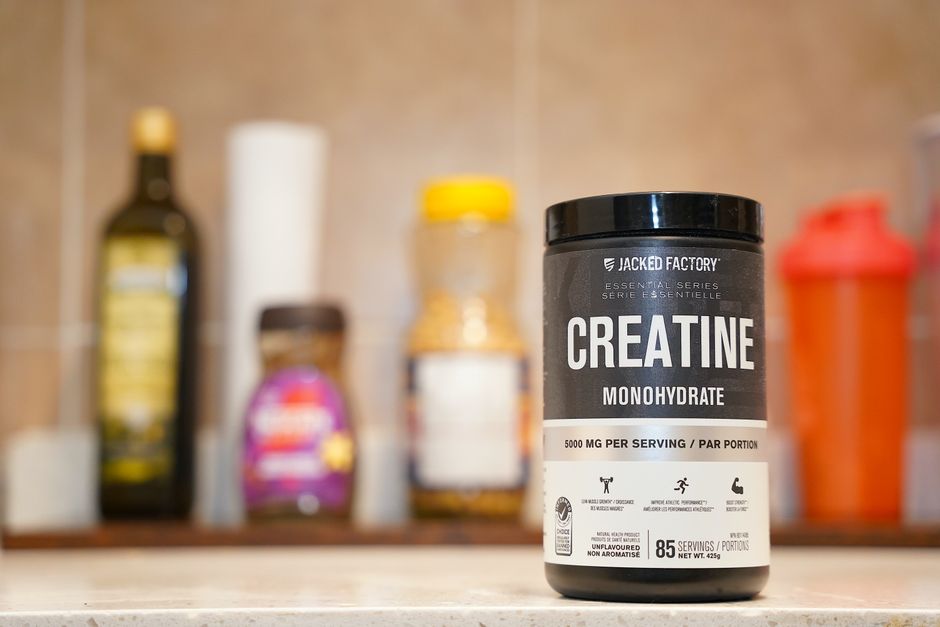
Nutricost Creatine is a straightforward creatine monohydrate powder sold at a low price, and the ingredient itself is one of the most studied sports supplements in existence. Whether a specific tub is “good” comes down to three things: it is monohydrate, it is third-party tested, and it dissolves and mixes in a way you can live with. On the first two, Nutricost generally holds up. On the third, results vary by person.
Creatine monohydrate has decades of research behind it for strength and muscle performance. The form matters more than the brand. If a product contains pure creatine monohydrate and has independent testing to confirm purity, it is doing the job. Nutricost’s offering fits that description for most buyers, with a few honest caveats worth knowing before you spend money.
What Is Nutricost Creatine Actually Made Of?
Nutricost sells creatine in the form of creatine monohydrate, usually as a plain unflavored powder. That is the same molecule used in the vast majority of clinical research on creatine. It is not a proprietary blend, not a “buffered” version, and not attached to any exotic delivery system.
Creatine monohydrate is a white, slightly gritty powder. It has no meaningful taste on its own. The label typically lists one ingredient: creatine monohydrate. Some versions are micronized, meaning the particles are milled finer to dissolve more easily. Micronization does not change what the creatine does in your body. It changes how it behaves in a glass of water.
This matters because the supplement market is full of creatine products that cost several times more by dressing up the same molecule. Creatine hydrochloride, creatine nitrate, and liquid creatine all exist. None has been shown in head-to-head human trials to outperform plain monohydrate for strength or muscle. The monohydrate form remains the reference standard that other forms are measured against.
Is Nutricost Creatine Good Compared to Other Brands?
For most people, the honest comparison comes down to purity testing, price per serving, and whether the powder mixes well. Nutricost competes strongly on price and reasonably on testing. It is not a premium boutique brand, and it does not pretend to be.
Third-party testing is the single most useful thing to check on any creatine product. Independent labs screen for heavy metals and confirm the creatine content matches the label. Nutricost states that its products are tested, and the brand publishes certificates of analysis for many items. If a specific batch certificate is not easy to find, that is worth noting. A brand that makes testing easy to verify is generally a safer bet than one that only says “tested” on the label.
Here is a comparison of what actually separates creatine products:
| Factor | What to Look For | Why It Matters |
|---|---|---|
| Form | Creatine monohydrate | Most studied form; others lack comparative evidence |
| Purity testing | Independent lab, certificate available | Confirms content and screens contaminants |
| Price per serving | Lower cost per gram | Monohydrate is a commodity; you should not overpay |
| Mixability | Micronized or fine powder | Affects how easily it dissolves; not effectiveness |
| Additives | Few or none | Flavored versions add sugar or sweeteners |
One clarification worth making: “micronized” gets marketed as if it improves absorption. It does not. Your body absorbs creatine monohydrate well regardless of particle size. Finer powder simply suspends better in liquid and is less likely to sit gritty at the bottom of the glass.
Does Creatine Monohydrate Actually Work?
Yes. Creatine monohydrate is one of the few supplements with strong, consistent evidence for improving short bursts of high-intensity effort. Research consistently shows it increases measures like strength and power output during repeated bouts of intense exercise. This is not a marginal or disputed finding. It is about as settled as sports nutrition gets.
Here is the mechanism, which is well established. Creatine is stored in muscle as phosphocreatine. During short, explosive efforts, your muscles use phosphocreatine to rapidly regenerate ATP, the basic energy currency of cells. Taking creatine raises the phosphocreatine available in muscle, which can support performance in activities lasting roughly seconds to a couple of minutes, such as sprinting or heavy lifting. It does not fuel long endurance efforts in the same way.
What creatine does not do is build muscle on its own. It supports training. Without resistance exercise and adequate protein, the performance benefit does not translate into meaningful muscle gain. The supplement amplifies the work you put in. It does not replace it.
Creatine also pulls water into muscle cells, which can raise body weight slightly. This is intracellular water, inside the muscle, not the puffiness associated with water retention elsewhere. Some people notice a small weight increase within the first weeks. That is expected and not a sign of a problem.

How Should You Take Creatine?
The most common approach is a daily dose of 3 to 5 grams of creatine monohydrate, taken consistently. This is the maintenance amount widely described in the scientific literature and sports nutrition guidance. Consistency matters more than timing. Creatine works by building up and holding a steady level in muscle, which takes a few weeks of regular use.
Some people use a “loading” phase of about 20 grams per day split into four doses for roughly a week, then drop to the maintenance dose. Loading saturates muscle faster, but the same level is reached over a few weeks at the lower daily dose. Loading is optional. It can cause mild stomach upset in some people, so many choose the simpler steady approach.
You can take it with water, juice, or food. Taking it with a meal that contains carbohydrate and protein may modestly improve uptake, based on the physiology of how creatine is absorbed, but the practical difference is small if you are consistent. Drink enough fluids. Creatine draws water into muscle, and staying hydrated is sensible.
One point that gets little attention: creatine is not a stimulant and does not need to be taken before a workout. People often time it pre-workout out of habit. Because the benefit comes from muscle saturation rather than an acute effect, the clock time of your dose is largely irrelevant.
Is Nutricost Creatine Safe?
Creatine monohydrate has a strong safety record in healthy adults when taken at typical doses. Reviews of the research in healthy populations have not found evidence of kidney damage in people with normal kidney function. The fears about creatine and kidneys largely come from confusion with creatinine, a waste product that creatine breaks down into.
That distinction matters. Creatine supplements can raise blood creatinine levels, which is what kidney function tests measure. A rise in creatinine on a blood test does not necessarily mean the kidneys are being harmed. It can simply reflect higher creatine intake. If you are having kidney function checked, tell your doctor you take creatine so the result is interpreted correctly.
People with pre-existing kidney disease should talk to a doctor before using creatine. The evidence in that group is limited, and this is not a decision to make on your own. The same caution applies to anyone with a medical condition affecting the kidneys or liver, and to people taking medications that affect kidney function.
No clinical guidelines currently exist for creatine use in children, and it should not be given to them without medical guidance. For pregnancy and breastfeeding, the evidence is limited. Most guidance advises caution, and this is a conversation for a clinician rather than a label.
What Are the Downsides of Nutricost Creatine?
The main complaints about any plain creatine powder are practical rather than medical. Some people find it gritty or hard to mix. Micronized versions reduce this, but no creatine powder dissolves completely like sugar. Stirring it into a larger volume of liquid or a smoothie helps.
Some users report mild digestive discomfort, especially at higher or loading doses. Splitting the dose and taking it with food usually helps. This is a common and generally manageable effect, not a sign of danger.
On the brand side, the honest limitation is transparency. Nutricost is a budget brand, and while it states its products are tested, a buyer who wants to verify every batch may find the documentation less prominent than with some premium brands. That is a fair consideration for anyone who prioritizes maximum traceability. For most people, the combination of the right form, stated testing, and low price is a reasonable trade.
Flavored versions of creatine add sweeteners and sometimes calories. If you want the plainest product, choose unflavored. It is also the most versatile, since you can add it to anything without changing the taste.
Who Should Consider a Different Product?
If you have kidney disease or any condition affecting kidney function, this is not a self-serve decision, and no brand is the right starting point without medical input. If you want a product with easily accessible batch-by-batch testing documentation, a premium brand may suit you better. If you dislike powders entirely, creatine is also sold in capsules, though you need more capsules to reach a 3 to 5 gram dose.
For most healthy adults who want a simple, low-cost creatine monohydrate, Nutricost is a reasonable choice. The form is right, the price is low, and the ingredient is well supported. The brand name matters far less than the molecule and the testing behind it.
Frequently Asked Questions
Is Nutricost creatine good quality?
It is a plain creatine monohydrate powder, which is the most studied form, and the brand states its products are tested. Quality depends on batch testing you can verify, so check for a certificate of analysis if that matters to you.
Does Nutricost creatine actually work?
The creatine monohydrate in it has strong evidence for improving strength and high-intensity performance when combined with training. The brand does not change the molecule, so the ingredient works the same as any quality monohydrate.
How much Nutricost creatine should I take per day?
A common maintenance dose is 3 to 5 grams daily, taken consistently. Loading with about 20 grams per day for roughly a week is optional and reaches saturation faster.
Is creatine safe for your kidneys?
In healthy adults with normal kidney function, research has not shown kidney damage at typical doses. It can raise blood creatinine, so tell your doctor you take it before kidney tests, and avoid it without medical advice if you have kidney disease.
