
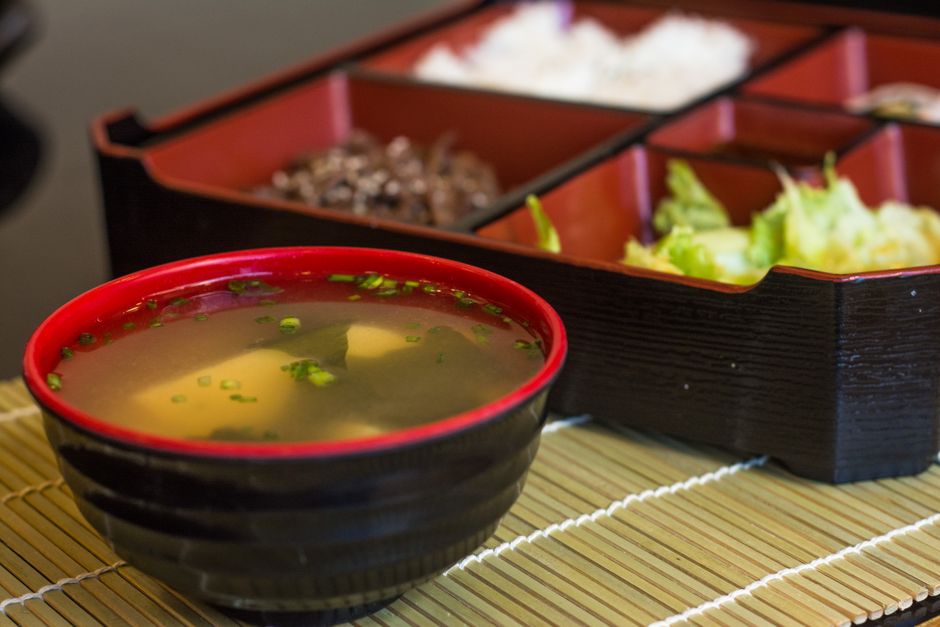
Miso soup is not always vegetarian. The soup base itself — miso paste — is made from soybeans, salt, and a grain like rice or barley, so it is plant-based. But traditional Japanese miso soup is usually made with dashi, a stock that commonly contains dried bonito flakes, which are a type of fish. That single ingredient decides the answer.
Restaurant versions and instant packets often use fish-based dashi without saying so on the menu. If you want vegetarian miso soup, you need to know what stock went into it. The rest of this article explains how to tell the difference and what to look for.
What Is Miso Soup Actually Made Of?
Miso soup has two core parts: the miso paste and the dashi stock. Everything else — tofu, seaweed, scallions, mushrooms — is an addition.
Miso paste is fermented soybeans mixed with salt and a grain culture. The grain varies. Rice miso (kome miso) is the most common in Japan. Barley miso (mugi miso) and pure soybean miso (mame miso) also exist. The fermentation is driven by a mold called Aspergillus oryzae, known in Japan as koji. None of these ingredients are animal-derived.
Dashi is where things get complicated. The most common traditional dashi is awase dashi, a combination of kombu (dried kelp) and katsuobushi (dried, fermented, smoked skipjack tuna flakes). Katsuobushi is definitively fish. A bowl made with this stock is not vegetarian.
Kombu dashi alone — just kelp steeped in water — is fully plant-based. Shiitake mushroom dashi is another vegetarian option. Some modern recipes use a combination of kombu and dried shiitake for depth.
So the honest answer depends entirely on which dashi the cook used. The miso paste is rarely the problem. The stock almost always is.
Is Miso Soup Vegetarian in Restaurants?
Usually not, unless the restaurant specifically says otherwise. Most Japanese restaurants outside Japan use standard awase dashi or a commercial dashi powder that contains bonito or other fish extract.
Dashi powder is a particular trap. Many brands sold as “dashi” or “hon dashi” contain dried bonito, sardine, or mackerel powder. Some contain dried shrimp or shellfish. The label may not list these in English, and menu descriptions almost never mention the stock at all.
Even dishes that look vegetarian on a menu — miso soup served alongside a vegetable roll, for example — often share the same dashi base as everything else in the kitchen. The soup is not made separately for vegetarian customers in most establishments.
If you want a reliable answer, ask directly: “Does the miso soup use fish-based dashi?” A server who knows the kitchen can usually tell you. A server who does not may guess. If the answer is uncertain, treat it as not vegetarian.
Some restaurants, particularly vegan Japanese spots and macrobiotic cafes, make their soup with kombu or shiitake dashi and will say so. These are the exception, not the rule.
Are Instant Miso Soup Packets Vegetarian?
Most are not. Instant miso soup packets typically include a dashi powder sachet, and that powder usually contains bonito, sardine, or other fish extracts.
Reading the ingredient list is the only reliable method. Look for these terms on the label:
- Bonito or katsuobushi — dried skipjack tuna
- Fish extract, fish powder, or seafood extract
- Dashi without a plant source specified
- Niboshi — dried sardines
- Shrimp, crab, or shellfish in some blends
Some packets are labeled “vegetarian” or “vegan” and use kombu or shiitake dashi instead. These exist and are increasingly common in health food stores and online. But the label has to say it. A packet that simply lists “dashi” is almost certainly fish-based.
One clarification worth knowing: the word “dashi” in Japanese cooking does not mean fish. It means “stock.” Kombu dashi and shiitake dashi are both legitimate dashi. The problem is that when a label says “dashi” without specifying the source, it usually means the fish version.
What About Miso Paste Itself?
Miso paste is vegetarian. It is made from soybeans, salt, grain, and koji mold. No animal products are involved in standard miso production.
There are exceptions worth checking. A small number of specialty misos are made with dashi already blended in, sold as “dashi-iri miso” (miso with stock included). These contain fish. They are less common outside Japan but do appear in Asian grocery stores.
Plain miso paste — white (shiro), red (aka), yellow, or mixed — is plant-based. If you are making soup at home from paste, you control the dashi and the answer is entirely up to you.
The fermentation process itself is also worth understanding. Miso is a living fermented food, and some research suggests fermented soy foods may support gut health, though the evidence for specific health outcomes in humans is limited and mostly observational. That is a separate topic from whether the soup is vegetarian, but it is one reason people seek it out.
How Do You Make Vegetarian Miso Soup at Home?
Making it at home is straightforward, and it removes all the uncertainty. You need three things: vegetarian dashi, miso paste, and whatever additions you like.
For the dashi, steep a piece of dried kombu in water. Some cooks warm it gently and remove the kombu before the water boils, since boiling kombu can make the stock bitter and slimy. Dried shiitake mushrooms soaked in water make a second option with a deeper, earthier flavor. Combining both gives a rounder stock.
Then whisk a spoonful of miso paste into the hot — not boiling — stock. Boiling miso is generally avoided because it can dull the flavor and, in traditional cooking, is said to reduce the beneficial enzymes and live cultures in the paste. Whether that matters nutritionally is not well established, but the flavor reason alone is enough.
Common vegetarian additions include:
- Soft or firm tofu cubes
- Wakame seaweed
- Sliced scallions
- Enoki or shimeji mushrooms
- Thinly sliced carrot or daikon
Check the miso paste label for “dashi-iri” before you buy. Otherwise, plain miso is fine.
Is Miso Soup Vegan?
Vegan miso soup requires the same thing vegetarian miso soup does — plant-based dashi — plus no other animal ingredients. Tofu, seaweed, and vegetables are all vegan. The only common non-vegan ingredient is the fish-based dashi.
Some miso soup recipes include a small amount of fish sauce, chicken stock, or egg, but these are not standard. The traditional recipe relies on dashi alone.
For practical purposes, vegetarian and vegan miso soup are the same dish. If the dashi is plant-based, the soup is both.
What Should You Look For on a Label?
The label is your most reliable tool. Look for the phrase “kombu dashi” or “shiitake dashi” or an explicit “vegan” or “vegetarian” claim. If none of those appear, assume fish.
Watch for these specific terms that indicate animal content:
- Bonito, katsuobushi, skipjack
- Niboshi (dried sardine)
- Iriko (another name for dried sardine)
- Fish sauce, fish extract, fish powder
- Shellfish or crustacean extract
One limitation to know about: labeling rules vary by country, and imported Japanese products are not always required to list every component of a blended dashi powder in the same way domestic products are. When in doubt, contact the manufacturer or choose a product that makes an explicit vegetarian claim.
If you are cooking for someone with a fish allergy, this matters beyond preference. Fish-based dashi is a real allergen risk, and miso soup is a common source of accidental exposure in Japanese restaurants. Ask about the stock the same way you would ask about any other allergen.
Frequently Asked Questions
Is miso soup vegetarian?
Not usually. Traditional miso soup is made with dashi stock that commonly contains dried bonito flakes, which are fish. It is only vegetarian when the cook uses kombu or shiitake dashi instead.
Is miso soup vegan?
It can be, but most restaurant and instant versions are not. Vegan miso soup requires plant-based dashi and no other animal ingredients, which is the same requirement as vegetarian miso soup.
Does miso soup contain fish?
Most traditional miso soup does contain fish in the form of bonito-based dashi. Instant packets and restaurant versions usually do as well unless they are specifically labeled vegetarian or vegan.
What is dashi made of?
Dashi is a Japanese stock. The most common version combines kombu seaweed and dried bonito flakes, which are fish. Kombu-only and shiitake-only versions are fully plant-based.
