
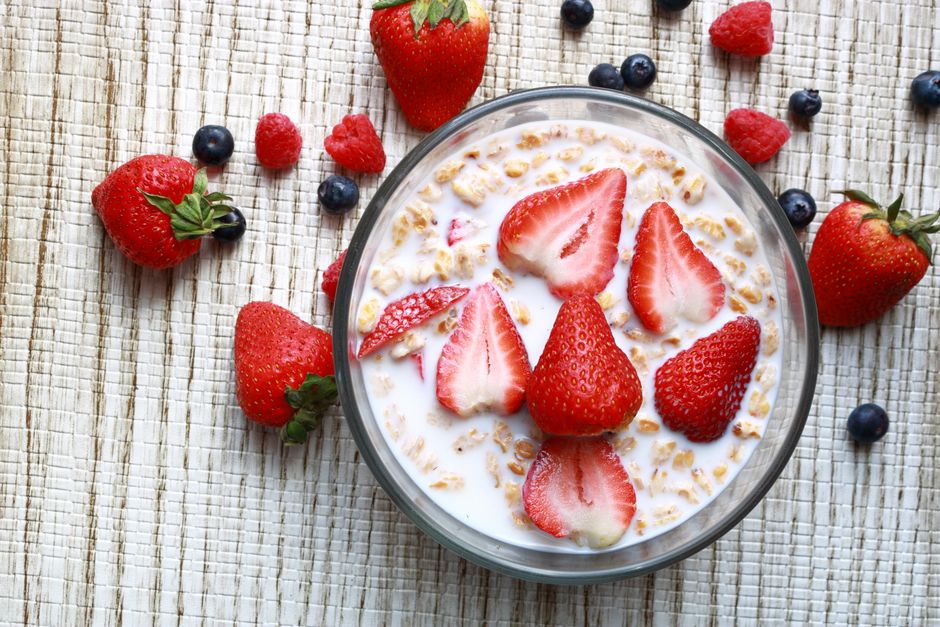
Milk fat content is not a mystery, but it is often misunderstood. Whole milk, 2% milk, and skim milk differ mainly in how much fat they contain, and that difference is clearly defined by law. Whole milk has about 3.25% milk fat, 2% milk has exactly 2%, and skim milk has less than 0.5%. So no, milk is not uniformly high in fat — the type you choose determines the fat content, and the difference between whole and skim is substantial.
What Is the Actual Fat Content of Whole, 2%, and Skim Milk?
The numbers on the carton are not marketing. They are legal standards enforced by the FDA. When you buy 2% milk, the fat content is exactly 2% of the total weight. The percentage refers to the weight of the milk, not the percentage of calories from fat.
Here is the breakdown per 8-ounce cup:
- Whole milk: about 3.25% milk fat, roughly 8 grams of fat, 150 calories
- 2% milk: exactly 2% milk fat, roughly 5 grams of fat, 120 calories
- 1% milk: exactly 1% milk fat, roughly 2.5 grams of fat, 100 calories
- Skim milk: less than 0.5% milk fat, roughly 0 grams of fat, 80 calories
These are standard USDA nutritional values. The fat in milk is mostly saturated fat, about 60-70% of the total fat. The rest is monounsaturated and polyunsaturated fat.
What matters for your health is not just the fat percentage but the overall context of your diet. A cup of whole milk has about 4.5 grams of saturated fat. The American Heart Association recommends limiting saturated fat to about 13 grams per day on a 2,000-calorie diet. One cup of whole milk provides about a third of that daily limit.
Does Whole Milk Actually Raise Cholesterol Levels?
Saturated fat does raise LDL cholesterol — the type linked to heart disease. This is one of the most consistent findings in nutrition research. Whole milk contains more saturated fat than 2% or skim, so it has a greater effect on cholesterol levels.
But the size of that effect matters. Studies have not shown that drinking whole milk dramatically increases heart disease risk for most people. The evidence is mixed. Some observational studies suggest full-fat dairy may be neutral or even slightly protective, while others show a modest increase in risk. The clinical trials that directly test milk fat and heart outcomes are limited.
What is clear: if you already have high cholesterol or heart disease risk, choosing lower-fat milk is a reasonable and evidence-based step. If you are healthy, the difference between whole and 2% is unlikely to be the deciding factor in your heart health. Your overall diet pattern matters far more than this single food choice.
Is Milk High in Fat Compared to Other Common Foods?
Milk is not a high-fat food in the way that butter, cheese, or cream are. An 8-ounce glass of whole milk has 8 grams of fat. The same amount of heavy cream has about 88 grams of fat. A slice of cheddar cheese has about 9 grams of fat in a much smaller serving.
Compared to plant-based milks, dairy milk is higher in fat. Unsweetened almond milk has about 2.5 grams of fat per cup. Oat milk has about 5 grams. Soy milk is comparable to 2% dairy milk at about 4-5 grams per cup.
The key point is portion size. Milk is typically consumed in 8-ounce servings, and that serving size keeps the fat content moderate even for whole milk. The fat in milk is naturally occurring, not added. It is part of the food’s structure.





Does Fat in Milk Help You Absorb Vitamins Better?
Yes, and this is where the story gets more interesting. Milk is fortified with vitamin D, and vitamin D is fat-soluble. That means your body needs some fat to absorb it properly.
Research shows that vitamin D absorption from skim milk is lower than from whole milk. One study found that people absorbed significantly more vitamin D from whole milk than from fat-free milk. The same principle applies to vitamin A, which is also fat-soluble and naturally present in milk fat.
This does not mean skim milk is useless. The difference in absorption is modest, and most people get vitamin D from sunlight and supplements as well. But if you drink only skim milk and rely on it for vitamin D, you may not be absorbing as much as you think.
The practical takeaway: the small amount of fat in 1% or 2% milk is enough to support fat-soluble vitamin absorption. You do not need whole milk for this purpose.
Is Whole Milk Better for Weight Management Than Skim?
This is a common claim online, and the evidence does not support it strongly. Some observational studies have suggested that full-fat dairy is associated with lower weight gain. Other studies show no difference. The evidence is genuinely mixed.
What the research does show: calories matter. Whole milk has nearly twice the calories of skim milk per cup. If you drink multiple glasses a day, that difference adds up. Two cups of whole milk add about 140 more calories than two cups of skim.
There is no metabolic magic in whole milk. It is not more filling per calorie than skim milk in most studies. If weight loss is your goal, the lower-calorie option is the safer choice. If you are maintaining weight and prefer the taste of whole milk, the difference is unlikely to cause weight gain on its own.
Which Milk Should You Choose?
The right choice depends on your health status and dietary needs. There is no single answer that fits everyone.
Choose skim or 1% if you have high cholesterol, heart disease, or are actively trying to cut calories. Choose 2% if you want a middle ground — lower in saturated fat than whole but creamier than skim. Choose whole milk if you are a young child, underweight, or have no cardiovascular risk factors and prefer the taste.
Children under two years old should drink whole milk. This is a firm pediatric recommendation because young children need the fat for brain development. After age two, children can transition to lower-fat milk if their growth is normal.
For older adults, the evidence is less clear. Some research suggests that full-fat dairy may be beneficial for frailty prevention in the elderly, but this is not a strong enough finding to override cardiovascular concerns. If you are over 65 and have low appetite, whole milk provides more calories and protein per serving, which can be helpful.
The most important factor is what else you eat. A glass of whole milk in an otherwise balanced diet is not a health emergency. A glass of skim milk in a diet full of processed food is not a health solution.
Does Organic or Grass-Fed Milk Have a Different Fat Profile?
Organic and grass-fed milk have a slightly different fat composition, but the total fat content is the same. The difference is in the types of fat. Grass-fed milk contains more omega-3 fatty acids and conjugated linoleic acid (CLA) than conventional milk.
The difference is small. A glass of grass-fed milk has about 0.05 grams more omega-3s than conventional milk. For context, a serving of salmon has over 1 gram. You would need to drink many glasses of grass-fed milk to match the omega-3 content of a single fish meal.
If you prefer grass-fed milk for environmental or animal welfare reasons, that is a valid choice. But do not expect a meaningful health difference from the fat profile alone.
Frequently Asked Questions
Frequently Asked Questions
Is whole milk considered a high-fat food?
No. Whole milk has about 3.25% fat by weight, which is moderate compared to foods like butter or cheese. An 8-ounce glass provides 8 grams of fat.
Does 2% milk have twice as much fat as 1% milk?
Yes. The percentage on the carton is the actual fat content by weight. 2% milk has exactly twice the fat of 1% milk.
Is skim milk healthy?
Skim milk is healthy for most adults. It provides the same protein, calcium, and vitamin D as whole milk with fewer calories and less saturated fat, though vitamin D absorption is slightly lower without fat.
Which milk has the most protein?
All dairy milks — whole, 2%, 1%, and skim — have about 8 grams of protein per cup. The fat content does not change the protein content.
