
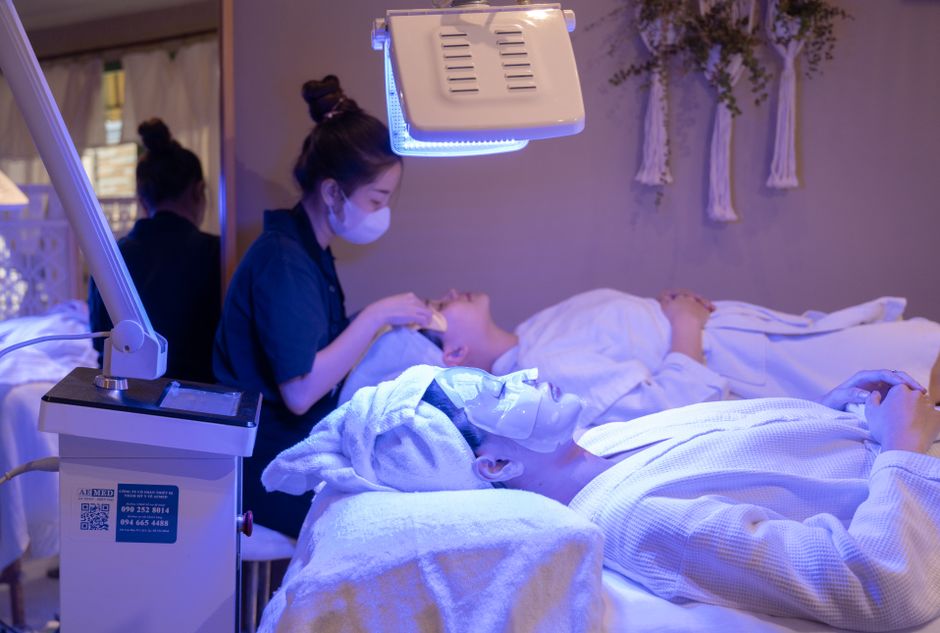
Medicube is a Korean skincare brand best known for its line of at-home beauty devices and the skincare products built around them. The brand has grown fast on social media, largely because its marketing leans on a clear promise: clinical-looking tools that bring professional treatments into your bathroom. The products themselves are real and legally sold. The bigger question is whether the results match the claims, and that answer depends on which product you’re looking at.
What Is Medicube and Where Did It Come From?
Medicube is a South Korean brand that sits under a larger parent company with roots in the medical and aesthetic device industry. That background matters. Unlike a brand that started with a cream and later added gadgets, Medicube built its identity around devices first — microneedling stamps, LED masks, and similar tools — then developed serums, toners, and creams designed to be used with them.
The brand’s positioning is the key to understanding it. It markets itself as a bridge between dermatology-office treatments and what you can do at home. That framing is appealing, and it is also where most of the confusion starts.
Some of what Medicube sells is ordinary skincare. Some of it is hardware. Those two categories need to be judged by completely different standards, and lumping them together is the main reason online reviews contradict each other so often.
Is Medicube a Good Skin Care Brand? What the Products Actually Do
A skincare product is only as good as its ingredients and how they’re formulated. On that front, Medicube’s topical products are broadly comparable to other mid-range Korean brands. Many contain well-studied ingredients like niacinamide, hyaluronic acid, and various plant extracts.
Here is the honest position: the ingredients in most of these creams and serums are not unique, and the brand does not hold patents on them. You can find similar formulas from many companies. That doesn’t make them bad. It means the skincare itself is not doing anything a dozen other brands aren’t also doing.
What is genuinely different is the device ecosystem. Medicube’s at-home tools are the reason people seek the brand out, and they deserve a closer look than the creams.
Do At-Home Beauty Devices Really Work?
This is the part where evidence matters most, and where marketing and science tend to drift apart.
At-home beauty devices fall into a few categories, and the evidence is not the same for each.
- Microneedling tools: Professional microneedling performed in a clinic has real evidence behind it for certain skin concerns, including some scarring and signs of aging. At-home versions use shorter needles and are far less studied. Whether they produce meaningful results is genuinely unclear.
- LED light therapy: Red and blue light have some clinical evidence for specific uses, largely in professional settings with controlled dosing. Home devices vary widely in power and wavelength, and there is no standard that guarantees a home device delivers a therapeutic dose.
- Radiofrequency and ultrasound devices: These are marketed for firming and lifting. Evidence for home versions is limited, and results reported in marketing are not the same as results measured in controlled studies.
The pattern here is consistent. A technology may have clinic-level evidence, but that does not automatically transfer to a consumer device that costs a fraction as much and is used without professional supervision. Biological plausibility — the idea that a treatment should work because of how it affects skin — is not the same as demonstrated clinical benefit. No large independent trials have confirmed that most home devices produce the results their advertising suggests.





What About Safety and Skin Irritation?
Any device that punctures or heats the skin carries real risks, and this is where caution is warranted.
Microneedling of any kind creates tiny wounds in the skin. That is how it is supposed to work. But it also means there is a window for irritation, infection, and reactions to whatever you apply afterward. Rolling a needle tool over your face at home, without training, is not risk-free. People with active acne, eczema, rosacea, or a compromised skin barrier may make their skin worse rather than better.
LED devices are generally considered low-risk when used as directed, though they are not appropriate for everyone. People taking medications that increase light sensitivity, or with certain medical conditions, should check with a clinician first.
Radiofrequency and ultrasound devices deliver heat or energy into the skin. Used incorrectly, they can cause burns or discomfort. The instructions matter more than the marketing.
None of this means the products are dangerous. It means they are tools, and tools used without care can cause harm. If you have a skin condition or you’re unsure, a dermatologist is the right person to ask — not a product page.
How Does Medicube Compare to Other Korean Skincare Brands?
Korean skincare as a category is known for gentle formulations, layered routines, and a focus on hydration and barrier support. Medicube fits partly into that tradition and partly outside it, because of the device focus.
If you’re comparing brands on skincare alone, Medicube is one of many solid options. It is not clearly better or worse than other mid-priced Korean brands. The ingredients overlap heavily across the market.
If you’re comparing on devices, Medicube is more distinctive, but also harder to evaluate. There is less independent research on specific home devices than on ingredients, and much of what exists is funded by the companies that make them. That doesn’t automatically invalidate the findings, but it means you should treat dramatic before-and-after claims with caution.
What Should You Actually Expect?
Realistic expectations protect both your skin and your wallet.
Skincare products take time. Ingredients like retinoids and niacinamide are supported by evidence, but they work gradually, usually over weeks to months, not days. Any product promising overnight transformation is overselling.
Home devices are a bigger gamble. Some people report improvements. Others notice nothing. Without large independent trials, no one can tell you with confidence which outcome you’ll get. The honest answer is that results vary, and the marketing rarely reflects that uncertainty.
A reasonable approach is to start with the basics — a gentle cleanser, a moisturizer, and sunscreen — before spending on tools. Sunscreen remains the single most evidence-backed step for protecting skin from visible aging. No device replaces that.
Who Should Be Careful With Medicube Products?
Some groups should be more cautious than others.
- People with active acne, eczema, or rosacea should talk to a dermatologist before using any needling or heat-based device.
- Anyone using prescription retinoids or acids should be careful combining them with microneedling, which can increase irritation.
- People with darker skin tones should be aware that needling carries a risk of pigmentation changes, and professional guidance is wise.
- Anyone who is pregnant or breastfeeding should check with a clinician before using devices that deliver heat or energy to the skin. No clinical guidelines specifically address home beauty device use in pregnancy.
These are not reasons to avoid the brand entirely. They are reasons to think before you buy, especially with the device line.
The Bottom Line on Medicube
Medicube is a legitimate brand with real products. Its skincare is comparable to many other Korean brands, and its devices are the main reason it stands apart. The honest verdict is mixed: the creams are fine but not special, and the devices are promising in concept but under-supported by independent evidence.
If you want a solid everyday moisturizer or serum, Medicube will likely serve you about as well as several competitors. If you’re buying a device expecting clinic-level results at home, temper that expectation. The gap between professional treatment and a consumer tool is real, and marketing tends to blur it.
Frequently Asked Questions
Is Medicube a good skin care brand overall?
Medicube is a legitimate brand whose topical products are comparable to other mid-range Korean skincare lines. Its at-home devices are the more distinctive part of the lineup, but they have less independent evidence behind them than the marketing suggests.
Are Medicube devices worth buying?
It depends on the device and your expectations. Some technologies have clinic-level evidence, but that does not guarantee a home version delivers the same results, and large independent trials on consumer devices are limited.
Is microneedling at home safe?
At-home microneedling carries real risks, including irritation, infection, and skin reactions, especially for people with active skin conditions. Professional guidance is wise before starting, particularly if you have acne, rosacea, or darker skin tones.
Can Medicube products replace dermatologist treatments?
No. Home skincare and devices cannot replicate in-office procedures, and no evidence supports that they can. They may support a routine, but they are not a substitute for professional care.
